bits & byte
25 TopicsThe Linebreakers: Where MVPs, Music, and Community Take the Stage
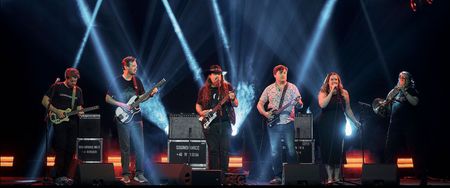
When Code Meets the Chorus At the intersection of technology, creativity, and community, The Linebreakers have found a stage all their own. The global group of technologists and musicians creates parody-style, programming-themed performances inspired by familiar songs, celebrating developer culture with humor, musicianship, and heart. Since 2016, they have entertained conference audiences and meetups around the world, from Kyiv to Kansas City, from Sydney to Siberia. What began as a few reworked lyrics has grown into a joyful reminder that community is built not only through code and collaboration, but also through shared laughter. From Frameworks to Front Row Singalongs The Linebreakers started with a simple question that could only come from developer culture: are there enough JavaScript frameworks to rewrite the Billy Joel song “We Didn’t Start the Fire?” For Microsoft MVP Dylan Beattie, the answer became “We’re Going to Build a Framework,” the first spark in what would become a globe-spanning musical side project. Dylan had played guitar as a teenager, became a developer, and never quite stopped changing song lyrics to make friends laugh. Conferences gave him the perfect audience: people who understood both the music and the technical absurdity. “There was an opportunity here to do a performance that wouldn’t work anywhere else.” - MVP Dylan Beattie As the act grew, so did the community around it. Fellow technologists joined in organically, often after seeing a show and asking, “Can I be in your band?” The result is a flexible, international lineup that can adapt to whoever is available for a given event. Dylan described today’s core group as spanning the UK, Belgium, Oslo, and Kansas City, with additional “stunt guitarists” and collaborators joining along the way. For Microsoft MVP Heather Downing, joining The Linebreakers meant stepping into a performance that was both technically sharp and delightfully ridiculous. Her first song with the band was the parody “Fight the Feature Creep,” a programming-themed take inspired by Adele’s “Rolling in the Deep,” centered on fighting feature creep in software projects. The audience response was immediate: phones came out, people sang along, and the room embraced the silliness. “When you are learning so much at an event, sometimes it’s nice to not have to think about anything and just relax and do something kind of silly.” – MVP Heather Downing The band’s catalog now ranges from JavaScript jokes to APIs, agile estimation, cloud migration, user stories, AI, and the everyday tensions between sales teams, engineers, product owners, and developers trying to ship good software. Their own description says it best: parody-style tech performances inspired by classic tunes, with lyrics lovingly reworked to fit as many programming, technology, and web jokes as possible into a four-minute pop-song format. Part of what makes The Linebreakers special is how intentionally rooted the performances are in the conference experience. Dylan remembered seeing event parties where a live band played familiar covers, but the music could have happened anywhere. The Linebreakers offered something different: a show that only made sense in a room full of people who had wrestled with frameworks, APIs, product requirements, deployment pipelines, and conference Wi-Fi. That sense of shared context has carried the band across events including Copenhagen Developers Festival, NDC, BuildStuff, DevSum, GOTO, YOW!, and more. Sometimes the lineup is a full stage of collaborators; other times it is a lean trio or even a hybrid performance stitched together across time zones. Dylan recalled two shows where he could not travel because of COVID, so the rest of the band put his private YouTube stream on a big screen and played along live while he performed from home. At the end, he signed off from an audience-filled room he could not see, then went back to everyday life - an appropriately surreal tech-community moment. “There’s never really been a plan. It’s: we want to have fun.” - MVP Dylan Beattie Heather described the band as fun and silly, but also full of people who are genuinely talented musicians. The challenge is not just getting the joke right; it is showing up ready to perform, often with very little in-person rehearsal. Because members live in different parts of the world, they usually practice individually and then pull the pieces together when they finally meet. That means listening closely, staying in sync with backing tracks, solving venue sound problems, and trusting one another on stage. Some of the best moments happen because the group is willing to experiment. Heather shared one favorite BuildStuff story: the band noticed that NDC had a theme song and wondered whether BuildStuff needed one too. Between soundcheck and showtime, Dylan found musical inspiration, reshaped the idea into “Build Stuff,” the group rehearsed it outside, and they performed it that same night. The song stuck, eventually becoming part of the event’s own recap culture. “That’s the level of talent that we have in this group.” - MVP Heather Downing More Than a Punchline: Craft, Community, and Code Behind the jokes is a serious commitment to craft. Dylan summed up the band’s creative standard with a motto that feels just as relevant to software as it does to parody: comedy never justifies mediocrity. If people are laughing, he said, they should be laughing at the intended jokes - not because the music, production, or performance falls short. That mindset has pushed The Linebreakers to build lyric videos, produce backing tracks, learn new media tools, and bring a true audio-visual show to developer audiences. “Comedy never justifies mediocrity.” - MVP Dylan Beattie The work has also fed back into their professional lives. Dylan shared how making videos for The Linebreakers helped him build media production skills that now strengthen his workshops, training videos, and conference presentations. Heather emphasized another kind of impact: the shared humanity of tech. Whether the song is about JavaScript weirdness, bad APIs, reply guys, feature creep, or vibe coding, audiences around the world recognize the situations because they have lived them. “It really is a celebration of the ridiculousness and the humanity behind all of what tech is.” - MVP Heather Downing That connection can be surprisingly practical, too. Dylan said “You Give REST a Bad Name ,” a parody of Bon Jovi’s classic “You Give Love a Bad Name,” catalogs common API design mistakes in a way that is both entertaining and memorable. The song has been shared by developers with suppliers and teams as a lighthearted way to encourage better API design. Humor, in that case, became a door-opener for better technical conversations. The song selection process is its own mix of art, timing, and technical instinct. Some ideas begin with a great tune or familiar musical structure the band wants to channel. Others begin with a technology frustration that begs to become a chorus. Dylan described “The Final Shutdown,” inspired by the emotional moment of decommissioning a server after years of care, patching, and maintenance. Another song, “Playing the Planning Poker,” came from watching an audience light up to a high-energy party song and realizing it could become a playful take on agile estimation and Scrum ceremonies. Other ideas take longer. Dylan said “Key for the WiFi,” inspired by a well-known late-90s rock track, lived on the back burner for years before it was ready. The creative work can be instant or slow, but the full production takes effort: lyrics, arrangements, recorded parts, backing tracks, and videos. For The Linebreakers, the joke may start the song, but polish is what turns it into a performance. “The idea is worth one, the lyrics are worth 10, the music is worth 100, and the video is worth 1000.” - MVP Dylan Beattie Encore: Keep the Community Singing The Linebreakers remind us that technical community is bigger than sessions, demos, and code samples. It is also hallway laughter, shared references, unexpected collaborations, and the courage to bring a different part of yourself to the stage. Their performances work because they are made by people who love both technology and music deeply enough to poke fun at each with care. Whether you are an MVP, developer, IT pro, community organizer, or technology enthusiast, their story is an invitation to celebrate the creative side of our industry - and maybe to laugh together at how wonderfully strange this work can be. Interested in learning more about The Linebreakers? Watch their videos, meet the band, and discover how this global group of technologists turns developer life into music, laughter, and community. And if you hear a familiar classic at karaoke and accidentally sing The Linebreakers version instead, Heather might consider that part of the mission accomplished. Want to learn more about the MVP Program? To find an MVP and learn more about the MVP Program visit the MVP Communities website and follow our updates on LinkedIn. Join us for a future live session through the Microsoft Reactor where we walk through what the MVP program is about, what we look for, and how nominations work. These sessions are designed to help you connect the dots between the work you’re already doing and the impact the MVP Program recognizes - with time for questions, examples, and real conversations.292Views3likes0CommentsFrom the Classroom to Community Impact: Lindsay Shelton’s MVP Journey
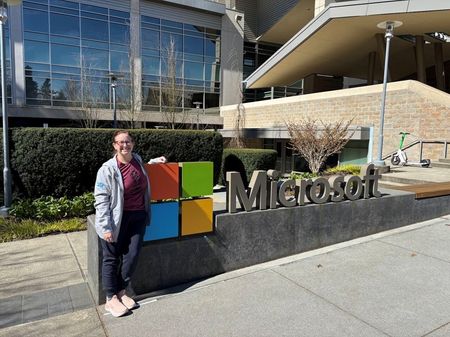
Where Curiosity Met Community Lindsay Shelton’s path to becoming a Microsoft MVP did not begin with a traditional tech resume. It began in the classroom, where she spent a decade teaching middle school English Language Arts before being selected to train as a technology and pre-engineering teacher. What carried her forward was not only technical curiosity, but also a deep belief in sharing knowledge, helping others grow, and building community. Today, that same mindset shapes her work as an Application Programmer, consultant, speaker, and community leader. “It was through sharing knowledge that I had learned with other teachers that even led me down this pathway and got me to where I am today.” From Teacher to Technologist Technology had always been part of Lindsay’s life. She grew up in a home where her father, a self-taught career switcher, explored HTML, CSS, graphic design, and web design long before career pivots became common conversation. Later, while teaching eighth-grade writing, Lindsay built a paperless classroom so she would not have to carry stacks of essays home. That practical problem-solving mindset led colleagues to seek her out, and soon she was sharing what she had learned while teaching STEM-focused courses. When burnout pushed her to imagine something different, she began looking for a new direction. An unexpected conversation at a community gathering opened the door to a role at a tech consultancy, growing from a lunch meeting into a part-time position and then a full-time opportunity in 2020. As Lindsay found her footing in tech, she also found her people - organizing events, speaking at user groups, and channeling the energy she once brought to teaching into community, collaboration, and helping other technologists solve real-world problems. “It’s not about the size of the crowd, it’s just about the impact really.” Building an Inclusive, Pay-It-Forward Community For Lindsay, the MVP Award represented more than recognition. It affirmed that she was contributing in meaningful ways and gave her more opportunities to advocate for the people she serves. She values how the MVP community helps members connect with product groups, share practical feedback, and influence better outcomes. Just as important, she believes community should be inclusive by design. Lindsay speaks openly about making space for people with different identities, backgrounds, and experiences - and about the responsibility allies have to listen, learn, and support without taking over. That perspective shapes the spaces she helps build and the way she encourages others entering tech from nontraditional paths. Her message is clear: community is strongest when people feel welcome, respected, and encouraged to contribute in their own way. “People want to help other people, especially MVPs. If you ask for help and you are given help, then remember to pay it forward.” Finding Her Voice on Stage As Lindsay became more involved in the community, she discovered that speaking was not just a professional skill - it was a way to connect. Her earliest contributions included helping organize SharePoint Saturday in Kansas City and speaking at local user groups, experiences that helped her explore what community leadership could look like outside the classroom. Over time, those smaller moments led to bigger opportunities, including her first international conference appearance at Scottish Summit. What stayed with her was not the size of the audience, but the relationships formed in those rooms. Whether she is presenting to a packed session or a handful of peers, Lindsay approaches every talk as a chance to make someone’s work a little easier, share a practical lesson, or help another person feel more confident showing up in tech spaces. “It was more like a jam session than a concert.” Advice for Career Changers and Future MVPs One of the most encouraging parts of Lindsay’s story is how directly it speaks to people who may not see a traditional path into tech. Her advice is practical: say yes to opportunities, even when they seem small or uncertain. Attend the local user group. Go to the networking event. Introduce yourself. Ask questions. Lindsay knows firsthand that career changes can feel intimidating, especially when confidence has not yet caught up with curiosity. But she also believes community can bridge that gap. For those interested in becoming an MVP one day, her example is a reminder that contributions take many forms—speaking, writing, organizing, mentoring, advocating, and simply helping others solve problems. The common thread is generosity: show up, share what you know, and when someone helps you, pay it forward. “Say yes to networking events, say yes to local user groups... you never know who you're going to meet.” Why This Matters Lindsay Shelton’s story matters because it challenges a common myth in tech: that there is only one right way to get here. Her journey shows that skills built in other careers - teaching, communication, adaptability, empathy, and problem-solving - can become powerful assets in technical spaces. It also highlights something equally important: community can be a catalyst. For aspiring MVPs, developers, IT Pros, and technologists, Lindsay’s example is a reminder that meaningful contributions do not begin with having all the answers. They begin with curiosity, generosity, and a willingness to participate. In a field that changes quickly, communities grow stronger when people with different experiences feel welcome to learn, share, and lead. Explore Lindsay’s Story - and Your Own Next Step If Lindsay Shelton’s story resonates with you, let it be a reminder that there is no single path into tech - or into community leadership. Whether you are early in your journey, changing careers, or looking for ways to contribute more deeply, there is value in showing up, learning in public, and helping others along the way. To learn more, visit Lindsay’s existing MVP Profile and LinkedIn, and explore the Microsoft MVP Program to see how community contributions can grow into meaningful impact. Want to Learn More About the MVP Program? To find an MVP and learn more about the MVP Program visit the MVP Communities website and follow our updates on LinkedIn or #mvpbuzz. Join us for a future live session through the Microsoft Reactor where we walk through what the MVP program is about, what we look for, and how nominations work. These sessions are designed to help you connect the dots between the work you’re already doing and the impact the MVP Program recognizes - with time for questions, examples, and real conversations.156Views2likes0CommentsEngineering Without Borders: MVPs and Experts at CognitionX Egypt
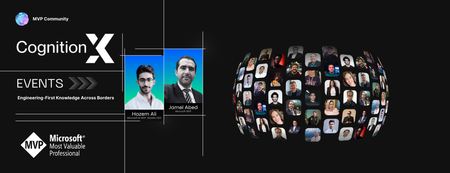
CognitionX is a premier seasonal events series happening worldwide and a global community for people who care about depth and accountability in engineering. It brings together AI, cybersecurity, cloud, and software engineering because production systems do not respect silos. Backed by Microsoft MVPs, researchers, and industry experts, CognitionX focuses on knowledge sharing across borders, drawing experts from 35+ countries for practical, technical editions with real-world impact. CognitionX Events are founded and organized by Hazem Ali, a Microsoft AI MVP, Principal AI & ML Engineer / Architect, and Founder & CEO of Skytells. His work sits at the intersection of deep learning and the disciplines that decide whether AI survives production: software architecture, cloud systems, and security. CognitionX Cairo is one edition in the CognitionX Events series. It was hosted at Microsoft Egypt on December 23, 2025. Public announcements around the Cairo edition highlighted a cross-border lineup of 15 featured speakers from 11 countries, including multiple Microsoft MVPs. The topics reflected what modern delivery actually demands: AI alongside cloud and cybersecurity, with sessions aimed at builders who operate real systems. CognitionX Cairo attendees showed up at 9:00 AM even though Microsoft’s office is far from downtown Cairo, which means they didn’t come for convenience. They came because the content was worth the trip and worth the time. That kind of turnout tells you the event hit a real need: serious, engineering-first knowledge that people don’t easily find elsewhere. The event also carried a clear founder signal: a deep commitment to engineering discipline and real production thinking. Hazem shared, “At the next CognitionX AI Conference, we’ll be announcing a new technology designed to let your system evolve and improve itself.” The point was not the headline. The point was the mindset behind it: observe production, connect decisions to evidence, and treat governance and safety as first-class engineering work. Cairo also brought in recognized contributors from the broader Microsoft and security communities. Jamel Abed, a Microsoft MVP and international speaker, participated and later described the room being full early and staying engaged throughout the day. The edition also included experts like Hammad Atta and Ahmed Hussien cybersecurity and AI security specialist known for work in AI governance and agentic AI security frameworks. Impact and Insights Across CognitionX Events, CognitionX Cairo stood out because it respected the audience. The official recap describes engineers challenging assumptions, sketching diagrams, and debating trade-offs instead of consuming motivational slides. That culture is the product: ideas get pressure-tested, patterns get examined, and people leave with clearer mental models they can apply at work. The impact also traveled beyond the technical circle. The CognitionX recap notes notable TV coverage, which helped carry engineering conversations to a wider audience and reinforced a simple message: meaningful AI progress requires depth, discipline, and informed leadership. When decision makers see real discussions about scaling, security, governance, and failure modes, it changes what gets funded and how systems are evaluated. Hazem Ali delivering a deep enterprise AI session at CognitionX Cairo, walking the audience through production-grade architecture decisions across AI, cloud, and security. CognitionX is not a one-off. It is a series that already spans multiple hubs, including editions hosted at Microsoft locations such as Dubai (July 28, 2025) and Cairo (December 23, 2025). For anyone who wants serious learning, the next step is straightforward. Follow CognitionX Events, join the CognitionX community, and attend an edition when it reaches your region. Come with real questions from real systems. Expect clear explanations, not simplifications. Expect AI discussed in context: cloud constraints, software engineering trade-offs, and cybersecurity realities. Join our Community at : https://www.cognitionx.org/en/community That is what CognitionX is optimizing for, and that focus is why the series keeps earning trust from engineers and attention from leaders. Author Bio / Co-Authors Hazem Aliis a Microsoft AI MVP, Principal AI & ML Engineer / Architect, and Founder & CEO of Skytells, and the organizer behind CognitionX Events. Jamel ABED is a Microsoft MVP and Product Evangelist with a passion for developer advocacy. He brings extensive experience in building and nurturing technical communities, helping developers worldwide leverage cutting-edge technologies. Resources https://www.linkedin.com/feed/update/urn:li:activity:7410622433864589312/687Views1like0CommentsThinking of Joining the MVP Program? Hear What Makes It Special!
We’re thrilled to share our brand-new video spotlighting the heart of the MVP Program - our MVPs themselves! In this inspiring video, MVPs from around the world open up about what being part of this global community means to them, and why they love it. Watch the MVP Program video here If you’ve ever wondered what it’s like to be an MVP - or if you're considering applying - this is the perfect place to start! But that’s just the beginning. We’ve gathered a set of helpful resources to guide you through the program and how to get involved: New to the MVP Program? Start Here: MVP Communities Website – Find everything you need to know about the MVP Program, including how to apply, who the MVPs are near you, and the impact they’re making in their communities. MVP FAQs - Our updated FAQ page answers key questions about the application process, eligibility, expectations, and more. Live Event Replay - Don’t miss the replay of our recent live session, where MVPs Anastasia Salari and Zaid Zaim share their personal journeys, practical advice, and tips for those thinking about applying. Ready to Take the Next Step? If you’ve been actively contributing to the community over the past 12 months, this might be your moment. Whether through sharing knowledge, helping others, organizing events, or driving conversations - you’re exactly who the MVP Program is looking for. Dive into the resources, get inspired by the stories, and if you meet the criteria, consider applying or connecting with someone who can nominate you. Your journey to becoming an MVP could start today!718Views5likes1Comment