azure sql db
84 TopicsLessons Learned #546: Maintaining a Local Azure Resource Inventory
I worked on a service request that our customer has an application works repeatedly with the same Azure resources. I guess that it may be useful to maintain our own persistent inventory instead of retrieving and validating every resource individually during each execution. In this example, a PowerShell script maintains an inventory of Azure SQL logical servers in a local JSON file. The idea is: Load the local JSON inventory -> Query Azure Resource Graph -> Compare both inventories -> Validate only detected changes -> Update the JSON file. Azure Resource Graph provides the current list of Microsoft.Sql/servers resources. The result is compared with the inventory stored by the application. If a server exists in both inventories, it is marked as: Observed: No additional request is required. NewValidatedByPointGet:If a new server is detected, it is validated individually with Get-AzSqlServer before being added If a previously known server is missing from the current result, the script also validates it individually. The possible results are: RecoveredByPointGet: the server still exists and remains in the inventory. Deleted: the individual request returns ResourceNotFound, so the server is removed. UnknownRetainedFromCache: the validation is inconclusive, so the previous inventory entry is preserved. The JSON file therefore represents the application’s active resource inventory and remains available between executions. I think this approach reduces repeated API requests because individual validation is performed only when a resource is new, missing, or has changed. I would like to share the PowerShell Script. Set-StrictMode -Version Latest $ErrorActionPreference = "Stop" # ------------------------------------------------------------ # Configuration # ------------------------------------------------------------ $tenantId = "<tenant-id>" $subscriptionId = "<subscription-id>" $resourceGroup = "<resource-group>" $cacheFile = ".\sql-server-inventory.json" # Required modules: # Install-Module Az.ResourceGraph -Scope CurrentUser # Install-Module Az.Sql -Scope CurrentUser # Connect-AzAccount -Tenant $tenantId Set-AzContext ` -Tenant $tenantId ` -Subscription $subscriptionId ` -ErrorAction Stop | Out-Null # ------------------------------------------------------------ # Helper functions # ------------------------------------------------------------ function ConvertTo-NormalizedResourceId { param( [Parameter(Mandatory)] [string]$ResourceId ) return $ResourceId.Trim().TrimEnd("/").ToLowerInvariant() } function Test-IsResourceNotFound { param( [Parameter(Mandatory)] [System.Management.Automation.ErrorRecord]$ErrorRecord ) $errorText = @( $ErrorRecord.Exception.Message $ErrorRecord.ErrorDetails.Message $ErrorRecord.FullyQualifiedErrorId $ErrorRecord.ToString() ) -join " " return ( $errorText -match "(?i)(\b404\b|ResourceNotFound|ServerNotInSubscriptionResourceGroup)" ) } function New-InventoryItem { param( [Parameter(Mandatory)] [string]$ResourceId, [Parameter(Mandatory)] [string]$Name, [string]$Location, [Parameter(Mandatory)] [string]$ValidationStatus ) return [pscustomobject]@{ id = $ResourceId name = $Name location = $Location validationStatus = $ValidationStatus } } # ------------------------------------------------------------ # 1. Load the persistent inventory # ------------------------------------------------------------ if (Test-Path -LiteralPath $cacheFile) { $jsonContent = Get-Content ` -LiteralPath $cacheFile ` -Raw ` -ErrorAction Stop if ([string]::IsNullOrWhiteSpace($jsonContent)) { $cachedServers = @() } else { $cachedServers = @( $jsonContent | ConvertFrom-Json ` -ErrorAction Stop ) } } else { $cachedServers = @() } $cachedServersById = @{} foreach ($cachedServer in $cachedServers) { $resourceId = [string]$cachedServer.id if ([string]::IsNullOrWhiteSpace($resourceId)) { continue } $normalizedId = ConvertTo-NormalizedResourceId ` -ResourceId $resourceId $cachedServersById[$normalizedId] = $cachedServer } Write-Host "Stored inventory: $($cachedServersById.Count) server(s)" # ------------------------------------------------------------ # 2. Discover the current resources # ------------------------------------------------------------ $query = @" Resources | where subscriptionId =~ '$subscriptionId' | where resourceGroup =~ '$resourceGroup' | where type =~ 'microsoft.sql/servers' | project id = tostring(id), name = tostring(name), location = tostring(location) "@ try { $argResponse = Search-AzGraph ` -Query $query ` -Subscription $subscriptionId ` -First 1000 ` -ErrorAction Stop } catch { throw ( "Azure Resource Graph query failed. " + "The existing inventory has not been modified. " + "Error: $($_.Exception.Message)" ) } if ( $null -ne $argResponse -and $argResponse.PSObject.Properties.Name -contains "Data" ) { $currentServers = @($argResponse.Data) } else { $currentServers = @($argResponse) } $currentServersById = @{} foreach ($currentServer in $currentServers) { $resourceId = [string]$currentServer.id $serverName = [string]$currentServer.name if ( [string]::IsNullOrWhiteSpace($resourceId) -or [string]::IsNullOrWhiteSpace($serverName) ) { continue } $normalizedId = ConvertTo-NormalizedResourceId ` -ResourceId $resourceId $currentServersById[$normalizedId] = $currentServer } Write-Host "Current observation: $($currentServersById.Count) server(s)" # ------------------------------------------------------------ # 3. Build the synchronized active inventory # ------------------------------------------------------------ $activeInventoryById = @() $activeInventoryIndex = @{} $deletedServers = @() foreach ($normalizedId in $currentServersById.Keys) { $currentServer = $currentServersById[$normalizedId] $resourceId = [string]$currentServer.id $serverName = [string]$currentServer.name $location = [string]$currentServer.location if ($cachedServersById.ContainsKey($normalizedId)) { # The resource is present in both inventories. $item = New-InventoryItem ` -ResourceId $resourceId ` -Name $serverName ` -Location $location ` -ValidationStatus "Observed" $activeInventoryIndex[$normalizedId] = $item continue } # The resource is new. Validate it individually. Write-Host "Validating new server '$serverName'..." try { $validatedServer = Get-AzSqlServer ` -ResourceGroupName $resourceGroup ` -ServerName $serverName ` -ErrorAction Stop $item = New-InventoryItem ` -ResourceId $resourceId ` -Name ([string]$validatedServer.ServerName) ` -Location ([string]$validatedServer.Location) ` -ValidationStatus "NewValidatedByPointGet" $activeInventoryIndex[$normalizedId] = $item } catch { Write-Warning ( "New server '$serverName' could not be validated " + "and was not added to the inventory. " + "Error: $($_.Exception.Message)" ) } } # ------------------------------------------------------------ # 4. Validate previously known resources missing from discovery # ------------------------------------------------------------ foreach ($normalizedId in $cachedServersById.Keys) { if ($currentServersById.ContainsKey($normalizedId)) { continue } $cachedServer = $cachedServersById[$normalizedId] $resourceId = [string]$cachedServer.id $serverName = [string]$cachedServer.name $location = [string]$cachedServer.location Write-Host ( "Server '$serverName' is missing from the current " + "observation. Running individual validation..." ) try { $validatedServer = Get-AzSqlServer ` -ResourceGroupName $resourceGroup ` -ServerName $serverName ` -ErrorAction Stop $item = New-InventoryItem ` -ResourceId $resourceId ` -Name ([string]$validatedServer.ServerName) ` -Location ([string]$validatedServer.Location) ` -ValidationStatus "RecoveredByPointGet" $activeInventoryIndex[$normalizedId] = $item Write-Warning ( "Server '$serverName' was not returned by discovery, " + "but individual validation confirmed that it still exists." ) } catch { if (Test-IsResourceNotFound -ErrorRecord $_) { $deletedServers += [pscustomobject]@{ id = $resourceId name = $serverName location = $location validationStatus = "Deleted" } Write-Warning ( "Deleted server detected: '$serverName'. " + "It will be removed from the active inventory." ) } else { # The result is inconclusive. Preserve the previous entry. $item = New-InventoryItem ` -ResourceId $resourceId ` -Name $serverName ` -Location $location ` -ValidationStatus "UnknownRetainedFromCache" $activeInventoryIndex[$normalizedId] = $item Write-Warning ( "The status of server '$serverName' could not be " + "confirmed. The previous inventory entry was retained. " + "Error: $($_.Exception.Message)" ) } } } # ------------------------------------------------------------ # 5. Save the updated active inventory # ------------------------------------------------------------ $activeInventory = @( $activeInventoryIndex.Values | Sort-Object name ) $jsonOutput = ConvertTo-Json ` -InputObject $activeInventory ` -Depth 10 $temporaryFile = "$cacheFile.tmp" Set-Content ` -LiteralPath $temporaryFile ` -Value $jsonOutput ` -Encoding utf8 ` -Force Move-Item ` -LiteralPath $temporaryFile ` -Destination $cacheFile ` -Force # ------------------------------------------------------------ # 6. Report the synchronization result # ------------------------------------------------------------ Write-Host "" Write-Host "Active inventory: $($activeInventory.Count) server(s)" $activeInventory | Format-Table ` name, location, validationStatus ` -AutoSize if ($deletedServers.Count -gt 0) { Write-Host "" Write-Warning "Confirmed deleted servers:" $deletedServers | Format-Table ` name, location, validationStatus ` -AutoSize } Disclaimer This PowerShell script is provided as a simplified proof of concept to illustrate a persistent resource inventory pattern. It should be reviewed, tested, and adapted before being used in a production environment. Authentication, permissions, error handling, retry policies, concurrency, logging, inventory storage, and operational requirements may differ between environments. The local JSON file is suitable for demonstration purposes and small automation scenarios.Lessons Learned #544: How to Detect INT Identity Exhaustion Before Inserts Fail.
Recently, I worked on a support case involving an Azure SQL Database table where the customer had reached the maximum value supported by the INT data type. The table used an INT IDENTITY(1,1) column as its primary key. Over time, the generated identity value approached the maximum value supported by INT. Once the available range was exhausted, the application was no longer able to insert new rows. At that point, the column needed to be changed from INT to BIGINT. However, performing this type of migration on a very large table can be a complex and time-consuming operation. The situation is that an INT column uses 4 bytes and supports values from: -2,147,483,648 to: 2,147,483,647. To prevent similar problems in the future, I suggested using the following query to review the current status of all INT IDENTITY columns in the database. The query uses the sys.identity_columns catalog view: SELECT s.name AS SchemaName, t.name AS TableName, c.name AS ColumnName, CONVERT(bigint, c.last_value) AS CurrentIdentityValue, CONVERT(bigint, 2147483647) AS MaximumIntValue, CONVERT(bigint, 2147483647) - ISNULL(CONVERT(bigint, c.last_value), 0) AS RemainingValues, CAST( ISNULL(CONVERT(decimal(20,2), c.last_value), 0) / 2147483647 * 100 AS decimal(6,2) ) AS PercentUsed FROM sys.identity_columns AS c INNER JOIN sys.tables AS t ON c.object_id = t.object_id INNER JOIN sys.schemas AS s ON t.schema_id = s.schema_id WHERE TYPE_NAME(c.system_type_id) = 'int' ORDER BY PercentUsed DESC; I prefer using this query instead of relying on: SELECT COUNT(*) FROM dbo.TableName. The number of rows in a table does not necessarily match the current identity value. Rows might have been deleted, transactions might have been rolled back, and identity values might contain gaps. For this reason, the current identity value is a better indicator of the remaining capacity. Adding this query as a regular preventive check can help identify identity columns that are approaching their limits before they cause application failures. I would like to share with you an example creates a table with an identity seed close to the maximum value supported by INT: DROP TABLE IF EXISTS dbo.IdentityCapacityDemo2; CREATE TABLE dbo.IdentityCapacityDemo2 ( Id INT IDENTITY(2147483600,1) NOT NULL, CreatedDate datetime2(0) NOT NULL CONSTRAINT DF_IdentityCapacityDemo2_CreatedDate DEFAULT SYSUTCDATETIME(), CONSTRAINT PK_IdentityCapacityDemo2 PRIMARY KEY CLUSTERED (Id) ) Insert 20 rows using this command: insert into IdentityCapacityDemo2(CreatedDate) values(SYSUTCDATETIME()) Example of returns: I think runnning this preventive check can help detect identity exhaustion before it affects the application.Lessons Learned #543: Evaluating MultiSubnetFailover with Azure SQL Database
Last week, I worked on a support case in which the use of the MultiSubnetFailover connection-string feature was being considered for an application connecting to Azure SQL Database. The expectation was that enabling the following option could improve connection recovery during a database failover changing MultiSubnetFailover to True. This option is commonly associated with SQL Server high availability, and Azure SQL Database is also designed to remain available by moving databases between replicas when required. However, after reviewing the Azure SQL Database connectivity architecture and comparing the behavior with the property enabled and disabled, I did not observe a clear improvement. The property could be added to the connection string without generating an error, and the application was able to connect successfully with both configurations. What MultiSubnetFailover is designed for MultiSubnetFailover was introduced primarily for SQL Server high-availability configurations such as: Always On Availability Group listeners. SQL Server Failover Cluster Instance virtual network names. In a multi-subnet Availability Group, a listener name may resolve to multiple IP addresses located in different network subnets. Without MultiSubnetFailover=True, the application may try those addresses sequentially. If the first address is not currently active, the connection can be delayed while the attempt waits for a timeout. When the option is enabled, supported SQL client drivers can attempt connections to the listener addresses in parallel and use the first address that responds successfully. This can reduce connection time after an Availability Group failover because the SQL client is directly involved in selecting the reachable listener address. Why Azure SQL Database is different Azure SQL Database uses a different connectivity architecture. The application connects to a logical server endpoint: <server-name>.database.windows.net. The Azure SQL connectivity layer receives the connection and routes it to the infrastructure currently hosting the database. Depending on the configured connection policy, the Azure SQL gateway either proxies the connection or redirects the application to the appropriate database node. The important difference is that the SQL client does not receive a list containing the IP addresses of the Azure SQL Database primary and secondary replicas. The decision and the associated routing are managed by the Azure SQL Database platform. Although Azure SQL Database internally uses multiple replicas for high availability, this is not the same connectivity model as a SQL Server Availability Group listener that publishes multiple addresses through DNS. What about Failover Groups? Azure SQL Database Failover Groups provide a stable listener endpoint such as: <failover-group-name>.database.windows.net. Following a regional failover, the listener is updated so that it points to the logical server hosting the new primary databases. This process depends partly on DNS. The listener name remains the same, but its DNS target changes after the failover. This is still different from a SQL Server multi-subnet Availability Group listener. The Failover Group listener does not expose the addresses of the Azure SQL Database replicas to the SQL client. Therefore, MultiSubnetFailover=True cannot directly select the new primary replica. In this scenario, application recovery continues to depend on the service transition, DNS resolution, and retry behavior. The importance of retry logic One of the main lessons from this case was that retry logic is more relevant to Azure SQL Database resiliency than enabling MultiSubnetFailover. An application connecting to Azure SQL Database must expect occasional transient connectivity errors. These can occur during maintenance, scaling, failover, network interruptions, or temporary service conditions. An appropriate retry strategy should normally include: A limited number of retry attempts. A short delay before the first retry. Increasing delays between subsequent attempts. A maximum retry interval. Creation of a fresh SQL connection. For transactions, retry logic requires additional care. The application must determine whether the transaction was committed, rolled back, or left in an unknown state before repeating the complete operation.Lessons Learned #542: Reviewing Historical Azure SQL Database Storage Growth
This week I worked on a service request where our customer needed to understand how an Azure SQL Database had grown over time. This information can be useful for capacity planning, cost analysis, and performance reviews. There are several possible approaches, depending on whether we need to review recent historical data that is still available in Azure Monitor, or whether we need to start collecting long-term historical data from now on. In this lesson learned, I would like to summarize some of the options available. 1. Reviewing recent historical data using Azure Monitor metrics The first point to clarify is how Azure Monitor metrics retention works. Most Azure platform metrics are retained for up to 93 days. However, a single Azure Monitor Metrics chart can query no more than 30 days of data at a time. This means that, if the data is still within the Azure Monitor retention window, we might need to review the metric in 30-day intervals. For Azure SQL Database storage usage, the metric commonly used is Data space used 2. Exporting metrics to Log Analytics for long-term analysis If the requirement is to perform long-term analysis, I would like to recommended option is to enable Diagnostic Settings on the Azure SQL Database and send the metrics to a Log Analytics workspace. Azure SQL Database diagnostic telemetry can be exported to different destinations, including: Log Analytics workspace Storage Account Event Hubs Using Log Analytics provides a very flexible way to query, aggregate, and visualize the data by using KQL. Once the metrics are available in Log Analytics, we can calculate the monthly database growth. For example: AzureMetrics | where ResourceProvider =~ "MICROSOFT.SQL" | where ResourceId == "/SUBSCRIPTIONS/your subscription/RESOURCEGROUPS/yourresourcegroup/PROVIDERS/MICROSOFT.SQL/SERVERS/yourserver/DATABASES/yourdatabase" | where MetricName == "storage" | summarize arg_max(TimeGenerated, Average) by Month = startofmonth(TimeGenerated) | project Month, DataSpaceUsedGB = round(Average / 1024 / 1024 / 1024, 2) | order by Month asc This query takes the last available value for each month and converts the metric from bytes to GB. Depending on the analysis requirements, the query can be customized. 3. Creating a custom database space usage history process If we need more control, or if we want to collect more granular database-level information, another option is to create a custom process that periodically captures the current database space usage into a table. This approach can be useful when we want to keep the information inside the database itself and avoid depending on external telemetry storage for this specific requirement. For example, the following table can be used to store daily or weekly snapshots: CREATE TABLE dbo.DatabaseSpaceUsageHistory ( SnapshotTimeUtc datetime2(3) NOT NULL DEFAULT SYSUTCDATETIME(), DatabaseName sysname NOT NULL, DataAllocatedMB decimal(19,2) NULL, DataUsedMB decimal(19,2) NULL, DataUnusedMB decimal(19,2) NULL, LogAllocatedMB decimal(19,2) NULL ); --Example collection query: INSERT INTO dbo.DatabaseSpaceUsageHistory ( DatabaseName, DataAllocatedMB, DataUsedMB, DataUnusedMB, LogAllocatedMB ) SELECT DB_NAME() AS DatabaseName, SUM(CASE WHEN type_desc = 'ROWS' THEN size END) * 8.0 / 1024 AS DataAllocatedMB, SUM(CASE WHEN type_desc = 'ROWS' THEN FILEPROPERTY(name, 'SpaceUsed') END) * 8.0 / 1024 AS DataUsedMB, ( SUM(CASE WHEN type_desc = 'ROWS' THEN size END) - SUM(CASE WHEN type_desc = 'ROWS' THEN FILEPROPERTY(name, 'SpaceUsed') END) ) * 8.0 / 1024 AS DataUnusedMB, SUM(CASE WHEN type_desc = 'LOG' THEN size END) * 8.0 / 1024 AS LogAllocatedMB FROM sys.database_files; This process can be executed daily, weekly, or monthly using the automation method that best fits the environment. This approach provides more control over the data collected, the retention period, and the frequency of collection.Lessons Learned #541:Automatic Plan Correction vs External Tables: A Practical Lesson from the Field
Automatic Plan Correction is one of the most useful capabilities in Azure SQL Database when dealing with plan regressions. It uses Query Store to identify when a query starts using a worse execution plan and, when appropriate, forces the last known good plan. However, during a recent troubleshooting scenario, I found that not all queries have the same execution characteristics. In particular, queries that reference external tables may behave differently from fully local queries because part of their execution depends on remote data access. When Query Store is configured to capture all queries, we can use it to identify queries that reference external tables and review whether those query IDs should participate in FORCE_LAST_GOOD_PLAN. From a practical perspective, external-table queries may not always be the best candidates for Automatic Plan Correction, especially when the expected benefit of automatic plan forcing is not clear. For that reason, the goal of this article is simple: identify queries that reference external tables and, when appropriate, exclude selected query IDs from Automatic Plan Correction. If we review the execution plan for the following query: DECLARE @Region nvarchar(50) = N'EMEA' SELECT CustomerId, CustomerName, Region FROM dbo.ExternalCustomers WHERE Region = @Region; We can see that the plan includes a Remote Query operator. This means that the query is not only accessing local data; part of the execution depends on remote data access through the external table. For this type of query, Automatic Plan Correction may not provide the same clear benefit as it does for fully local queries. The performance may depend not only on the local execution plan, but also on the remote database, the external data source, network latency, and the amount of data returned from the remote side. For that reason, queries referencing external tables are good candidates for review before allowing them to participate in FORCE_LAST_GOOD_PLAN. In this scenario, the first step was to identify the Query Store query_id associated with the query referencing the external table. Since the query text was available in Query Store, we searched for the external table name in sys.query_store_query_text. SELECT q.query_id, p.plan_id, p.is_forced_plan, p.plan_forcing_type_desc, p.force_failure_count, p.last_force_failure_reason_desc, p.last_execution_time, qt.query_sql_text FROM sys.query_store_query_text AS qt INNER JOIN sys.query_store_query AS q ON qt.query_text_id = q.query_text_id INNER JOIN sys.query_store_plan AS p ON q.query_id = p.query_id WHERE qt.query_sql_text LIKE N'%ExternalCustomers%' ORDER BY p.last_execution_time DESC; Once the query_id was identified, the next step was to exclude that specific query from Automatic Plan Correction by setting FORCE_LAST_GOOD_PLAN to OFF for that query_id. EXECUTE sys.sp_configure_automatic_tuning @option = 'FORCE_LAST_GOOD_PLAN', @type = 'QUERY', @type_value = N'<query_id>', @option_value = 'OFF'; For example: EXECUTE sys.sp_configure_automatic_tuning @option = 'FORCE_LAST_GOOD_PLAN', @type = 'QUERY', @type_value = N'1574', @option_value = 'OFF'; This does not disable Automatic Plan Correction for the entire database. It only tells Automatic Plan Correction to ignore this specific Query Store query ID for FORCE_LAST_GOOD_PLAN. With this approach, Automatic Plan Correction can remain enabled for the rest of the database workload, while selected queries that depend on external or remote data access can be reviewed and excluded individually when automatic plan forcing is not expected to provide a clear benefit.Azure SQL DB Fabric Mirroring with Private Endpoint
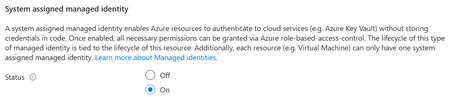
Introduction Overview steps for configuration of Mirroring between Azure SQL Database to Fabric Mirrored Database over Private Endpoint and Public Connectivity Disabled on source. Prerequisites #1 - The minimum requirement for the source Azure SQL Database tier is - it is Standard Tier with DTUs equal or greater than 100. Free, Basic Tier, or <100 DTUs are NOT supported. All vCore model tiers supported. #2 - System Assigned Managed Identity (SAMI) must be enabled on the Azure SQL logical server. #3 - Microsoft.PowerPlatform should be registered as a source provider at the subscription level. If this step is not completed, you'll face error in the next steps, while creating the 'Virtual Network Data Gateway', example below. #4 - The Virtual Network Subnet of the configured Private Endpoint should have the following selected. Select Microsoft.PowerPlatform/netaccesslinks for the Subnet Delegation tab. This is a required step, otherwise the subnet is grayed out to select while configuration of the Virtual Network Data Gateway at Fabric level. High Level Configuration Steps #1 - Go to Fabric Portal > Settings Click on Settings button on top right > Click on Manage Connections and Gateways Go to 'Virtual Network Data Gateway' tab > Click New In the new page, Select your Capacity, Subscription, Resource Group, VNET and Subnet of the source Azure SQL DB and create it. #2 - Go back to your workspace, and click new item > Search 'Mirrored Azure SQL Database' #3 - Here, in Data Gateway section, chose your new created gateway which we created in previous step, and fill the required source Azure SQL Database details and click connect. #4 - Select the tables to be mirrored in the next steps and you will be able to successfully mirror from Azure SQL Database to Mirrored Azure SQL Database without Public Connectivity and using Private Endpoint.196Views1like0CommentsLessons Learned #540:Bulk Insert Throughput in Azure SQL Hyperscale with Partitioned Heap Tables
In this lesson learned, I would like to share an interesting scenario working on a service request where our customer was running a high-volume data load process in Azure SQL Database Hyperscale. The workload was based on a common pattern: Recreate a staging table. Load a large number of rows using bulk insert. The bulk insert showed unstable execution times and became the main area to investigate. The process was loading a very large number of rows into an Azure SQL Database Hyperscale database. The process used a staging table that was initially loaded as a heap. The main concern was the inconsistent execution time during the load process. Why Manually Adding Data Files Was Not the Right Direction In Azure SQL Database Hyperscale, the storage architecture is different from a traditional SQL Server deployment. The data layout and storage management are handled internally by the service. Because of this architecture, manually creating or pre-allocating multiple data files is not the same tuning option that we may consider in SQL Server on-premises or SQL Server running on Azure Virtual Machines. For this reason, the troubleshooting focus moved from manual file layout configuration to the actual workload pattern, waits, concurrency, batch size, and staging table design. What We Observed During the bulk insert phase, waits such as PAGELATCH_EX were observed. Since the staging table was loaded as a heap and the clustered primary key was created only after the bulk insert completed, OPTIMIZE_FOR_SEQUENTIAL_KEY was not directly applicable to the bulk insert phase. This changed the direction of the investigation. Instead of focusing on last-page insert contention on an existing clustered index, the analysis moved toward heap insert behavior, allocation contention, concurrency, batch size, and whether a different staging table design could help. First Recommendation: Start with Low-Impact Changes Before changing the table design, the first recommendation was to test the least intrusive changes: Reduce the number of concurrent bulk insert sessions. Increase the batch size, for example from 10,000 rows to 50,000 or 100,000 rows. Test TABLOCK on the dedicated heap staging table. The goal was to avoid assuming that more concurrency would always reduce the total execution time. In some high-volume load scenarios, excessive concurrency may increase contention and make the process less stable. The Interesting Design Option: Partitioned Heap Staging Table One of the most interesting design options was to evaluate a partitioned heap staging table. The idea is simple: instead of loading all rows into a non-partitioned heap staging table, the staging table can be created on the same partition scheme used by the target table, using the same partitioning column. This does not mean that a partitioned heap will always be faster. However, it can be a useful design option when: The bulk load phase is affected by allocation or latch contention. Concurrent load processes can naturally distribute rows across different partition ranges. The staging table is used only as an intermediate structure.Lessons Learned The main lessons from this scenario were: In Azure SQL Database Hyperscale, manually managing multiple data files is not the right tuning direction. PAGELATCH_EX during heap loading may point to concurrency or allocation-related contention. Reducing concurrency can sometimes improve total throughput. Larger batch sizes may provide better results than many small batches. TABLOCK on a dedicated heap staging table is a low-impact test worth evaluating. A partitioned heap staging table can be a valid second-phase design option when the load can be distributed across partition ranges. The best approach is to test small, measurable changes before introducing architectural redesigns. Final Thoughts A partitioned heap staging table can be a powerful option, but only when it is tested carefully and when the workload pattern can benefit from partition distribution.
Why do I see many VDI_CLIENT_WORKER sessions in Azure SQL Database — and do they impact performance?
Sometimes you’ll notice many sessions showing the command VDI_CLIENT_WORKER in Azure SQL Database—often around scaling, replica/copy workflows, or internal seeding operations. These sessions can look alarming, especially during a performance investigation, but they are typically internal background workers. This post explains how to recognize them, what’s safe to do (and what isn’t), and how to focus on the real bottlenecks like blocking/deadlocks or log rate throttling when you’re troubleshooting slowness. Why you might see VDI_CLIENT_WORKER sessions in Azure SQL Database The symptom You run a session query (for example, using sys.dm_exec_requests or a monitoring tool) and observe: Many sessions with command text VDI_CLIENT_WORKER They may appear to be “stuck,” persist longer than expected, and can’t be killed Teams may worry these sessions are “the cause” of slowness Why it shows up in Azure SQL In Azure SQL, VDI_CLIENT_* wait types and VDI_CLIENT_WORKER sessions are commonly associated with platform operations that involve copying/seeding—for example: Scaling operations (service objective changes) Geo-replication / copy workflows Replica seeding-like behaviors Important: The presence of these sessions does not automatically mean they are the bottleneck. How to validate whether VDI_CLIENT_WORKER is benign? 1) Correlate to recent platform operations. Ask: did you recently perform (or did the platform perform) one of these? Scale up/down. Creation of replicas / geo-secondary operations. Any database copy-like workflow. If yes, it’s a strong indicator you’re seeing background workers tied to that lifecycle event. 2) Check whether they consume resources. A practical approach: Look for CPU/IO/log pressure at the database level. Compare the timing of slowness reports with spikes in waits/locks/log write percentage. If these sessions show minimal resource consumption and are just “present,” treat them as background noise while you investigate real contention. 3) Don’t try to kill them! These sessions are typically system/internal. Attempts to kill them may fail or be ineffective—and generally aren’t recommended. 4) If you need them to disappear. In many cases, these internal workers naturally age out. If they remain visible and you need a cleanup path, operational actions like failover/restart may clear stale workers (use change control / maintenance windows as appropriate for your environment). (This is a practical operational observation; always weigh downtime/impact.) When performance is actually slow: focus on what usually hurts. In many real-world incidents, the main causes of slowness are: Blocking chains / deadlocks. Transaction log rate throttling (LOG_RATE_GOVERNOR) during heavy DML. Hot queries running concurrently and contending on the same objects. Key takeaways Seeing many VDI_CLIENT_WORKER sessions is often expected around platform copy/seeding workflows and doesn’t automatically indicate a bottleneck. Don’t attempt to kill system/internal workers; instead, validate resource impact and focus on actual bottlenecks. For real slowness, prioritize diagnosing blocking/deadlocks and LOG_RATE_GOVERNOR-driven DML throttling.118Views0likes0CommentsAzure SQL BACPAC Export Failure with CDC & db_cdcreader (SQL71501)
Overview Exporting an Azure SQL Database to a BACPAC using SqlPackage / SSMS may fail when Change Data Capture (CDC) is enabled and database users (or Entra groups) are assigned to CDC-related roles such as db_cdcreader. A common error observed: Error SQL71501: Error validating element: Role Membership: has an unresolved reference to Role [db_cdcreader]. This issue can be confusing because: The database is healthy CDC is functioning correctly The error occurs only during export Scenario From a real customer case: Azure SQL Database with CDC enabled An Entra (AAD) group added to db_cdcreader Export attempted via SqlPackage (v170+) Export fails during schema validation phase Root Cause Explained 1. SqlPackage performs strict schema modeling During export, SqlPackage (via DacFx) builds a logical schema model of the database. Every object must be fully resolvable Roles and role memberships are validated Any missing/unsupported object → export fails This is why the error appears as: SQL71501 – unresolved reference 2. CDC introduces system-managed objects When CDC is enabled, SQL automatically creates: cdc schema System tables Special roles: db_cdcreader cdc_admin These objects are not treated as regular user-defined objects: They are system-managed Some are implicitly created Some are not fully modeled/exported by DacFx 3. Role membership is the breaking point The failure does not happen because the role exists It happens because: The role membership exists (e.g., Entra group → db_cdcreader) But the role itself is not included or resolved in the export model Result: Membership → cannot resolve target role → validation failure (SQL71501) This behavior aligns with documented patterns where CDC roles are excluded or not recognized during BACPAC export. Reproducing the Issue You are likely impacted if: CDC is enabled Users or Entra groups are assigned to: db_cdcreader cdc_admin Export is attempted via: SqlPackage SSMS “Export Data-tier Application” Workarounds Option 1: Temporarily remove role membership Remove the CDC role membership before export: ALTER ROLE db_cdcreader DROP MEMBER [your_user_or_group]; Run export, then reassign: ALTER ROLE db_cdcreader ADD MEMBER [your_user_or_group]; This is the simplest and most reliable workaround Confirmed in Microsoft Q&A guidance for CDC roles Option 2: Export from a cleaned database copy If you cannot modify production (e.g., tooling restrictions): Create a database copy Remove CDC-related role memberships Export from the copy Recommended when: Using automation tools (e.g., Commvault) Production changes are restricted Option 3: Cleanup unsupported references General best practice: Remove unsupported / system-bound references before export Especially: CDC role memberships Legacy system objects Option 4: Use SqlPackage with ExtractAllTableData=True Another practical workaround is to leverage the SqlPackage option ExtractAllTableData=True, which allows you to extract all data from all user tables. When set to True: Data is extracted from all user tables You cannot specify individual tables When set to False (default): You can selectively extract data from specific tables only This reduces exposure to unsupported or problematic objects during validation Example SqlPackage /Action:Extract /SourceServerName:<server> /SourceDatabaseName:<database> /TargetFile:<output.bacpac> /p:ExtractAllTableData=True When to use this option When the export fails due to CDC roles or related schema validation issues (SQL71501) As a targeted workaround when full export is blocked Important Considerations This is not a runtime database issue It is a schema validation limitation in DacFx / SqlPackage CDC itself is supported, but: Certain security objects are not fully exportable Key Takeaways SQL71501 during export is often a model validation issue, not a data issue CDC roles (db_cdcreader, cdc_admin) can break export due to partial modeling The failure is triggered by role membership, not CDC itself Workarounds involve: Removing memberships Exporting from a cleaned copy140Views0likes0CommentsMonitoring Azure SQL Data Sync Errors Using PowerShell
Azure SQL Data Sync is a powerful service that enables data synchronization between multiple databases across Azure SQL Database and on‑premises SQL Server environments. It supports hybrid architectures and distributed applications by allowing selected data to synchronize bi‑directionally between hub and member databases using a hub‑and‑spoke topology. However, one of the most common operational challenges faced by support engineers and customers using Azure SQL Data Sync is: ❗ Lack of proactive monitoring for sync failures or errors By default, Azure SQL Data Sync does not provide native alerting mechanisms that notify administrators when synchronization operations fail or encounter issues. This can result in silent data drift or synchronization delays that may go unnoticed in production environments. In this blog, we’ll walk through how to monitor Azure SQL Data Sync activity and detect synchronization errors using Azure PowerShell commands. Why Monitoring Azure SQL Data Sync Matters Azure SQL Data Sync works by synchronizing data between: Hub Database (must be Azure SQL Database) Member Databases (Azure SQL Database or SQL Server) Sync Metadata Database (stores sync configuration and logs) All synchronization activity—including errors, failures, and successes—is logged internally within the Sync Metadata Database and exposed through Azure SQL Sync Group logs. Monitoring these logs enables: Detection of sync failures Identification of schema mismatches Validation of sync completion Troubleshooting of sync group issues Verification of last successful sync activity Prerequisites Before monitoring Azure SQL Data Sync activity, ensure the following: Azure PowerShell module (Az.Sql) is installed You have access to the Azure SQL Data Sync resources Proper authentication and subscription context are configured Install and import the required module if not already available: # Install Azure PowerShell module if not already installed Install-Module -Name Az -Repository PSGallery -Force # Import the SQL module Import-Module Az.Sql Authenticate to Azure: # Login to Azure Connect-AzAccount -TenantId "<tenant-id>" # Set subscription context Set-AzContext -SubscriptionId "<subscription-id>" These commands enable access to Azure SQL Sync Group monitoring operations. Monitoring Sync Group Status To retrieve Sync Group details, define the required variables: # Define variables $resourceGroup = "rg-datasync-demo" $serverName = "<hub-server-name>" $databaseName = "HubDatabase" $syncGroupName = "SampleSyncGroup" # Get sync group details Get-AzSqlSyncGroup -ResourceGroupName $resourceGroup ` -ServerName $serverName ` -DatabaseName $databaseName ` -SyncGroupName $syncGroupName | Format-List Note: The LastSyncTime property returned by Get-AzSqlSyncGroup may sometimes display a value such as 1/1/0001, even when synchronization operations are completing successfully. To obtain accurate synchronization timestamps, it is recommended to use Sync Group Logs instead. Monitoring Sync Activity Using Logs (Recommended) To monitor synchronization activity and retrieve detailed sync status, use: # Get sync logs for the last 24 hours $startTime = (Get-Date).AddHours(-24).ToString("yyyy-MM-ddTHH:mm:ssZ") $endTime = (Get-Date).ToString("yyyy-MM-ddTHH:mm:ssZ") Get-AzSqlSyncGroupLog -ResourceGroupName $resourceGroup ` -ServerName $serverName ` -DatabaseName $databaseName ` -SyncGroupName $syncGroupName ` -StartTime $startTime ` -EndTime $endTime This command retrieves: Sync operation timestamps Sync status Error messages Activity details Sync Group Logs provide more reliable monitoring information than the Sync Group status output alone. Retrieving the Last Successful Sync Time To determine the most recent successful synchronization operation: # Get the most recent successful sync timestamp $startTime = (Get-Date).AddDays(-7).ToString("yyyy-MM-ddTHH:mm:ssZ") $endTime = (Get-Date).ToString("yyyy-MM-ddTHH:mm:ssZ") Get-AzSqlSyncGroupLog -ResourceGroupName $resourceGroup ` -ServerName $serverName ` -DatabaseName $databaseName ` -SyncGroupName $syncGroupName ` -StartTime $startTime ` -EndTime $endTime | Where-Object { $_.Details -like "*completed*" -or $_.Type -eq "Success" } | Select-Object -First 1 Timestamp, Type, Details This helps administrators validate whether synchronization is occurring as expected across the sync topology. Filtering for Synchronization Errors To identify failed or problematic sync operations: # Get only error logs Get-AzSqlSyncGroupLog -ResourceGroupName $resourceGroup ` -ServerName $serverName ` -DatabaseName $databaseName ` -SyncGroupName $syncGroupName ` -StartTime $startTime ` -EndTime $endTime | Where-Object { $_.LogLevel -eq "Error" } Filtering logs by error type allows for: Rapid identification of failed sync attempts Analysis of failure causes Early detection of data consistency risks Key Takeaways Azure SQL Data Sync does not provide native alerting for sync failures Sync Group Logs offer detailed monitoring of sync operations Get-AzSqlSyncGroupLog provides accurate timestamps and status Monitoring logs enables detection of silent sync failures PowerShell can be used to proactively monitor synchronization health References Azure SQL Data Sync Error Monitoring GitHub Repository What is SQL Data Sync for Azure?119Views0likes0Comments