azure spring apps
38 TopicsAzure Container Apps Express is now Generally Available
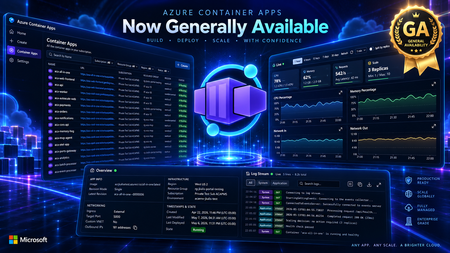
For many web apps and APIs, a container image should be enough to get started. Developers should not have to choose and configure an environment before the first deployment. Today, Azure Container Apps Express reaches general availability. It is the fastest way to go from a container image to a production-ready app on Azure, with instant provisioning, startup optimized for sub-second performance, and scale-from-zero. Customers created many thousands of Express apps during public preview and told us, clearly and often, what was missing. That feedback set the priorities for general availability, and it continues to guide what comes next. From container image to running app Express starts with the application. Bring a container image, choose a region, add the configuration your app needs, and deploy. In the Express experience, there is no environment to stand up first. Azure provisions the underlying compute, ingress, and scaling. That shorter path matters when you are shipping a web app or API. It matters even more when the thing doing the shipping is an agent: AI-assisted workflows can create and update apps far faster than anyone can configure infrastructure by hand. Speed continues after deployment. Express apps can scale to zero when idle and are optimized for sub-second startup when traffic returns. For a measured look at that experience, see Express scale from zero. Broad regional availability At general availability, Express is available in more than 40 Azure regions, covering almost every public region where Azure Container Apps is offered. You get the same direct deployment experience while placing applications close to users and data. See the current list in the Express region availability documentation. Built on Azure Container Apps Sandboxes Azure Container Apps Express runs on Azure Container Apps Sandboxes, the isolated compute layer behind its provisioning and startup speed. Developers can also use Sandboxes directly to build agent platforms, secure code-execution services, and other systems that need isolated compute on demand. The Azure Container Apps Sandboxes announcement covers the compute platform underneath Express. Where Express goes next We launched Express in public preview while its focused feature set was still taking shape. That gave customers access sooner and let real usage shape the work that followed. Since preview, we have expanded regional availability, strengthened Express for production workloads, and added capabilities that fit its direct application model. General availability makes Express ready for production use. We will continue adding features while preserving its focus on fast, simple deployment. Express offers a focused subset of Azure Container Apps capabilities. Choose Express when speed and simplicity matter most. Choose a standard Container Apps environment when you need greater control over networking, GPU compute, advanced configuration, or environment-level capabilities such as Dapr. Deploy your first Express app Ready to try it? Create an Azure Container Apps Express app. Then read the Express documentation, see Express scale from zero, or learn about Azure Container Apps Sandboxes.654Views0likes0CommentsBuilding the agentic future together at JDConf 2026
JDConf 2026 is just weeks away, and I’m excited to welcome Java developers, architects, and engineering leaders from around the world for two days of learning and connection. Now in its sixth year, JDConf has become a place where the Java community compares notes on their real-world production experience: patterns, tooling, and hard-earned lessons you can take back to your team, while we keep moving the Java systems that run businesses and services forward in the AI era. This year’s program lines up with a shift many of us are seeing first-hand: delivery is getting more intelligent, more automated, and more tightly coupled to the systems and data we already own. Agentic approaches are moving from demos to backlog items, and that raises practical questions: what’s the right architecture, where do you draw trust boundaries, how do you keep secrets safe, and how do you ship without trading reliability for novelty? JDConf is for and by the people who build and manage the mission-critical apps powering organizations worldwide. Across three regional livestreams, you’ll hear from open source and enterprise practitioners who are making the same tradeoffs you are—velocity vs. safety, modernization vs. continuity, experimentation vs. operational excellence. Expect sessions that go beyond “what” and get into “how”: design choices, integration patterns, migration steps, and the guardrails that make AI features safe to run in production. You’ll find several practical themes for shipping Java in the AI era: connecting agents to enterprise systems with clear governance; frameworks and runtimes adapting to AI-native workloads; and how testing and delivery pipelines evolve as automation gets more capable. To make this more concrete, a sampling of sessions would include topics like Secrets of Agentic Memory Management (patterns for short- and long-term memory and safe retrieval), Modernizing a Java App with GitHub Copilot (end-to-end upgrade and migration with AI-powered technologies), and Docker Sandboxes for AI Agents (guardrails for running agent workflows without risking your filesystem or secrets). The goal is to help you adopt what’s new while hardening your long lived codebases. JDConf is built for community learning—free to attend, accessible worldwide, and designed for an interactive live experience in three time zones. You’ll not only get 23 practitioner-led sessions with production-ready guidance but also free on-demand access after the event to re-watch with your whole team. Pro tip: join live and get more value by discussing practical implications and ideas with your peers in the chat. This is where the “how” details and tradeoffs become clearer. JDConf 2026 Keynote Building the Agentic Future Together Rod Johnson, Embabel | Bruno Borges, Microsoft | Ayan Gupta, Microsoft The JDConf 2026 keynote features Rod Johnson, creator of the Spring Framework and founder of Embabel, joined by Bruno Borges and Ayan Gupta to explore where the Java ecosystem is headed in the agentic era. Expect a practitioner-level discussion on how frameworks like Spring continue to evolve, how MCP is changing the way agents interact with enterprise systems, and what Java developers should be paying attention to right now. Register. Attend. Earn. Register for JDConf 2026 to earn Microsoft Rewards points, which you can use for gift cards, sweepstakes entries, and more. Earn 1,000 points simply by signing up. When you register for any regional JDConf 2026 event with your Microsoft account, you'll automatically receive these points. Get 5,000 additional points for attending live (limited to the first 300 attendees per stream). On the day of your regional event, check in through the Reactor page or your email confirmation link to qualify. Disclaimer: Points are added to your Microsoft account within 60 days after the event. Must register with a Microsoft account email. Up to 10,000 developers eligible. Points will be applied upon registration and attendance and will not be counted multiple times for registering or attending at different events. Terms | Privacy JDConf 2026 Regional Live Streams Americas – April 8, 8:30 AM – 12:30 PM PDT (UTC -7) Bruno Borges hosts the Americas stream, discussing practical agentic Java topics like memory management, multi-agent system design, LLM integration, modernization with AI, and dependency security. Experts from Redis, IBM, Hammerspace, HeroDevs, AI Collective, Tekskills, and Microsoft share their insights. Register for Americas → Asia-Pacific – April 9, 10:00 AM – 2:00 PM SGT (UTC +8) Brian Benz and Ayan Gupta co-host the APAC stream, highlighting Java frameworks and practices for agentic delivery. Topics include Spring AI, multi-agent orchestration, spec-driven development, scalable DevOps, and legacy modernization, with speakers from Broadcom, Alibaba, CERN, MHP (A Porsche Company), and Microsoft. Register for Asia-Pacific → Europe, Middle East and Africa – April 9, 9:00 AM – 12:30 PM GMT (UTC +0) The EMEA stream, hosted by Sandra Ahlgrimm, will address the implementation of agentic Java in production environments. Topics include self-improving systems utilizing Spring AI, Docker sandboxes for agent workflow management, Retrieval-Augmented Generation (RAG) pipelines, modernization initiatives from a national tax authority, and AI-driven CI/CD enhancements. Presentations will feature experts from Broadcom, Docker, Elastic, Azul Systems, IBM, Team Rockstars IT, and Microsoft. Register for EMEA → Make It Interactive: Join Live Come prepared with an actual challenge you’re facing, whether you’re modernizing a legacy application, connecting agents to internal APIs, or refining CI/CD processes. Test your strategies by participating in live chats and Q&As with presenters and fellow professionals. If you’re attending with your team, schedule a debrief after the live stream to discuss how to quickly use key takeaways and insights in your pilots and projects. Learning Resources Java and AI for Beginners Video Series: Practical, episode-based walkthroughs on MCP, GenAI integration, and building AI-powered apps from scratch. Modernize Java Apps Guide: Step-by-step guide using GitHub Copilot agent mode for legacy Java project upgrades, automated fixes, and cloud-ready migrations. AI Agents for Java Webinar: Embedding AI Agent capabilities into Java applications using Microsoft Foundry, from project setup to production deployment. Java Practitioner’s Guide: Learning plan for deploying, managing, and optimizing Java applications on Azure using modern cloud-native approaches. Register Now JDConf 2026 is a free global event for Java teams. Join live to ask questions, connect, and gain practical patterns. All 23 sessions will be available on-demand. Register now to earn Microsoft Rewards points for attending. Register at JDConf.com289Views0likes0CommentsWhat's new in Azure Container Apps at Ignite'25
Azure Container Apps (ACA) is a fully managed serverless container platform that enables developers to design and deploy microservices and modern apps without requiring container expertise or needing infrastructure management. ACA is rapidly emerging as the preferred platform for hosting AI workloads and intelligent agents in the cloud. With features like code interpreter, Serverless GPUs, simplified deployments, and per-second billing, ACA empowers developers to build, deploy, and scale AI-driven applications with exceptional agility. ACA makes it easy to integrate agent frameworks, leverage GPU acceleration, and manage complex, multi-container AI environments - all while benefiting from a serverless, fully managed infrastructure. External customers like Replit, NFL Combine, Coca-Cola, and European Space Agency as well as internal teams like Microsoft Copilot (as well as many others) have bet on ACA as their compute platform for AI workloads. ACA is quickly becoming the leading platform for updating existing applications and moving them to a cloud-native setup. It allows organizations to seamlessly migrate legacy workloads - such as Java and .NET apps - by using AI-powered tools like GitHub Copilot to automate code upgrades, analyze dependencies, and handle cloud transformations. ACA’s fully managed, serverless environment removes the complexity of container orchestration. This helps teams break down monolithic or on-premises applications into robust microservices, making use of features like version control, traffic management, and advanced networking for fast iteration and deployment. By following proven modernization strategies while ensuring strong security, scalability, and developer efficiency, ACA helps organizations continuously innovate and future-proof their applications in the cloud. Customers like EY, London Stock Exchange, Chevron, and Paychex have unlocked significant business value by modernizing their workloads onto ACA. This blog presents the latest features and capabilities of ACA, enhancing its value for customers by enabling the rapid migration of existing workloads and development of new cloud applications, all while following cloud-native best practices. Secure sandboxes for AI compute ACA now supports dynamic shell sessions, currently available in public preview. These shell sessions are platform-managed built-in containers designed to execute common shell commands within an isolated, sandboxed environment. With the addition of empty shell sessions and an integrated MCP server, ACA enables customers to provision secure, isolated sandboxes instantly - ideal for use cases such as code execution, tool testing, and workflow automation. This functionality facilitates seamless integration with agent frameworks, empowering agents to access disposable compute environments as needed. Customers can benefit from rapid provisioning, improved security, and decreased operational overhead when managing agentic workloads. To learn more about how to add secure sandbox shell sessions to Microsoft Foundry agents as a tool, visit the walkthrough at https://aka.ms/aca/dynamic-sessions-mcp-tutorial. Docker Compose for Agents support ACA has added Docker Compose for Agents support in public preview, making it easy for developers to define agentic applications stack-agnostic, with MCP and custom model support. Combined with native serverless GPU support, Docker Compose for Agents allows fast iteration and scaling for AI-driven agents and application using LangGraph, LangChain CrewAI, Spring AI, Vercel AI SDK and Agno. These enhancements provide a developer-focused platform that streamlines the process for modern AI workloads, bringing together both development and production cycles into one unified environment. Additional regional availability for Serverless GPUs Serverless GPU solutions offer capabilities such as automatic scaling with NVIDIA A100 or T4 GPUs, per-second billing, and strict data isolation within container boundaries. ACA Serverless GPUs are now generally available in 11 additional regions, further facilitating developers’ ability to deploy AI inference, model training, and GPU-accelerated workloads efficiently. For further details on supported regions, please visit https://aka.ms/aca/serverless-gpu-regions. New Flexible Workload Profile The Flexible workload profile is a new option that combines the simplicity of serverless Consumption with the performance and control in Dedicated profiles. It offers a familiar pay-per-use model along with enhanced features like scheduled maintenance, dedicated networking, and support for larger replicas to meet demanding application needs. Customers can enjoy the advantages of dedicated resources together with effortless infrastructure management and billing from the Consumption model. Operating on a dedicated compute pool, this profile ensures better predictability and isolation without introducing extra operational complexity. It is designed for users who want the ease of serverless scaling, but also need more control over performance and environmental stability. Confidential Computing Confidential computing support is now available in public preview for ACA, offering hardware-based Trusted Execution Environments (TEEs) to secure data in use. This adds to existing encryption of data at rest and in transit by encrypting memory and verifying the cloud environment before processing. It helps protect sensitive data from unauthorized access, including by cloud operators, and is useful for organizations with high security needs. Confidential computing can be enabled via workload profiles, with the preview limited to certain regions. Extending Network capabilities General Availability of Rule-based Routing Rule-based routing for ACA is now generally available, offering users improved flexibility and easier composition when designing microservice architectures, conducting A/B testing, or implementing blue-green deployments. With this feature, you can route incoming HTTP traffic to specific apps within your environment by specifying host names or paths - including support for custom domains. You no longer need to set up an extra reverse proxy (like NGINX); simply define routing rules for your environment, and traffic will be automatically directed to the appropriate target apps. General Availability of Premium Ingress ACA support for Premium Ingress is now Generally Available. This feature introduces environment-level ingress configuration options, with the primary highlight being customizable ingress scaling. This capability supports the scaling of the ingress proxy, enabling customers to better handle higher demand workloads, such as large performance tests. By configuring your ingress proxy to run on workload profiles, you can scale out more ingress instances to handle more load. Running the ingress proxy on a workload profile will incur associated costs. To further enhance the flexibility of your application, this release includes other ingress-related settings, such as termination grace period, idle request timeout, and header count. Additional Management capabilities Public Preview of Deployment labels ACA now offers deployment labels in public preview, letting you assign names like dev, staging, or prod to container revisions which can be automatically assigned. This makes environment management easier and supports advanced strategies such as A/B testing and blue-green deployments. Labels help route traffic, control revisions, and streamline rollouts or rollbacks with minimal hassle. With deployment labels, you can manage app lifecycles more efficiently and reduce complexity across environments. General Availability of Durable Task Scheduler support Durable Task Scheduler (DTS) support is now generally available on ACA, empowering users with a robust pro-code workflow solution. With DTS, you can define reliable, containerized workflows as code, benefiting from built-in state persistence and fault-tolerant execution. This enhancement streamlines the creation and administration of complex workflows by boosting scalability, reliability, and enabling efficient monitoring capabilities. What’s next ACA is redefining how developers build and deploy intelligent agents. Agents deployed to Azure Container Apps with Microsoft Agent Framework and Open Telemetry can also be plugged directly into Microsoft Foundry, giving teams a single pane of glass for their agents in Azure. With serverless scale, GPU-on-demand, and enterprise-grade isolation, ACA provides the ideal foundation for hosting AI agents securely and cost-effectively. Utilizing open-source frameworks such as n8n on ACA enables the deployment of no-code automation agents that integrate seamlessly with Azure OpenAI models, supporting intelligent routing, summarization, and adaptive decision-making processes. Similarly, running other agent frameworks like Goose AI Agent on ACA enables it to operate concurrently with model inference workloads (including Ollama and GPT-OSS) within a unified, secure environment. The inclusion of serverless GPU support allows for efficient hosting of large language models such as GPT-OSS, optimizing both cost and scalability for inference tasks. Furthermore, ACA facilitates the remote hosting of Model Context Protocol (MCP) servers, granting agents secure access to external tools and APIs via streamable HTTP transport. Collectively, these features enable organizations to develop, scale, and manage complex agentic workloads - from workflow automation to AI-driven assistants - while leveraging ACA’s enterprise-grade security, autoscaling capabilities, and developer-centric user experience. In addition to these, ACA also enables a wide range of cross-compatibility with various frameworks and services, making it an ideal platform for running Azure Functions on ACA, Distributed Application Runtime (Dapr) microservices, as well as polyglot apps across .NET / Java / JavaScript. As always, we invite you to visit our GitHub page for feedback, feature requests, or questions about Azure Container Apps, where you can open a new issue or up-vote existing ones. If you’re curious about what we’re working on next, check out our roadmap. We look forward to hearing from you!2.6KViews0likes0CommentsReimagining App Modernization for the Era of AI
This blog highlights the key announcements and innovations from Microsoft Build 2025. It focuses on how AI is transforming the software development lifecycle, particularly in app modernization. Key topics include the use of GitHub Copilot for accelerating development and modernization, the introduction of Azure SRE agent for managing production systems, and the launch of the App Modernization Guidance to help organizations modernize their applications with AI-first design. The blog emphasizes the strategic approach to modernization, aiming to reduce complexity, improve agility, and deliver measurable business outcomes5.1KViews2likes0Comments
Seamlessly Integrating Azure KeyVault with Jarsigner for Enhanced Security
Dive into the world of enhanced security with our step-by-step guide on integrating Azure KeyVault with Jarsigner. Whether you're a beginner or an experienced developer, this guide will walk you through the process of securely signing your Java applications using Azure's robust security features. Learn how to set up, execute, and verify digital signatures with ease, ensuring your applications are protected in an increasingly digital world. Join us to boost your security setup now!8.2KViews0likes1CommentDeploy and Scale Spring Batch in the Cloud – with Adaptive Cost Control
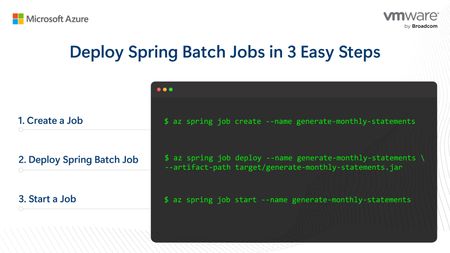
You can now use Azure Spring Apps to effectively run Spring Batch applications with adaptive cost control. You only pay when batch jobs are running, and you can simply lift and shift your Spring Batch jobs with no code change.4.2KViews0likes0CommentsDiscover How App Modernization on Azure Enables Intelligent App Innovation
Legacy applications, built on outdated technologies, are increasingly becoming a roadblock for businesses in the fast-paced digital world. They struggle to manage growing data volumes and user traffic, posing scalability challenges that can lead to performance bottlenecks and system failures.3.8KViews1like0CommentsAzure Migrate application and code assessment is now available for .NET and Java
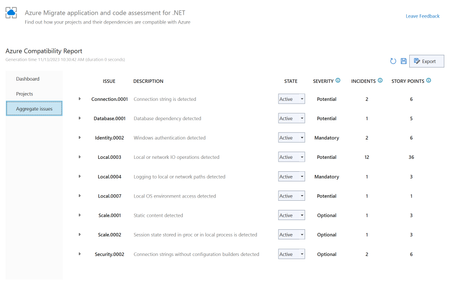
Enterprise application migrations often require deep insights and stakeholder alignment across a variety of use cases, whether at the portfolio or application level. Azure Migrate is Microsoft’s free platform for migrating to and modernizing in Azure. It provides discovery, assessment, business case analysis, planning, migration, and modernization capabilities in a consistent manner across workloads. All this while allowing you to run and monitor the proceedings from a single, secure portal. Today, we are excited to announce application and code assessment capabilities in Azure Migrate to help accelerate your application migrations.7.8KViews3likes0Comments
Azure Spring Apps feature updates in Q4 2023
Announcing the exciting feature updates for Azure Spring Apps in Q4 2023. Recent updates to the Enterprise plan include improved response caching in Spring Cloud Gateway, a more secure try-out option in API Portal, and enhanced application-level settings in Service Connector. Additionally, there's richer build history information to help with troubleshooting. For both Enterprise and Basic/Standard plans, Azure Spring Apps now offer scheduled maintenance for updates and an auto-sync feature for certificates, making application management more efficient and secure.1.9KViews1like0Comments