azure openai services
18 TopicsAzure OpenAI Service is now generally available
Early this week Satya Nadella, Microsoft CEO, and Eric Boyd, Corporate AI Vice President, announced Azure OpenAI Service generally available, which will soon include ChatGPT – the fine-tuned version of GPT-3.5 built upon Azure AI infrastructure gone viral in the last few weeks. But let’s take a step back. What is Azure OpenAI? And how can you get started?30KViews6likes3CommentsDeploying a Large Language Model (GPT-2) on Azure Using Power Automate: Step-by-Step Guide
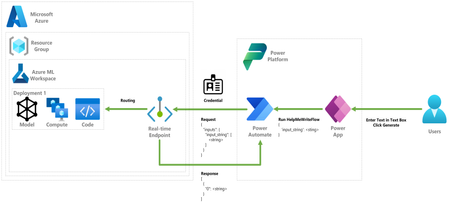
Step-by-step guide on deploying a large language model (GPT-2) to the Azure platform and consuming it using Power Platform (Power Automate, Power Apps) to generate text and give you creative writing ideas.24KViews5likes0CommentsA Practical Guide for Beginners: Azure OpenAI with JavaScript and TypeScript (Part 01)
In this series of three articles, you will learn how to take the first steps in using Azure OpenAI Service with JavaScript and TypeScript! In this first article, we will learn about what Responsible A.I is, understand the Azure OpenAI Service, and how to create an Azure OpenAI resource in the Azure Portal.5KViews3likes1CommentDeploying GPT-4o AI Chat app on Azure via Azure AI Services – a step-by-step guide
Are you ready to revolutionize your business with cutting-edge AI technology? Dive into our comprehensive step-by-step guide on deploying a GPT-4o AI Chat app using Azure AI Services. Discover how to harness the power of advanced natural language processing to create interactive, human-like chat experiences. From setting up your Azure account to deploying your AI model and customizing your chat app, this guide covers it all. Unleash the potential of AI in your business and stay ahead of the curve with the latest advancements from Microsoft Azure. Don’t miss out on this opportunity to transform your workflows and elevate customer interactions to new heights!6.8KViews2likes0CommentsMaster Azure OpenAI Services with Azure for student: A Comprehensive Guide for Students
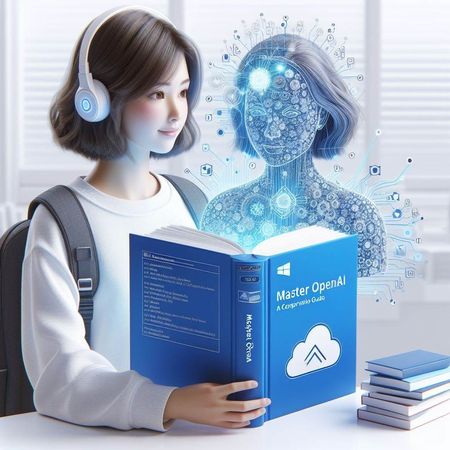
Dive into the world of OpenAI with our comprehensive guide. Learn how to leverage the power of Azure to develop and deploy your AI models. Perfect for computer science students and tech enthusiasts6.7KViews2likes2CommentsUnlock the Potential of AI in Your Apps with Semantic Kernel: A Lightweight SDK for LLMs
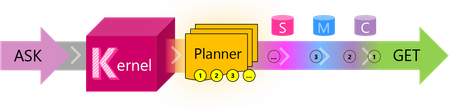
Semantic Kernel (SK) is a lightweight SDK enabling integration of AI Large Language Models (LLMs) with conventional programming languages. The SK extensible programming model combines natural language semantic functions, traditional code native functions, and embeddings-based memory unlocking new potential and adding value to applications with AI. SK supports prompt templating, function chaining, vectorized memory, and intelligent planning capabilities out of the box11KViews2likes0CommentsIntegrating Microsoft Foundry with OpenClaw: Step by Step Model Configuration
Step 1: Deploying Models on Microsoft Foundry Let us kick things off in the Azure portal. To get our OpenClaw agent thinking like a genius, we need to deploy our models in Microsoft Foundry. For this guide, we are going to focus on deploying gpt-5.2-codex on Microsoft Foundry with OpenClaw. Navigate to your AI Hub, head over to the model catalog, choose the model you wish to use with OpenClaw and hit deploy. Once your deployment is successful, head to the endpoints section. Important: Grab your Endpoint URL and your API Keys right now and save them in a secure note. We will need these exact values to connect OpenClaw in a few minutes. Step 2: Installing and Initializing OpenClaw Next up, we need to get OpenClaw running on your machine. Open up your terminal and run the official installation script: curl -fsSL https://openclaw.ai/install.sh | bash The wizard will walk you through a few prompts. Here is exactly how to answer them to link up with our Azure setup: First Page (Model Selection): Choose "Skip for now". Second Page (Provider): Select azure-openai-responses. Model Selection: Select gpt-5.2-codex , For now only the models listed (hosted on Microsoft Foundry) in the picture below are available to be used with OpenClaw. Follow the rest of the standard prompts to finish the initial setup. Step 3: Editing the OpenClaw Configuration File Now for the fun part. We need to manually configure OpenClaw to talk to Microsoft Foundry. Open your configuration file located at ~/.openclaw/openclaw.json in your favorite text editor. Replace the contents of the models and agents sections with the following code block: { "models": { "providers": { "azure-openai-responses": { "baseUrl": "https://<YOUR_RESOURCE_NAME>.openai.azure.com/openai/v1", "apiKey": "<YOUR_AZURE_OPENAI_API_KEY>", "api": "openai-responses", "authHeader": false, "headers": { "api-key": "<YOUR_AZURE_OPENAI_API_KEY>" }, "models": [ { "id": "gpt-5.2-codex", "name": "GPT-5.2-Codex (Azure)", "reasoning": true, "input": ["text", "image"], "cost": { "input": 0, "output": 0, "cacheRead": 0, "cacheWrite": 0 }, "contextWindow": 400000, "maxTokens": 16384, "compat": { "supportsStore": false } }, { "id": "gpt-5.2", "name": "GPT-5.2 (Azure)", "reasoning": false, "input": ["text", "image"], "cost": { "input": 0, "output": 0, "cacheRead": 0, "cacheWrite": 0 }, "contextWindow": 272000, "maxTokens": 16384, "compat": { "supportsStore": false } } ] } } }, "agents": { "defaults": { "model": { "primary": "azure-openai-responses/gpt-5.2-codex" }, "models": { "azure-openai-responses/gpt-5.2-codex": {} }, "workspace": "/home/<USERNAME>/.openclaw/workspace", "compaction": { "mode": "safeguard" }, "maxConcurrent": 4, "subagents": { "maxConcurrent": 8 } } } } You will notice a few placeholders in that JSON. Here is exactly what you need to swap out: Placeholder Variable What It Is Where to Find It <YOUR_RESOURCE_NAME> The unique name of your Azure OpenAI resource. Found in your Azure Portal under the Azure OpenAI resource overview. <YOUR_AZURE_OPENAI_API_KEY> The secret key required to authenticate your requests. Found in Microsoft Foundry under your project endpoints or Azure Portal keys section. <USERNAME> Your local computer's user profile name. Open your terminal and type whoami to find this. Step 4: Restart the Gateway After saving the configuration file, you must restart the OpenClaw gateway for the new Foundry settings to take effect. Run this simple command: openclaw gateway restart Configuration Notes & Deep Dive If you are curious about why we configured the JSON that way, here is a quick breakdown of the technical details. Authentication Differences Azure OpenAI uses the api-key HTTP header for authentication. This is entirely different from the standard OpenAI Authorization: Bearer header. Our configuration file addresses this in two ways: Setting "authHeader": false completely disables the default Bearer header. Adding "headers": { "api-key": "<key>" } forces OpenClaw to send the API key via Azure's native header format. Important Note: Your API key must appear in both the apiKey field AND the headers.api-key field within the JSON for this to work correctly. The Base URL Azure OpenAI's v1-compatible endpoint follows this specific format: https://<your_resource_name>.openai.azure.com/openai/v1 The beautiful thing about this v1 endpoint is that it is largely compatible with the standard OpenAI API and does not require you to manually pass an api-version query parameter. Model Compatibility Settings "compat": { "supportsStore": false } disables the store parameter since Azure OpenAI does not currently support it. "reasoning": true enables the thinking mode for GPT-5.2-Codex. This supports low, medium, high, and xhigh levels. "reasoning": false is set for GPT-5.2 because it is a standard, non-reasoning model. Model Specifications & Cost Tracking If you want OpenClaw to accurately track your token usage costs, you can update the cost fields from 0 to the current Azure pricing. Here are the specs and costs for the models we just deployed: Model Specifications Model Context Window Max Output Tokens Image Input Reasoning gpt-5.2-codex 400,000 tokens 16,384 tokens Yes Yes gpt-5.2 272,000 tokens 16,384 tokens Yes No Current Cost (Adjust in JSON) Model Input (per 1M tokens) Output (per 1M tokens) Cached Input (per 1M tokens) gpt-5.2-codex $1.75 $14.00 $0.175 gpt-5.2 $2.00 $8.00 $0.50 Conclusion: And there you have it! You have successfully bridged the gap between the enterprise-grade infrastructure of Microsoft Foundry and the local autonomy of OpenClaw. By following these steps, you are not just running a chatbot; you are running a sophisticated agent capable of reasoning, coding, and executing tasks with the full power of GPT-5.2-codex behind it. The combination of Azure's reliability and OpenClaw's flexibility opens up a world of possibilities. Whether you are building an automated devops assistant, a research agent, or just exploring the bleeding edge of AI, you now have a robust foundation to build upon. Now it is time to let your agent loose on some real tasks. Go forth, experiment with different system prompts, and see what you can build. If you run into any interesting edge cases or come up with a unique configuration, let me know in the comments below. Happy coding!4.1KViews1like2CommentsMaster Generative AI with Azure OpenAI Service: A Comprehensive Guide for Students
Dive into the cutting-edge technology of Generative AI with our detailed guide. From understanding the role of large language models to building powerful applications with Azure OpenAI Service, this guide has everything you need. Plus, participate in our Azure OpenAI Cloud Skills Challenge and compete with peers globally while enhancing your technical skills. Start your journey with Generative AI today!8.6KViews1like0CommentsHarnessing the Power of Conversational AI with Power Platform and Azure OpenAI Services
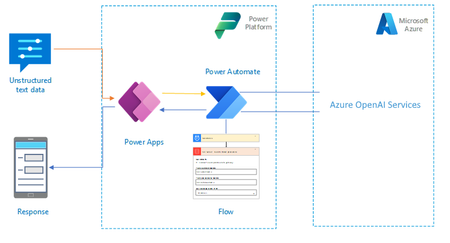
Unlock the Potential of Conversational AI with Azure OpenAI Services: Revolutionizing Enterprise Work for Enhanced Efficiency, Security, and Customer Service Discover how Conversational AI, powered by Azure OpenAI Services, is reshaping the business landscape. This revolutionary technology automates customer service, provides valuable insights, and enhances employee training. Learn how the seamless integration of Copilot chat with Power Apps empowers enterprises to handle inquiries swiftly, automate processes, and boost productivity. Benefit from user-friendly custom mobile apps and advanced security features, safeguarding sensitive information. Explore the transformative capabilities of Conversational AI with Power Platform Copilot and revolutionize the way you work and engage with customers.5.4KViews1like2Comments