azure networking
5 Topics
Azure Incident Retrospective - Please register! Session 2 - Tracking ID: 5GP8-W0G
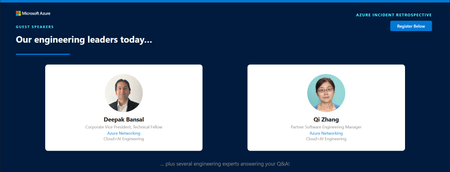
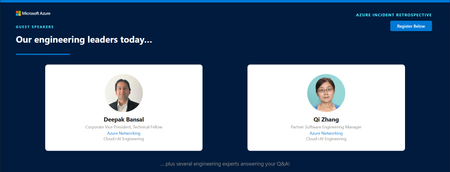
Join our upcoming live webcast for a transparent discussion about this recent Azure service incident — led by our engineering teams. Control plane issues in East US Tracking ID: 5GP8-W0G | Impacted: 24-25 April 2026 Same content presented in both sessions — pick the one that works best for your timezone! What to expect 📚 Understand What happened, how we responded, and what we learned 💬 Ask Live Q&A with our engineering experts throughout the session 🛠 Learn The fixes we've put in place and guidance for workload resiliency Choose your session Same content presented at both times — pick the one that works best for your timezone: Session 1 17:30 UTC Thursday, 14 May 2026 Register now → Session 2 05:30 UTC Friday, 15 May 2026 Register now → 9:30 AM US Pacific (PDT) 12:30 PM US Eastern (EDT) 5:30 PM London (BST) 1:30 AM +1 Beijing (CST) 4:30 AM +1 Sydney (AEDT) 6:30 AM +1 Auckland (NZDT) 9:30 PM -1 US Pacific (PDT) 12:30 AM US Eastern (EDT) 5:30 AM London (BST) 1:30 PM Beijing (CST) 4:30 PM Sydney (AEDT) 6:30 PM Auckland (NZDT) Our engineering leaders Deepak Bansal Corporate Vice President, Technical Fellow Azure Networking Cloud+AI Engineering LinkedIn ↗ Qi Zhang Partner Software Engineering Manager Azure Networking Cloud+AI Engineering LinkedIn ↗ ⚠️ Prepare before the livestream Read the Post Incident Review (PIR) ahead of time so you can ask any follow up questions during the live Q&A Helpful resources 🔔 Azure Service Health Alerts Get alerts for relevant incidents by setting up notifications via email, SMS, or webhook 🎥 Past Retrospective Recordings Watch recordings of previous retrospective livestreams 📄 Azure Post Incident Reviews Learn more about PIRs and the retrospective program94Views0likes0CommentsAzure Incident Retrospective - Please register! Session 1 - Tracking ID: 5GP8-W0G
Join our upcoming live webcast for a transparent discussion about this recent Azure service incident — led by our engineering teams. Control plane issues in East US Tracking ID: 5GP8-W0G | Impacted: 24-25 April 2026 Same content presented in both sessions — pick the one that works best for your timezone! What to expect 📚 Understand What happened, how we responded, and what we learned 💬 Ask Live Q&A with our engineering experts throughout the session 🛠 Learn The fixes we've put in place and guidance for workload resiliency Choose your session Same content presented at both times — pick the one that works best for your timezone: Session 1 17:30 UTC Thursday, 14 May 2026 Register now → Session 2 05:30 UTC Friday, 15 May 2026 Register now → 9:30 AM US Pacific (PDT) 12:30 PM US Eastern (EDT) 5:30 PM London (BST) 1:30 AM +1 Beijing (CST) 4:30 AM +1 Sydney (AEDT) 6:30 AM +1 Auckland (NZDT) 9:30 PM -1 US Pacific (PDT) 12:30 AM US Eastern (EDT) 5:30 AM London (BST) 1:30 PM Beijing (CST) 4:30 PM Sydney (AEDT) 6:30 PM Auckland (NZDT) Our engineering leaders Deepak Bansal Corporate Vice President, Technical Fellow Azure Networking Cloud+AI Engineering LinkedIn↗ Qi Zhang Partner Software Engineering Manager Azure Networking Cloud+AI Engineering LinkedIn ↗ ⚠️ Prepare before the livestream Read the Post Incident Review (PIR) ahead of time so you can ask any follow up questions during the live Q&A Helpful resources 🔔 Azure Service Health Alerts Get alerts for relevant incidents by setting up notifications via email, SMS, or webhook 🎥 Past Retrospective Recordings Watch recordings of previous retrospective livestreams 📄 Azure Post Incident Reviews Learn more about PIRs and the retrospective program124Views0likes0CommentsAzure Incident Retrospective — Please register for one of the 2 sessions below!
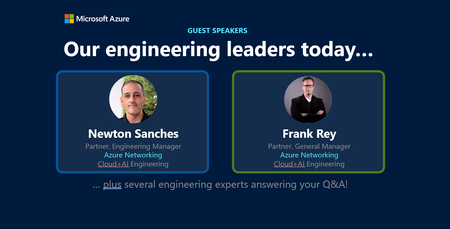
Join our upcoming live webcast for a transparent discussion about this recent Azure service incident — led by our engineering teams. Network degradation within East US AZ-02 Tracking ID: DG_Z-S08 | Impacted: 20 March 2026 What to expect 📚 Understand What happened, how we responded, and what we learned 💬 Ask Live Q&A with our engineering experts throughout the session 🛠 Learn The fixes we've put in place and guidance for workload resiliency Choose your session Same content presented at both times — pick the one that works best for your timezone: Session 1 17:30 UTC Thursday, 23 April 2026 Register now → Session 2 05:30 UTC Friday, 24 April 2026 Register now → 9:30 AM US Pacific (PDT) 12:30 PM US Eastern (EDT) 5:30 PM London (BST) 1:30 AM +1 Beijing (CST) 4:30 AM +1 Sydney (AEDT) 6:30 AM +1 Auckland (NZDT) 9:30 PM -1 US Pacific (PDT) 12:30 AM US Eastern (EDT) 5:30 AM London (BST) 1:30 PM Beijing (CST) 4:30 PM Sydney (AEDT) 6:30 PM Auckland (NZDT) Our engineering leaders Newton Sanches Partner, Engineering Manager Azure Networking Cloud+AI Engineering LinkedIn ↗ Frank Rey Partner, General Manager Azure Networking Cloud+AI Engineering LinkedIn ↗ ⚠️ Prepare before the livestream Read the Post Incident Review (PIR) ahead of time so you can ask any follow up questions during the live Q&A Helpful resources 🔔 Azure Service Health Alerts Get alerts for relevant incidents by setting up notifications via email, SMS, or webhook 🎥 Past Retrospective Recordings Watch recordings of previous retrospective livestreams 📄 Azure Post Incident Reviews173Views0likes0CommentsIntroducing Azure Programmable Connectivity Powering Network-Aware Applications
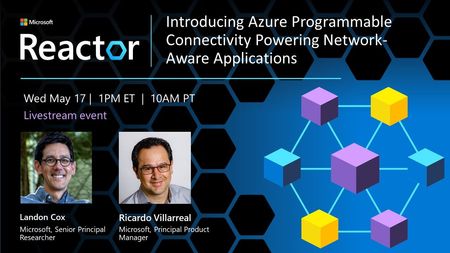
Three trends in distributed computing are converging. First, the number of places where applications can run has grown to include the cloud, public and private edges, and on-device. Second, distributed applications increasingly span these compute targets simultaneously, with placement decisions based on cost, location, and performance requiring continuous evaluation. Third, the networks connecting these compute targets are increasingly programmable, allowing applications to query and dynamically configure network conditions and behavior via APIs. Azure offers excellent support for deploying and managing applications across the full diversity of today’s compute targets. We have a limited, private preview program for Azure Programmable Connectivity (APC) to support network-aware applications that span compute targets and program the networks in between. Who should attend? • Developers who want to enhance the connectivity of their applications and make it more reliable, efficient and secure • Developers who recognize that network connectivity is critical to the success of their applications, and want to learn how to leverage network programmability to achieve their goals • Developers who want to enhance the user experience of your application by optimizing network performance and reducing latency • Developers who are interested in learning about Network APIs What will I learn? Overall, attendees will gain a deeper understanding of the benefits of network programmability and how it can be used to enhance application connectivity, performance, and security, as well as how to apply to the private preview program for Azure Programmable Connectivity to get hands-on experience with building network-aware applications. Pre-Register at: https://aka.ms/ModernConnectedApplications05.17 Watch Livestream at: https://aka.ms/AzureProgrammableConnectivity5/172.5KViews0likes0CommentsDevelop modern connected apps with the MEC Accelerator and 5G Kit
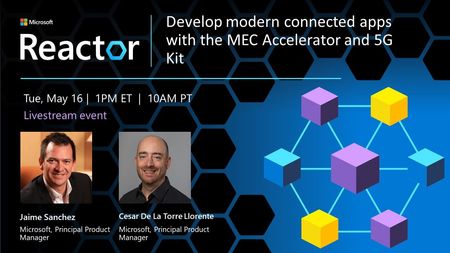
Today, 5G enables new applications for scenarios that were previously out of reach. From smart roads that can notify of obstacles in the road in real time to smart airports that can identify runway issues before they threaten safety, a new breed of real-time and mission-critical applications is emerging. Developers can now start building their own MEC/Edge application by forking and evolving our open source MEC Application Solution Accelerator. This is an example application that offers a common foundation based on a light microservices architecture designed for the edge. It includes Kubernetes, docker containers, and Dapr framework. It also includes AI model inferencing capabilities with an example deep learning model that analyzes video coming from cameras, as well as MQTT event-driven communication following a publish/subscription pattern to raise events/alerts after detecting issues with the AI models. Who should attend? • Developers interested in building real-time and mission-critical applications for the edge with low latency. • Individuals interested in learning about AI model inferencing capabilities and deep learning models for analyzing video. • Professionals seeking to learn about light/fast event-driven communication between AI models events/alerts handlers. What will I learn? • How to build MEC/Edge applications using the open source MEC Application Solution Accelerator. • Understanding and get ready to get started on a light microservices and event-driven architecture, based on Kubernetes, Docker containers, Dapr framework and MQTT messaging broker for edge/mec applications with low latency. • The potential of 5G technology and how it enables new applications for previously unreachable scenarios. Pre-Register at: https://aka.ms/ModernConnectedApplications05.16 Watch Livestream at: https://aka.ms/ModernConnectedApplications5/151.8KViews0likes0Comments