ai skilling
8 Topics
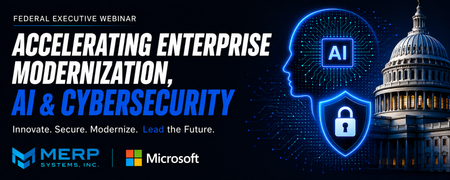
August 20 Federal Event: Accelerating Enterprise Modernization, AI & Cybersecurity
Overview Federal agencies are under increasing pressure to modernize mission systems, strengthen cybersecurity, and responsibly adopt artificial intelligence. Executive Order 14409, record federal technology investments, and Microsoft's OneGov initiative have created a unique opportunity to accelerate secure digital transformation. What Attendees Will Learn How agencies are translating AI strategy into operational outcomes. Microsoft's latest AI, cybersecurity, and modernization capabilities. How Microsoft OneGov is accelerating secure AI adoption across federal agencies. Real-world modernization strategies and success stories from CDC and USGS. Practical approaches to modernizing legacy systems while improving mission outcomes. Plus: Every attendee receives a complimentary 30-minute FY27 AI Readiness Consultation with a MERP Solutions Architect. Why Attend Join MERP Systems and Microsoft to discover the latest AI and cybersecurity innovations and hear directly from CDC and USGS as they share real-world enterprise modernization strategies and success stories. Attendees will leave with actionable insights, proven approaches, and a better understanding of how to accelerate secure AI adoption across their organizations. Event Link- https://events.teams.microsoft.com/event/b58ebc1e-e927-4e66-b73c-f25d7f43be7f@c33861f9-4a57-4bc4-bc88-d6e0c7b92c37?source=copyLinkOneEventsShareDialogThe AI job boom continues: Build the skills that move business forward
Discover new AI powered business Certifications to validate the skills that matter most. Gretchen LaBelle: Copilot + Agents Learning Portfolio Manager, Global Skilling Tarek Saleh Eldin: Content Publishing Manager, Global Skilling In Part 1 of this series, The AI job boom is here. Are you ready to showcase your skills?, we explored how Microsoft Certifications across AI, cloud, and security are evolving to keep pace with a rapidly changing job market. AI is no longer a niche capability. It’s becoming foundational across roles, reshaping how work gets done, and redefining how professionals create impact. This post picks up that thread. As organizations move from experimenting with AI to operationalizing it at scale, big changes are happening in business solutions roles. These shifts demand the ability to apply AI in real business contexts, redesign processes, build intelligent apps and agents, and lead transformation responsibly across the organization. Earlier this year, Microsoft introduced four new AI business solutions Certifications: Microsoft Certified: Agentic AI Business Solutions Architect (Exam AB‑100) Microsoft 365 Certified: Copilot and Agent Administration Fundamentals (Exam AB‑900) Microsoft Certified: AI Business Professional (Exam AB‑730) Microsoft Certified: AI Transformation Leader (Exam AB‑731) Together, these Certifications map to the critical roles in an AI‑driven workplace, from business practitioners and IT administrators to solution architects and transformation leaders. Building on that foundation, we’re launching new Certifications to help amplify human skills for AI-powered roles in the business landscape. New AI business solutions credentials: April 2026 and beyond Additional new Certification exams begin rolling out in beta starting in April 2026, with more releases over the following months, and going live later this year. The Microsoft Certified: AI Agent Builder Associate Certification is designed for tech pros, including developers, AI engineers, and architects, who are pushing AI agents beyond out‑of‑the‑box scenarios to implement production‑ready Microsoft Copilot Studio agents and multi‑agent solutions capable of sophisticated processes, workflow automation, and enterprise integration. Exam AB-620 beta and training available in April 2026; exam expected to go live in June 2026. The Microsoft Certified: Dynamics 365 Contact Center AI Engineer Associate Certification is designed for contact center engineers and solutions pros who design and run modern contact center as a service (CCaaS) solutions with Dynamics 365 Contact Center and service‑oriented autonomous agents. This Certification goes beyond routing and channels, focusing on how AI, Microsoft Copilot, and agents deliver scalable, always‑on service across voice and digital channels. Exam AB-250 beta and training available in June 2026; exam expected to go live in August 2026. The Microsoft Certified: Dynamics 365 Sales AI Consultant Associate Certification is for modern sellers who design and operationalize AI‑powered sales solutions across the lead‑to‑cash lifecycle, emphasizing Copilot-driven productivity and insights, AI-powered opportunity research and qualification, agent configuration and lifecycle management, and secure, scalable automation aligned with governance and responsible AI. Exam AB‑210 beta and training available in May 2026; exam expected to go live in June 2026. The Microsoft Certified: Intelligent Applications Builder Associate Certification equips Microsoft Power Platform pros to build for an AI-first world, where apps, agents, automation, and models work as one. It validates the skills to use Copilot and natural language to design intelligent solutions, embed agents across experiences, and ship responsibly with strong governance and application lifecycle management. Exam AB-410 beta and training available in April 2026; exam expected to go live in June 2026. The Microsoft Applied Skills: Build an agent-first app credential validates learners’ ability to build an app that surfaces a Copilot Studio agent and to craft prompts that make the agent genuinely effective, not just functional. This credential is part of the broader Microsoft Certified: Intelligent Applications Builder Associate (Exam AB-410) Certification journey, serving as a fast, accessible entry point for those looking to get started with agent-first development before pursuing the full Certification. Credential and training expected to go live in June 2026. Refresh: The Microsoft Certified: Power Platform Fundamentals Certification (Exam PL-900) is being updated with a streamlined, one-day instructor-led course and a new training program. These improvements are designed to align with the AI-powered Microsoft Power Platform and to make it easier than ever for learners to start building confidently. Training and courseware updates are scheduled for June 2026, with minor exam changes planned at the same time to reflect these enhancements. Retiring Certifications: What you need to know We’re committed to keeping our Certifications portfolio aligned with latest technology. As we launch new Certifications, we also retire some older credentials to keep the portfolio mapped to evolving roles. The following table itemizes what’s changing and provides key dates for Certification and training retirements in 2026. If your Certification is eligible for renewal, please renew it before the retirement date. Retiring Microsoft Credential Credential and exam retirement date Planned training retirement date Related new Credential Microsoft Certified: Dynamics 365 Customer Experience Analyst Associate (Exam MB-280) July 31, 2026 July 31, 2026 Microsoft Certified: Dynamics 365 Sales AI Consultant Associate (Exam AB-210) Microsoft Certified: Power Platform Functional Consultant Associate (Exam PL-200) August 31, 2026 August 31, 2026 Microsoft Certified: Intelligent Applications Builder Associate (Exam AB-410) Microsoft Certified: Dynamics 365: Finance and Operations Apps Solution Architect Expert (Exam MB-700) June 30, 2026 June 30, 2026 No new Certification is planned. To stay up to date with these technologies please refer to the Microsoft technical documentation. Microsoft Certified: Power Platform Solution Architect Expert (Exam PL-600) June 30, 2026 June 30, 2026 Microsoft Certified: Dynamics 365 Supply Chain Management Functional Consultant Expert (Exam MB-335) June 30, 2026 June 30, 2026 Microsoft Certified: Dynamics 365 Field Service Functional Consultant Associate (Exam MB-240) June 30, 2026 June 30, 2026 Microsoft Certified: Power Automate RPA Developer Associate (Exam PL-500) June 30, 2026 June 30, 2026 Microsoft Applied Skills: Create and manage model-driven apps with Power Apps and Dataverse June 30, 2026 June 30, 2026 Microsoft Applied Skills: Build an agent-first app Note: The recently released Microsoft Certified: Agentic AI Business Solutions Architect Certification (Exam AB‑100), although not a direct replacement for the retiring Certifications listed here, is the flagship expert‑level Certification, spanning a significantly broader scope and covering agentic architectures, AI‑driven solution design, and end‑to‑end business impact. If you currently hold one of the retiring expert-level Certifications (associated with Exam MB‑700, Exam PL‑600, Exam MB-335, Exam MB-240, or Exam PL-500), consider pursuing the Microsoft Certified: Agentic AI Business Solutions Architect Certification (Exam AB‑100) as your next step. Navigating the transition: FAQs The following questions and answers can help you determine how these retirements and expanded portfolio could impact your learning journey: Q. Why is Microsoft implementing these updates? A. Microsoft Credentials are valuable, as is the time you spend earning them. With the ongoing evolutions in technology, it’s essential that we keep the credentials up to date so we can help you stay aligned with latest skills and trends. We’re implementing these updates to provide a valuable path forward to keep up with the latest skills. Q. I’ve already earned one of the retiring Certifications. What happens now? A. If you’ve already earned any of the retiring Certifications, your credential remains valid until it expires. Retirement does not revoke or invalidate Certifications that were earned while the exam was active. They show your continued dedication to staying up to date and learning new skills in this ever-changing technical landscape. Q. What if a Certification that’s retiring is part of the prerequisites for an expert-level Certification? A. If a retiring Certification is required for an expert-level Certification, the requirements for that expert-level Certification will be updated as needed. The retiring Certification will be removed from the requirements and replaced (as appropriate) with a new associate-level Certification. If you’ve earned an expert-level Certification by earning an associate-level Certification that’s now retiring, you’ll continue to hold the expert-level Certification as long as you renew the expert-level Certification when it’s eligible. After you’ve earned a Certification, and if you renew it when it’s eligible, you hold it until it expires. If you’ve earned an associate-level Certification that’s a requirement for an expert-level Certification and that associate-level Certification hasn't expired, it can still satisfy the expert-level requirement. Be sure to meet all the requirements for the expert-level Certification before the associate-level Certification expires. Expired Certifications cannot be used to meet the requirements for an expert-level Certification. Q. Can I renew a soon-to-retire Certification? A. Yes, as long as it’s eligible for renewal and you renew it before the Certification officially retires, you can renew a soon-to-retire Certification. Please note that Fundamentals Certifications don’t expire. Q. Is there a direct transition path from a retiring Certification that I’ve already earned to the related new Certification, or do I need to pass the new exam? A. To earn the new Certification, you need to pass the new exam, since the new exam and the old one don’t measure the same skill sets. Q. I’m preparing for an exam that’s retiring. What should I do? A. The time you spend preparing for an exam and earning a Certification never goes to waste. If you’re actively preparing for an exam that’s retiring and a replacement exam has been announced: If you’ve already registered for the exam, you can continue preparing for it and take it while it’s still available. Keep in mind that after the exam retires, you won’t be able to retake it if you don’t pass, and you won’t be able to renew it. Exam registration ends on the same day that the exam retires. If you haven’t registered for the exam and there’s a related new exam, we strongly recommend that you prepare for and take the new exam instead, as noted in the following table. If you’re not close to testing for this exam Prepare for and take this exam instead Learning path and instructor-led training expected to be available in Exam MB-280 Exam AB-210 April 2026 Exam PL-200 Exam AB-410 April 2026 If you’re preparing for Exam PL-900 to earn the Microsoft Certified: Power Platform Fundamentals Certification, the new Course PL-900 will be available at the end of June 2026. If you’re preparing for Exam MB-335 to earn the Microsoft Certified: Dynamics 365 Supply Chain Management Functional Consultant Associate Certification, Exam MB-700 to earn the Microsoft Certified: Dynamics 365: Finance and Operations Apps Solution Architect Expert Certification, or Exam PL-600 to earn the Microsoft Certified: Power Platform Solution Architect Expert Certification, consider preparing for and taking Exam AB-100 to earn the Microsoft Certified: Agentic AI Business Solutions Architect Certification, the new flagship expert‑level Certification for solutions architects, available now. Note that to earn the Certification, you must pass Exam AB-100 and you must also have a current associate-level Certification. Q. How might these updates impact partner competency requirements? A. To track whether and how these updates might impact partner competency requirements, go to Solutions Partner for Business Applications in the Partner Center. The bigger picture AI is transforming not only what technology can do but also who does the work and how. Whether you’re building agents, designing intelligent apps, transforming sales, or leading enterprise AI strategy, there’s now a Certification that reflects the real skills your role demands. These Certifications can help ensure that you’re not only ready for AI-driven work but you’re also leading it. We’ll share updates for the new AI business solutions Certifications, including beta exams and go-live dates, on The Skills Hub Blog. Stay tuned! Explore more Microsoft Credentials on AI Skills Navigator.108KViews16likes67CommentsHow SCBX built AI literacy at scale and made AI part of daily work
Read how SCBX used a structured skilling plan with Trainocate to strengthen AI literacy, support role-based adoption, and help teams reduce time spent on repetitive work. Founded in 2021, SCB X Public Company Limited (SCBX) aimed to modernize its Siam Commercial Bank into a regional fintech conglomerate. By early 2026, SCBX had solidified its role as the core of one of Thailand’s most influential financial groups, leading a high-profile virtual bank consortium, scaling data and technology units, and embedding AI across every business line. But SCBX leadership recognized that meaningful change required an AI-fluent workforce. The organization needed a practical way to help thousands of employees truly adopt AI—not as a side project, but as a meaningful part of their everyday work. What needed to change Two issues stood out: AI literacy and aptitude varied across teams; and employees were spending too much time on repetitive work. The organization needed AI understanding at enterprise scale, along with role-based practices. And because SCBX operates in a highly regulated environment, the training needed to stay within strict governance and control requirements. SCBX needed to do all of this with thousands of employees. This challenge was as much about people as about technology. The approach: Phased skilling built for outcomes SCBX partnered with Trainocate, a global leader in IT training for more than 30 years. Together they crafted a phased, outcome-oriented roadmap designed to drive AI adoption—not just awareness. Microsoft provided vital support through its Organizational skilling program, enabling SCBX to commit to enterprise-wide scale without sacrificing depth, pace, or quality. Phase 1: Shared foundations The first phase focused on building shared language and confidence around AI, and it included: AI for Business Leaders, helping executives and managers lead confidently in an AI-driven world. The AI Tech Podcast series, focusing on building fluency in generative AI and Microsoft 365 Copilot. Prompt Engineering in Practice, sharing practical AI skills and experience. Phase 2: Role-based application The plan then focused on applying these skills to real-world work, offering: AI Bootcamps, an onramp to working with generative AI, including Copilot and Microsoft Power Platform. AI for Business Enablement, role-relevant training for nontechnical users in sales, operations, finance, legal, and marketing. Copilot Prompt Training for Business Users, covering Copilot fluency across roles and functions. Microsoft Power Platform Training, helping low-code and no-code developers streamline routine work with Power Apps, Power Automate, and Microsoft Copilot Studio, reducing dependency on IT. Advanced Technical Training tracks, with upskilling for developers, data pros, and security specialists. Role-based adoption at enterprise scale SCBX chose Trainocate Thailand because it could execute at scale while ensuring consistent quality, align training tightly to Microsoft technologies, and embed security and responsible AI practices suited to regulated financial services. Segmenting engagement-driven learning by audience meant training translated into true role-based adoption. Tying every program to business key performance indicators (KPIs) helped validate the investment. Positive outcomes and measurable impact By focusing on adoption and measurable learning outcomes, SCBX saw results throughout the company, including: 15,170+ total participants across the organization. 10,000+ completions of AI literacy and technical pathways. 700+ advanced learners completing deep technical tracks. 4.5/5 satisfaction rating average among participants, signaling genuine engagement. Productivity impact: Teams reduced time spent on repetitive work, like drafting emails, creating reports, summarizing information, and running routine workflows. This has freed capacity for higher-value thinking and decisions. The result is learning that translates into fluency and adoption—AI is improving how SCBX teams work, not just what they know. For leaders facing similar challenges, SCBX’s experience is a useful reminder that organizations build AI readiness with skill-building and real-world use. A clear, phased roadmap and the right partner helped SCBX grow AI skills, strengthen role-based applications, and build momentum that continues as employees across all roles apply their new abilities to improve the way work gets done. Your learners who want to build their AI skills can get started with AI Skills Navigator, our agentic learning space, bringing together AI-powered skilling experiences and credentials that help individuals build career skills and organizations worldwide accelerate their business.893Views4likes0CommentsCloudThat: How the gamified CloudAttack app is transforming AI skilling
Learn how CloudAttack brings AI skilling to life with interactive modes, adaptive feedback, and community challenges that help learners stay engaged and prepare to earn Microsoft Credentials. AI skills are more essential every day across all industries, but some traditional training approaches don’t keep learners as engaged and motivated as they could be. Microsoft Training Services Partner CloudThat, an award-winning global leader in training and consulting, recognized this challenge and set out to reimagine how people build cloud and AI skills. The result is CloudAttack, a proprietary generative AI–powered gamified learning platform that’s making skill-building more interactive, enjoyable, and measurable. Finding the gaps and defining the goals CloudThat identified two key learner challenges: Low engagement. Some learners completed training but didn’t retain or apply their knowledge. A prompt engineering gap. Some struggled to craft effective prompts. CloudThat wanted to bring AI learning to life, while addressing a wide range of learning styles and all roles, including students, independent learners, professionals, corporate teams, and educators. The company also wanted to align with the Microsoft AI vision and to encourage Microsoft 365 Copilot adoption, overall AI readiness, and preparation for earning Microsoft Credentials. Approaching real-world AI skills with a gamified approach CloudThat’s answer to these challenges is CloudAttack, an app rooted in AI technology and gamification teaching methodology. Game‑like elements, including puzzles, levels, and leaderboards, transform complex topics into engaging experiences. As Marmik jain, a student at B.M.S. Institute of Technology and Management, Bengaluru, observes, “It was indeed a fun and interactive way to prepare for Microsoft Certifications and learn prompt engineering.” OpenAI‑based models evaluate learner inputs with high accuracy, adapting prompts and scenarios to create individualized learning paths. Skilling for every audience Corporate learning and development (L&D) teams use private leagues and leaderboards to drive engagement, while academic institutions rely on the app for interactive and competition-based learning. Learning through a game makes the experience engaging and effective... It’s a great way to upskill in cloud technologies and prompt engineering. Being part of communities like Cloud Attack, CloudThat, and Microsoft encourages continuous learning. Prompt engineering also helps improve our efficiency by enabling us to give precise commands and achieve better outcomes. Heemanshu Hemant Sute, student Rajarambapu Institute of Technology, Uran Ishwarpur, Maharashtra Working professionals can upskill without disrupting their jobs, using daily challenges and tournaments to strengthen prompts and get ready for credential exams or assessments. And independent learners get self‑paced, feedback‑driven practice, while educators and training partners use CloudAttack to make workshops and bootcamps more fun, interactive, and measurable. Teaching AI with AI: The Prompt-A-Thon One of the most impactful demonstrations of CloudAttack’s potential was the Prompt-A-Thon, a nationwide AI-skilling initiative sponsored by Microsoft. Over two months, this “AI teaching AI” approach brought together nearly 1,000 learners from universities, corporations, and startups, all competing to craft effective prompts and use AI tools, like Copilot, more confidently. In this immersive environment, participants received AI-generated feedback on every prompt they submitted, helping them understand where they could improve and seeing real results. As Professor Nanda MB from the Sri Krishna Institute of Technology (SKIT), Bengaluru, points out, "The prompt engineering learning session followed by [the] Prompt-A-Thon for our B-Tech [bachelor of technology] students was helpful. The gamification learning through CloudThat was very interesting, which made our students’ AI learning easy. [After] the contest, we saw 100% increase in use of AI [among] our students." Discovering real impacts The numbers speak volumes. As of this writing, CloudThat reports that more than 2,000 active CloudAttack users, over 10,000 downloads on the Play Store with a 4.4 rating, and a 5.0 rating on the App Store. CloudThat also reports a 100% increase over the last year in Microsoft AI and prompt engineering sessions at universities like Acharya Institutes, REVA University, Dayananda Sagar University, International School of Business & Research (ISBR), B.M.S. College of Engineering, and Shri Vaishnav Vidyapeeth Vishwavidyalaya. User testimonials highlight the transformative experience. Participants express new confidence in using Copilot daily, students feel invested in building fundamentals, and enterprise learners demonstrate stronger retention and meaningful engagement during training. CloudThat notes a 15% increase in Certification exam participation among enterprise learners. AI skilling for the new era CloudAttack isn’t just a learning app—it’s an immersive and personalized way of championing AI and cloud technologies. By blending generative AI technology with a gamified learning approach, CloudThat has created a dynamic learning experience that drives real results and that learners return to repeatedly and enthusiastically. It’s clear that the future of AI skilling is not only instructional but also interactive, competitive, and fun.926Views5likes1Comment
What’s new in AI Skills Navigator: April 2026
Learn about recent improvements to playlists, skilling sessions, partner discovery, and credentials, based on what learners and team leaders told us they need to build skills with confidence. Priya Vaidyanathan is a Director of Product Management at Microsoft, where she leads the product management teams that are building AI Skills Navigator. AI Skills Navigator exists to help people and teams build confidence with AI skills, through clear paths, practical learning, and guidance that fits real work. It brings together trusted training and credentials from Microsoft, LinkedIn, GitHub, and other sources in one connected experience so you can build skills without bouncing between tools. Since launch, we’ve kept improving the experience, guided by your feedback, based on how people are learning and working. For the deeper story behind why we built AI Skills Navigator, read The moment AI skilling stopped being optional—and started being personal. Today’s post focuses on what’s changed, including recent updates designed to make it easier to guide teams, learn at your own pace, and stay on track. Skilling playlists: From small teams to organization-wide rollouts Skilling playlists in AI Skills Navigator turn priorities into clear, role-aligned paths, helping teams focus on the skills that matter for their day-to-day work. They’re often where people begin, especially when team leaders want learning plans tied to real projects and role-specific responsibilities. The process for creating playlists is now more transparent and efficient. As you draft a playlist with AI support, you can see why specific content is suggested, apply your own judgment, and adjust as needed. You can also select multiple AI-suggested prompts in a single interaction, reducing manual effort while maintaining control of what your teams learn next. We’ve improved visibility for playlist owners and team leaders. Real-time progress tracking helps you see how your learners are moving through a playlist, spot where support may be needed, and adjust plans as priorities change. Progress view in an AI Skills Navigator skilling playlist. We’ve also enhanced skilling playlists to support wider rollouts, whether you’re guiding a small team or coordinating learning across an organization. We made this change based on your feedback, so playlists can scale with your needs—without added complexity. Skilling sessions: Now more flexible for real workdays Skilling sessions in AI Skills Navigator feature content written by human experts and presented by AI, with in-session support from the Skilling Coach agent. You can ask questions at any time, and the coach prompts quick knowledge checks and reflections to reinforce what you’re learning. Recent improvements give learners more control over how they explore the sessions, including the ability to move forward or rewind, adjust playback speed, and save progress to resume later. These updates make it easier for learners to fit deeper learning into their workdays, while continuing to build skills they can apply right away. Pro tip: Find skilling sessions in Explore content, where you can browse and filter by learning type. Microsoft Training Services Partners: Tailored, local training support From individual skill‑building to supporting your team’s goals, Training Services Partners can help. They can tailor instructor-led training to your needs, from role- and project-specific enablement to local language delivery and flexible formats (in-person, virtual, or blended). The new Training Services Partners directory in AI Skills Navigator makes it easier to discover Microsoft partners that can support human‑led training, customized programs, and organization‑wide skilling initiatives. This directory helps organizations move from individual learning to coordinated, supported skilling, without having to search across multiple sites or programs. New content and credentials: All in one place AI Skills Navigator brings training and credentials together so you can follow a clear path and build toward readiness. The Microsoft Certified: AI Transformation Leader and Microsoft Certified: AI Business Professional Certifications are now generally available, giving individuals and organizations a way to validate applied capability—not just knowledge. With training and credential prep in one place, you can focus on getting ready and proving what you can do. Earn an AI Transformation Leader or AI Business Professional Certification. As we continue evolving the content and credentials available in AI Skills Navigator, our focus remains the same: making it easier for you to find relevant learning, build skills that stick, and demonstrate progress over time. We’re listening—and continuing to improve AI Skills Navigator These updates reflect your feedback: you’ve asked for clearer ways to guide teams with playlists, more flexible learning through skilling sessions, and more support when you want it, through partner discovery and credentials in one place. We’ll keep evolving AI Skills Navigator based on how people learn, how teams work, and what we hear from individuals and organizations. And we’ll continue sharing updates as the experience grows. Sign in to get started with AI Skills Navigator. Sign in to AI Skills Navigator to see what’s most relevant for you, and pick up right where you left off. Stay tuned for more updates soon. In our next Inside AI Skills Navigator post, we’ll take a closer look at skilling playlists.3.2KViews4likes1Comment
The moment AI skilling stopped being optional—and started being personal
Find out what it takes to build AI skills with confidence, individually and as a team. Kavitha Radhakrishnan is a General Manager in Microsoft Global Skilling, where she leads the teams creating AI‑first, learner‑centered experiences that help people and teams build skills they can apply at work. Sunday night. The week hasn’t started yet, but the questions already have. A leader is scrolling through AI headlines, trying to keep up with the constant changes. Every day there’s a new tool, a new capability, a new prediction about how work is changing. And it is. By Monday morning, the pressure isn’t theoretical; it’s sitting on a packed calendar and a team that’s already running hot. Everyone’s saying, “We should be using AI,” but nobody’s quite sure what that means for this team, this week. Elsewhere, an employee is watching coworkers use AI with speed and confidence. They want to keep up without feeling exposed for what they don’t know yet. The gap isn’t intelligence; it’s psychological safety and a clear starting point. And then there’s the learning leader who’s had the “training participation” conversation a hundred times, but now the question is sharper. It isn’t How many people finished?, but What changed in the way they work? The bar has moved from awareness to application. None of these people are asking for more content. There’s plenty of that. They want a path that respects their time, fits their role, and helps them build confidence, both individually and as part of a team. Enter AI Skills Navigator AI is moving faster than most of us can track. The problem is figuring out what to do next. Leaders don’t want to stitch together five different tools. People don’t want another long course about AI. Teams are looking for skilling that fits into real work. That’s the gap AI Skills Navigator is built to address. AI Skills Navigator brings role‑based, practical skilling into a single experience, so individuals and teams have a clear starting point, a sense of direction, and ways to see progress as they go. Instead of an endless catalog, it offers guided paths that respect time, align to real responsibilities, and make it easier to turn learning into action. At its core, it’s designed to help turn skilling into execution—progress that people can feel and leaders can point to. How AI Skills Navigator fits your flow Alex, a team manager, is trying to set the team up for success. The team is kicking off a new project with clear goals, tight timelines, and a mix of responsibilities across roles. Everyone is expected to use AI more effectively, but “go learn AI” isn’t a plan. Sending people to a long list of links doesn’t help either. So Alex turns to AI Skills Navigator. Instead of gathering content from multiple places, Alex uses AI Skills Navigator to design a skilling playlist for the team. The conversational AI experience helps him identify what his team really needs. The playlist is grounded in what the team is actually working on and intentionally structured around the project goals and role-specific responsibilities. It brings together different content formats on purpose: short sessions for core concepts, practice where it matters, and optional deeper dives for people who want to explore further. It’s not about forcing everyone through the same experience. It’s about giving the team a shared path forward, while respecting different roles, learning needs, and preferences. Sam, an experienced marketing manager on the team, doesn’t have to figure out where to start. A link from Alex lands in their inbox, and the intent is clear: this is what matters for our work right now. As Sam works through the playlist, they move naturally between different ways of learning. The structure makes it easy for them to focus without feeling boxed in. For a topic that matters most to the project, Sam chooses a skilling session. A video sets the context, and the Skilling Session Coach AI agent is there along the way—ready to clarify a concept, answer a quick question, or pause to check understanding. Sometimes there’s a short quiz to help Sam confirm that they’re learning and making progress. People are juggling meetings, messages, deadlines, and more. Attention spans are shorter, and learning often happens in brief moments between tasks. AI Skills Navigator is designed for that reality. Sometimes Sam feels like listening instead of reading. An AI‑generated podcast turns dense material into something easier to absorb. When time is tight, an AI-generated summary helps Sam catch up in minutes, without losing the thread. From Alex’s perspective, there’s a simple view of how the team is progressing—enough to see who’s moving forward, where people might be getting stuck, and when it’s time to adjust the plan. Together, these moments add up. Skilling sessions provide depth when it’s needed. Podcasts and summaries offer flexibility when attention is limited. Skilling playlists keep everything connected, so learning feels purposeful rather than scattered. By combining structured paths with flexible ways to learn, and pairing AI support with human expertise, AI Skills Navigator helps individuals and teams build confidence, apply skills, and make progress together. How we’re building confidence, together AI Skills Navigator is designed to help people and teams build confidence, not by adding more noise, but by providing guidance that fits real work. It brings together training content from sources that many people already know and trust, including Microsoft Learn, LinkedIn, and GitHub, and connects it into structured paths that make it easier to start, go deeper, and keep moving forward. Whether you’re learning on your own or designing skilling for a team, the goal is the same: turn learning into progress that you can feel. And this isn’t static. We’ll continue evolving AI Skills Navigator based on how people learn, how teams work, and the feedback we hear from learners and leaders along the way. We’ll share updates regularly, including new content, new capabilities, and what’s coming next, so you can stay current as the experience grows. After you've signed in, you can get started with these options. (Pro tip: To expand the navigation pane on the left, try selecting it.) Create a skilling playlist for your team. Try the “Explore Microsoft 365 Copilot Chat” skilling session. Access all available AI Skills Navigator training content. Review Microsoft Credentials in AI Skills Navigator.2.3KViews12likes1CommentAI Genius Season 2: MVP Speakers Power Asia’s AI Tour—Build Smarter, Faster, and Hands-On
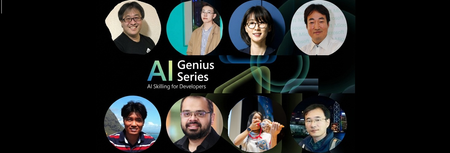
Introduction The Microsoft AI Genius Season 2 is here, bringing together the Asia Pacific’s top MVP speakers and developer leaders for a technical deep dive into the future of AI. Inspired by the success of last year’s series, the new season of videos on-demand is designed for developers and dev managers eager to master the tools behind GitHub Copilot, AI Foundry, Microsoft Fabric, and Azure Databricks. With a focus on hands-on learning and real-world impact, AI Genius Season 2 is your gateway to building smarter, faster, and with greater confidence than ever before. The program features three in-depth episodes designed to empower participants. Season 2 Highlights Episode 1: Elevate Your Agents with Model Context Protocol (MCP) Episode 2: Unified Data & AI Workflows with Fabric, Databricks & AI Foundry Episode 3: Supercharge Your DevOps with Copilot in Azure & GitHub Copilot Registration & On-Demand Access: AI Genius English (India, ANZ, ASEAN, HK) AI Genius Season 2 (China) Japan Korea Youngwook Kim, Jaeseok Lee, Mi Jeong Jeon from Korea, Jingun Jung, Tomohiro Suzuki, Maki Nagase from Japan, Kasam Shaikh from India, Qi Li from China The sessions are more than just presentations—they’re interactive experiences. Developers get hands-on with the exact tools and architecture featured in the AI Tour workshops, learning directly from MVPs who have implemented these solutions in real-world scenarios. The impact is clear: in Q1 alone, 87,500 developers engaged with the series, with 20,000 joining through a gated experience and 55% of the Managed Account List reached. China saw a 200% increase in views, while Japan and Korea also achieved significant growth. MVP speakers, Youngwook Kim, Jaeseok Lee, Mi Jeong Jeon from Korea, Jingun Jung, Tomohiro Suzuki, Maki Nagase from Japan, Kasam Shaikh from India, Qi Li from China, shared their expertise, delivering live demos, answering questions, and inspiring the next generation of AI innovators. Their dedication and passion have helped shape a vibrant, inclusive community where learning and collaboration thrive. Season 3: What’s Next for AI Genius? Building on the momentum of Season 2, AI Genius Season 3 is set to take developer skilling to the next level. This new season will feature advanced topics and hands-on workshops designed to help you: Prototype multimodal AI agents with Microsoft Foundry and the AI Toolkit in Visual Studio Code Orchestrate advanced multi-agent systems using SWE Agents and the Microsoft Agent Framework Bring Model Context Protocol (MCP) tools into production with Azure Functions and enterprise-ready AI patterns Whether you’re looking to deepen your expertise or explore the latest in agentic AI, Season 3 offers practical guidance and real-world demos from MVPs and Microsoft experts. Sessions are available in English, Korean, and Japanese, ensuring accessibility for all developers across Asia. Explore and register for Season 3: https://msft.it/6045sLrND Impact and Insights The AI Genius Series has become a catalyst for developer growth and innovation across Asia. By delivering localized content in English, Korean, and Japanese, the program ensures accessibility and relevance for all participants. The MVP speakers’ real-world insights and hands-on guidance have empowered thousands to move beyond experimentation and into enterprise-grade AI development. Key outcomes include: Over 87,000 developers engaged across Asia Significant growth in on-demand participation, especially in China and Japan High demand for immersive, digital hands-on experiences—driving new solutions for future events The ripple effect of MVP leadership is evident: as more developers gain confidence and skills, they, in turn, inspire others to join the journey. The AI Genius Expert Group continues to grow, welcoming new members who are passionate about advancing AI in their communities. Ready to become an AI Genius? Join the movement—register now for the latest episodes, available in English, Korean, and Japanese. Get hands-on with the tools, connect with experts, and earn your AI Genius badge. Whether you’re a developer, manager, or community advocate, there’s a place for you in this vibrant network. Let’s build the future of AI together! 👉 https://msft.it/6045sLrND Resources Season 2 Highlights Episode 1: Elevate Your Agents with Model Context Protocol (MCP) Episode 2: Unified Data & AI Workflows with Fabric, Databricks & AI Foundry Episode 3: Supercharge Your DevOps with Copilot in Azure & GitHub Copilot Registration & On-Demand Access: AI Genius English (India, ANZ, ASEAN, HK) AI Genius Season 2 (China) Japan Korea508Views3likes0CommentsThe Art and Science of Prompting: AI fluency. mayoral delegate edition
Art and science of prompting is your gateway to unlocking citywide transformation. AI skills are now foundational for every city leader. The winners will be those who ask better questions, shape better prompts, and empower their teams to experiment, learn, and scale what works. This session will show you how to move from curiosity to action, and from pilot to policy The deck below is the best prompts I've curated over 2.5 years deeply testing, implementing, teaching, and scaling AI to governments and large companies around the world. These are the basis to the prompting skills you can gain to augment and supercharge your expertise. Slide 10 is my personal favorite -- the easy button -- i use it everyday and so should you. Start with an area you're already an expert in, and go deep with context. Get to your 'Aha moment' then rinse and repeat. Have fun!