threat hunting
69 Topics
Understand New Sentinel Pricing Model with Sentinel Data Lake Tier
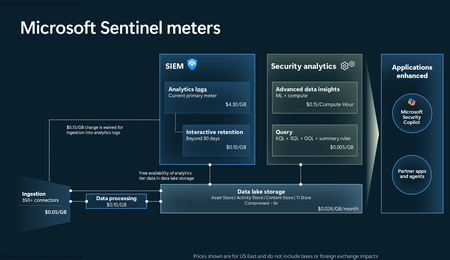
Introduction on Sentinel and its New Pricing Model Microsoft Sentinel is a cloud-native Security Information and Event Management (SIEM) and Security Orchestration, Automation, and Response (SOAR) platform that collects, analyzes, and correlates security data from across your environment to detect threats and automate response. Traditionally, Sentinel stored all ingested data in the Analytics tier (Log Analytics workspace), which is powerful but expensive for high-volume logs. To reduce cost and enable customers to retain all security data without compromise, Microsoft introduced a new dual-tier pricing model consisting of the Analytics tier and the Data Lake tier. The Analytics tier continues to support fast, real-time querying and analytics for core security scenarios, while the new Data Lake tier provides very low-cost storage for long-term retention and high-volume datasets. Customers can now choose where each data type lands—analytics for high-value detections and investigations, and data lake for large or archival types—allowing organizations to significantly lower cost while still retaining all their security data for analytics, compliance, and hunting. Please flow diagram depicts new sentinel pricing model: Now let's understand this new pricing model with below scenarios: Scenario 1A (PAY GO) Scenario 1B (Usage Commitment) Scenario 2 (Data Lake Tier Only) Scenario 1A (PAY GO) Requirement Suppose you need to ingest 10 GB of data per day, and you must retain that data for 2 years. However, you will only frequently use, query, and analyze the data for the first 6 months. Solution To optimize cost, you can ingest the data into the Analytics tier and retain it there for the first 6 months, where active querying and investigation happen. After that period, the remaining 18 months of retention can be shifted to the Data Lake tier, which provides low-cost storage for compliance and auditing needs. But you will be charged separately for data lake tier querying and analytics which depicted as Compute (D) in pricing flow diagram. Pricing Flow / Notes The first 10 GB/day ingested into the Analytics tier is free for 31 days under the Analytics logs plan. All data ingested into the Analytics tier is automatically mirrored to the Data Lake tier at no additional ingestion or retention cost. For the first 6 months, you pay only for Analytics tier ingestion and retention, excluding any free capacity. For the next 18 months, you pay only for Data Lake tier retention, which is significantly cheaper. Azure Pricing Calculator Equivalent Assuming no data is queried or analyzed during the 18-month Data Lake tier retention period: Although the Analytics tier retention is set to 6 months, the first 3 months of retention fall under the free retention limit, so retention charges apply only for the remaining 3 months of the analytics retention window. Azure pricing calculator will adjust accordingly. Scenario 1B (Usage Commitment) Now, suppose you are ingesting 100 GB per day. If you follow the same pay-as-you-go pricing model described above, your estimated cost would be approximately $15,204 per month. However, you can reduce this cost by choosing a Commitment Tier, where Analytics tier ingestion is billed at a discounted rate. Note that the discount applies only to Analytics tier ingestion—it does not apply to Analytics tier retention costs or to any Data Lake tier–related charges. Please refer to the pricing flow and the equivalent pricing calculator results shown below. Monthly cost savings: $15,204 – $11,184 = $4,020 per month Now the question is: What happens if your usage reaches 150 GB per day? Will the additional 50 GB be billed at the Pay-As-You-Go rate? No. The entire 150 GB/day will still be billed at the discounted rate associated with the 100 GB/day commitment tier bucket. Azure Pricing Calculator Equivalent (100 GB/ Day) Azure Pricing Calculator Equivalent (150 GB/ Day) Scenario 2 (Data Lake Tier Only) Requirement Suppose you need to store certain audit or compliance logs amounting to 10 GB per day. These logs are not used for querying, analytics, or investigations on a regular basis, but must be retained for 2 years as per your organization’s compliance or forensic policies. Solution Since these logs are not actively analyzed, you should avoid ingesting them into the Analytics tier, which is more expensive and optimized for active querying. Instead, send them directly to the Data Lake tier, where they can be retained cost-effectively for future audit, compliance, or forensic needs. Pricing Flow Because the data is ingested directly into the Data Lake tier, you pay both ingestion and retention costs there for the entire 2-year period. If, at any point in the future, you need to perform advanced analytics, querying, or search, you will incur additional compute charges, based on actual usage. Even with occasional compute charges, the cost remains significantly lower than storing the same data in the Analytics tier. Realized Savings Scenario Cost per Month Scenario 1: 10 GB/day in Analytics tier $1,520.40 Scenario 2: 10 GB/day directly into Data Lake tier $202.20 (without compute) $257.20 (with sample compute price) Savings with no compute activity: $1,520.40 – $202.20 = $1,318.20 per month Savings with some compute activity (sample value): $1,520.40 – $257.20 = $1,263.20 per month Azure calculator equivalent without compute Azure calculator equivalent with Sample Compute Conclusion The combination of the Analytics tier and the Data Lake tier in Microsoft Sentinel enables organizations to optimize cost based on how their security data is used. High-value logs that require frequent querying, real-time analytics, and investigation can be stored in the Analytics tier, which provides powerful search performance and built-in detection capabilities. At the same time, large-volume or infrequently accessed logs—such as audit, compliance, or long-term retention data—can be directed to the Data Lake tier, which offers dramatically lower storage and ingestion costs. Because all Analytics tier data is automatically mirrored to the Data Lake tier at no extra cost, customers can use the Analytics tier only for the period they actively query data, and rely on the Data Lake tier for the remaining retention. This tiered model allows different scenarios—active investigation, archival storage, compliance retention, or large-scale telemetry ingestion—to be handled at the most cost-effective layer, ultimately delivering substantial savings without sacrificing visibility, retention, or future analytical capabilities.1.5KViews2likes2CommentsAutomating Microsoft Sentinel: A blog series on enabling Smart Security
This entry guides readers through building custom Playbooks in Microsoft Sentinel, highlighting best practices for trigger selection, managed identities, and integrating built-in tools and external APIs. It offers practical steps and insights to help security teams automate incident response and streamline operations within Sentinel.1.5KViews2likes1CommentTurn Complexity into Clarity: Introducing the New UEBA Behaviors Layer in Microsoft Sentinel
Security teams today face an overwhelming challenge: every data point is now a potential security signal, and SOCs are drowning in fragmented, high-volume logs from countless sources - firewalls, cloud platforms, identity systems, and more. Analysts spend precious time translating between schemas, manually correlating events, and piecing together timelines across disparate data sources. For custom detections, it’s no different. What if you could transform this noisy complexity into clear, actionable security intelligence? Today, we're thrilled to announce the release of the UEBA Behaviors layer - a breakthrough AI-based UEBA capability in Microsoft Sentinel that fundamentally changes how SOC teams understand and respond to security events. The Behaviors layer translates low-level, noisy telemetry into human-readable behavioral insights that answer the critical question: "Who did what to whom, and why does it matter?" Instead of sifting through thousands of raw CloudTrail events or firewall logs, you get enriched, normalized behaviors - each one mapped to MITRE ATT&CK tactics and techniques, tagged with entity roles, and presented with a clear, natural-language explanation. All behaviors are aggregated and sequenced within a time window or specific trigger, to give you the security story that resides in the logs. What Makes the Behaviors Layer Different? Unlike alerts - which signal potential threats - or anomalies - which flag unusual activity - behaviors are neutral, descriptive observations. They don't decide if something is malicious; they simply describe meaningful actions in a consistent, security-focused way. The Behaviors layer bridges the gap between alerts (work items for the SOC, indicating a breach) and raw logs, providing an abstraction layer that makes sense of what happened without requiring deep familiarity with every log source. While existing UEBA capabilities provide insights and anomalies for a specific event (raw log), behaviors turn clusters of related events – based on time windows or triggers – into security data. The technology behind it: Generative AI powers the Behaviors layer to create and scale the insights it provides. AI is used to develop behavior logic, map entities, perform MITRE mapping, and ensure explainability - all while maintaining quality guardrails. Each behavior is mapped back to raw logs, so you can always trace which events contributed to it. Real-World Impact: We've been working closely with enterprise customers during private preview, and their feedback speaks volumes about the transformative potential of the Behaviors layer: "We're constantly exploring innovative ways to detect anomalous behavior for our detection engineering and incident enrichment. Behaviors adds a powerful new layer that also covers third-party data sources in a multi-cloud environment - seamlessly integrable and packed with rich insights, including MITRE mapping and detailed context for deeper correlation and context-driven investigation." (Glueckkanja) "Microsoft's new AI-powered extension for UEBA enhances behavioral capabilities for PaloAlto logs. By intelligently aggregating and sequencing low-level security events, it elevates them into high-fidelity 'behaviors' - powerful, actionable signals. This enhanced behavioral intelligence significantly can improve your security operations. During investigations, these behaviors are immediately pointing to unusual or suspicious activities and providing a rich, contextual understanding of an entity's actions. They serve as a stable starting point for the analysts, instead of sifting through millions of logs." (BlueVoyant) How It Works: Aggregation and Sequencing The Behaviors layer operates using two powerful patterns: Aggregation Behaviors detect volume-based patterns. For example: "User accessed 50+ AWS resources in 1 hour." These are invaluable for spotting unusual activity levels and turning high-volume logs into actionable security insights. Sequencing Behaviors detect multi-step patterns that surface complex chains invisible in individual events. For example: "Access key created → used from new IP → privileged API calls." This helps you spot sophisticated tactics and procedures across sources. Once enabled, behaviors are aggregated and sequenced based on time windows and triggers tailored to each logic. When the time window closes or a pattern is identified, the behavior log is created immediately - providing near real-time availability. The behaviors are stored as records in Log Analytics. This means each behavior record contributes to your data volume and will be billed according to your Sentinel/Log Analytics data ingestion rates. Use Cases: Empowering Every SOC Persona The new Behaviors layer in Microsoft Sentinel enhances the daily workflows of SOC analysts, threat hunters, and detection engineers by providing a unified, contextual view of security activity across diverse data sources. SOC analysts can now investigate incidents faster by querying behaviors tied to the entities involved in an incident. For example, instead of reviewing 20 separate AWS API calls, a single behavior like “Suspicious mass secret access via AWS IAM” provides immediate clarity and context, with or without filtering on specific MITRE ATT&CK mapping. Simply use the following query (choose the entity you’re investigating): let targetTechniques = dynamic ("Password Guessing (T1110.001)"); // to filter on MITRE ATT&CK let behaviorInfoFiltered = BehaviorInfo | where TimeGenerated > ago(1d) | where AttackTechniques has_any (targetTechniques) | project BehaviorId, AttackTechniques; BehaviorEntities | where TimeGenerated > ago(1d) | where AccountUpn == ("user@domain.com") | join kind=inner (behaviorInfoFiltered) on BehaviorId Threat hunters benefit from the ability to proactively search for behaviors mapped to MITRE tactics or specific patterns, uncovering stealthy activity such as credential enumeration or lateral movement without complex queries. Another use case, is looking for specific entities that move across the MITRE ATT&CK chain within a specific time window, for example: let behaviorInfo = BehaviorInfo | where TimeGenerated > ago(12h) | where Categories has "Persistance" or Categories has "Discovery" // Replace with actual tactics | project BehaviorId, Categories, Title, TimeGenerated; BehaviorEntities | where TimeGenerated > ago(12h) | extend EntityName = coalesce(AccountUpn, DeviceName, CloudResourceId) // Replace with actual entity types | join kind=inner (behaviorInfo) on BehaviorId | summarize BehaviorTypes = make_set(Title), AffectedEntities = dcount(EntityName) by bin(TimeGenerated, 5m) | where AffectedEntities > 5 Detection engineers can build simpler, more explainable rules using normalized, high-fidelity behaviors as building blocks. This enables faster deployment of detections and more reliable automation triggers, such as correlating a new AWS access key creation with privilege escalation within a defined time window. Another example is joining the rarest behaviors with other signals that include the organization’s highest value assets: BehaviorInfo | where TimeGenerated > ago(5d) | summarize Occurrences = dcount(behaviorId), FirstSeen = min(TimeGenerated), LastSeen = max(TimeGenerated) by Title | order by Occurrences asc Supported Data Sources & Coverage This release focuses on most common non-Microsoft data sources that traditionally lack easy behavioral context in Sentinel. Coverage of more behaviors will expand over time - both within each data source and across new sources. Initial supported sources include: CommonSecurityLog - Specific vendors and logs: o Cyber Ark Vault o Palo Alto Threats AWS CloudTrail - Coverage for several AWS services like EC2, IAM, S3, EKS, Secrets Manager (common AWS management activities) GCPAuditLogs Once enabled, two new tables (BehaviorInfo and BehaviorEntities) will populate in your Log Analytics workspace. You can query these tables in Advanced Hunting, use them in detection rules, or view them alongside incidents - just like any other Sentinel data. If you already benefit from Defender behaviors (such as Microsoft Defender for Cloud Apps), the same query will show results for all sources. Ready to Experience the Power of Behaviors? The future of security operations is here. Don't wait to modernize your SOC workflows. Enable the Behaviors layer in Microsoft Sentinel today and start transforming raw telemetry into clear, contextual insights that accelerate detection, investigation, and response. Get started now: Understand pre-requisites, limitations, pricing, and use of AI in Documentation. Navigate to your Sentinel workspace settings, enable the Behaviors layer (a new tab under the UEBA settings) and connect the data sources. This is currently supported for a single workspace per tenant (best chosen by the ingestion of the supported data sources). Once enabled, explore the BehaviorInfo and BehaviorEntities tables in Advanced Hunting. If you already benefit from behaviors in XDR, querying the tables will show results from both XDR and UEBA. Start building detection rules, hunting queries, and automation workflows using the behaviors as building blocks. Share your feedback to help us improve and expand coverage.3.4KViews6likes0CommentsIgnite 2025: New Microsoft Sentinel Connectors Announcement
Microsoft Sentinel continues to set the pace for innovation in cloud-native SIEMs, empowering security teams to meet today’s challenges with scalable analytics, built-in AI, and a cost-effective data lake. Recognized as a leader by Gartner and Forrester, Microsoft Sentinel is a platform for all of security, evolving to unify signals, cut costs, and power agentic AI for the modern SOC. As Microsoft Sentinel’s capabilities expand, so does its connector ecosystem. With over 350+ integrations available, organizations can seamlessly bring data from a wide range of sources into Microsoft Sentinel’s analytics and data lake tiers. This momentum is driven by our partners, who continue to deliver new and enhanced connectors that address real customer needs. The past year has seen rapid growth in both the number and diversity of connectors, ensuring that Microsoft Sentinel remains robust, flexible, and ready to meet the demands of any security environment. Today we showcase some of the most recent additions to our growing Microsoft Sentinel ecosystem spanning categories such as cloud security, endpoint protection, identity, IT operations, threat intelligence, compliance, and more: New and notable integrations BlinkOps and Microsoft Sentinel BlinkOps is an enterprise-ready agentic security automation platform that integrates seamlessly with Microsoft Sentinel to accelerate incident response and streamline operations. With Blink, analysts can rapidly build sophisticated workflows and custom security agents—without writing a single line of code—enabling agile, scalable automation with both Microsoft Sentinel and any other security platform. This integration helps eliminate alert fatigue, reduce mean time to resolution (MTTR), and free teams to focus on what matters most: driving faster operations, staying ahead of cyber threats, and unlocking new levels of efficiency through reliable, trusted orchestration. Check Point for Microsoft Sentinel solutions Check Point’s External Risk Management (ERM) IOC and Alerts integration with Microsoft Sentinel streamlines how organizations detect and respond to external threats by automatically sending both alerts and indicators of compromise (IOCs) into Microsoft Sentinel. Through this integration, customers can configure SOAR playbooks to trigger automated actions such as updating security policies, blocking malicious traffic, and executing other security operations tasks. This orchestration reduces manual effort, accelerates response times, and allows IT teams, network administrators, and security personnel to focus on strategic threat analysis—strengthening the organization’s overall security posture. Cloudflare for Microsoft Sentinel Cloudflare’s integration with Microsoft Sentinel, powered by Logpush, brings detailed security telemetry from its Zero Trust and network services into your SIEM environment. By forwarding logs such as DNS queries, HTTP requests, and access events through Logpush, the connector enables SOC teams to correlate Cloudflare data with other sources for comprehensive threat detection. This integration supports automated workflows for alerting and investigation, helping organizations strengthen visibility across web traffic and identity-based access while reducing manual overhead. Contrast ADR for Microsoft Sentinel Contrast Security gives Microsoft Sentinel users their first-ever integration with Application Detection and Response (ADR), delivering real-time visibility into application and API attacks, eliminating the application-layer blind spot. By embedding security directly into applications, Contrast enables continuous monitoring and precise blocking of attacks, and with AI assistance, the ability to fix underlying software vulnerabilities in minutes. This integration helps security teams prioritize actionable insights, reduce noise, and better understand the severity of threats targeting APIs and web apps. GreyNoise Enterprise Solution for Microsoft Sentinel GreyNoise helps Microsoft Sentinel users cut through the noise by identifying and filtering out internet background traffic that clutters security alerts. Drawing from a global sensor network, GreyNoise classifies IP addresses that are scanning the internet, allowing SOC teams to deprioritize benign activity and focus on real threats. The integration supports automated triage, threat hunting, and enrichment workflows, giving analysts the context they need to investigate faster and more effectively. iboss Connector for Microsoft Sentinel The iboss Connector for Microsoft Sentinel delivers real-time ingestion of URL event logs, enriching your SIEM with high-fidelity web traffic insights. Logs are forwarded in Common Event Format (CEF) over Syslog, enabling streamlined integration without the need for a proxy. With built-in parser functions and custom workbooks, the solution supports rapid threat detection and investigation. This integration is especially valuable for organizations adopting Zero Trust principles, offering granular visibility into user access patterns and helping analysts accelerate response workflows. Mimecast Mimecast’s integration with Microsoft Sentinel consolidates email security telemetry into a unified threat detection environment. By streaming data from Mimecast into Microsoft Sentinel’s Log Analytics workspace, security teams can craft custom queries, automate response workflows, and prioritize high-risk events. This connector supports a wide range of use cases, from phishing detection to compliance monitoring, while helping reduce mean time to respond (MTTR). MongoDB Atlas Solution for Microsoft Sentinel MongoDB Atlas integrates with Microsoft Sentinel to provide visibility into database activity and security events across cloud environments. By forwarding database logs into Sentinel, this connector enables SOC teams to monitor access patterns, detect anomalies, and correlate database alerts with broader security signals. The integration allows for custom queries and dashboards to be built on real-time log data, helping organizations strengthen data security, streamline investigations, and maintain compliance for critical workloads. Onapsis Defend Onapsis Defend integrates with Microsoft Sentinel Solution for SAP to deliver real-time security monitoring and threat detection from both cloud and on-premises SAP systems. By forwarding Onapsis's unique SAP exploit detection, proprietary SAP zero-day rules, and expert SAP-focused insights into Microsoft Sentinel, this integration enables SOC teams to correlate SAP-specific risks with enterprise-wide telemetry and accelerate incident response. The integration supports prebuilt analytics rules and dashboards, helping organizations detect suspicious behavior and malicious activity, prioritize remediation, and strengthen compliance across complex SAP application landscapes. Proofpoint on Demand (POD) Email Security for Microsoft Sentinel Proofpoint’s Core Email Protection integrates with Microsoft Sentinel to deliver granular email security telemetry for advanced threat analysis. By forwarding events such as phishing attempts, malware detections, and policy violations into Microsoft Sentinel, SOC teams can correlate Proofpoint data with other sources for a unified view of risk. The connector supports custom queries, dashboards, and automated playbooks, enabling faster investigations and streamlined remediation workflows. This integration helps organizations strengthen email defenses and improve response efficiency across complex attack surfaces. Proofpoint TAP Solution Proofpoint’s Targeted Attack Protection (TAP), part of its Core Email Protection, integrates with Microsoft Sentinel to centralize email security telemetry for advanced threat detection and response. By streaming logs and events from Proofpoint into Microsoft Sentinel, SOC teams gain visibility into phishing attempts, malicious attachments, and compromised accounts. The connector supports custom queries, dashboards, and automated playbooks, enabling faster investigations and streamlined remediation workflows. This integration helps organizations strengthen email defenses while reducing manual effort across incident response processes. RSA ID Plus Admin Log Connector The RSA ID Plus Admin Log Connector integrates with Microsoft Sentinel to provide centralized visibility into administrative activity within RSA ID Plus Connector. By streaming admin-level logs into Sentinel, SOC teams can monitor changes, track authentication-related operations, and correlate identity events with broader security signals. The connector supports custom queries and dashboards, enabling organizations to strengthen oversight and streamline investigations across their hybrid environments. Rubrik Integrations with Microsoft Sentinel for Ransomware Protection Rubrik’s integration with Microsoft Sentinel strengthens ransomware resilience by combining data security with real-time threat detection. The connector streams anomaly alerts, such as suspicious deletions, modifications, encryptions, or downloads, directly into Microsoft Sentinel, enabling fast investigations and more informed responses. With built-in automation, security teams can trigger recovery workflows from within Microsoft Sentinel, restoring clean backups or isolating affected systems. The integration bridges IT and SecOps, helping organizations minimize downtime and maintain business continuity when facing data-centric threats. Samsung Knox Asset Intelligence for Microsoft Sentinel Samsung’s Knox Asset Intelligence integration with Microsoft Sentinel equips security teams with near real-time visibility into mobile device threats across Samsung Galaxy enterprise fleets. By streaming security events and logs from managed Samsung devices into Microsoft Sentinel via the Azure Monitor Log Ingestion API, organizations can monitor risk posture, detect anomalies, and investigate incidents from a centralized dashboard. This solution is especially valuable for SOC teams monitoring endpoints for large mobile workforces, offering data-driven insights to reduce blind spots and strengthen endpoint security without disrupting device performance. SAP S/4HANA Public Cloud – Microsoft Sentinel SAP S/4HANA Cloud, public edition integrates with Microsoft Sentinel Solution for SAP to deliver unified, real-time security monitoring for cloud ERP environments. This connector leverages Microsoft’s native SAP integration capabilities to stream SAP logs into Microsoft Sentinel, enabling SOC teams to correlate SAP-specific events with enterprise-wide telemetry for faster, more accurate threat detection and response. SAP Enterprise Threat Detection – Microsoft Sentinel SAP Enterprise Threat Detection integrates with Microsoft Sentinel Solution for SAP to deliver unified, real-time security monitoring across SAP landscapes and the broader enterprise. Normalized SAP logs, alerts, and investigation reports flow into Microsoft Sentinel, enabling SOC teams to correlate SAP-specific alerts with enterprise telemetry for faster, more accurate threat detection and response. SecurityBridge: SAP Data to Microsoft Sentinel SecurityBridge extends Microsoft Sentinel for SAP’s reach into SAP environments, offering real-time monitoring and threat detection across both cloud and on-premises SAP systems. By funneling normalized SAP security events into Microsoft Sentinel, this integration enables SOC teams to correlate SAP-specific risks with broader enterprise telemetry. With support for S/4HANA, SAP BTP, and NetWeaver-based applications, SecurityBridge simplifies SAP security auditing and provides prebuilt dashboards and templates to accelerate investigations. Tanium Microsoft Sentinel Connector Tanium’s integration with Microsoft Sentinel bridges real-time endpoint intelligence and SIEM analytics, offering a unified approach to threat detection and response. By streaming real-time telemetry and alerts into Microsoft Sentinel,Tanium enables security teams to monitor endpoint health, investigate incidents, and trigger automated remediation, all from a single console. The connector supports prebuilt workbooks and playbooks, helping organizations reduce dwell time and align IT and security operations around a shared source of truth. Team Cymru Pure Signal Scout for Microsoft Sentinel Team Cymru’s Pure Signal™ Scout integration with Microsoft Sentinel delivers high-fidelity threat intelligence drawn from global internet telemetry. By enriching Microsoft Sentinel alerts with real-time context on IPs, domains, and adversary infrastructure, Scout enables security teams to proactively monitor third-party compromise, track threat actor infrastructure, and reduce false positives. The integration supports external threat hunting and attribution, enabling analysts to discover command-and-control activity, signals of data exfiltration and compromise with greater precision. For organizations seeking to build preemptive defenses by elevating threat visibility beyond their borders, Scout offers a lens into the broader threat landscape at internet scale. Veeam App for Microsoft Sentinel The Veeam App for Microsoft Sentinel enhances data protection by streaming backup and recovery telemetry into your SIEM environment. The solution provides visibility into backup job status, anomalies, and potential ransomware indicators, enabling SOC teams to correlate these events with broader security signals. With support for custom queries and automated playbooks, this integration helps organizations accelerate investigations, trigger recovery workflows, and maintain resilience against data-centric threats. WithSecure Elements via Function for Microsoft Sentinel WithSecure’s Elements platform integrates with Microsoft Sentinel to provide centralized visibility into endpoint protection and detection events. By streaming incident and malware telemetry into Microsoft Sentinel, organizations can correlate endpoint data with broader security signals for faster, more informed responses. The solution supports a proactive approach to cybersecurity, combining predictive, preventive, and responsive capabilities, making it well-suited for teams seeking speed and flexibility without sacrificing depth. This integration helps reduce complexity while enhancing situational awareness across hybrid environments, and for companies to prevent or minimize any disruption. In addition to these solutions from our third-party partners, we are also excited to announce the following connectors published by the Microsoft Sentinel team, available now in Azure Marketplace and Microsoft Sentinel content hub. Alibaba Cloud Action Trail Logs AWS: Network Firewall AWS: Route 53 DNS AWS: Security Hub Findings AWS: Server Access Cisco Secure Endpoint GCP: Apigee GCP: CDN GCP: Cloud Monitor GCP: Cloud Run GCP: DNS GCP: Google Kubernetes Engine (GKE) GCP: NAT GCP: Resource Manager GCP: SQL GCP: VPC Flow GCP: IAM OneLogin IAM Oracle Cloud Infrastructure Palo Alto: Cortex Xpanse CCF Palo Alto: Prisma Cloud CWPP Ping One Qualys Vulnerability Management Salesforce Service Cloud Slack Audit Snowflake App Assure: The Microsoft Sentinel promise Every connector in the Microsoft Sentinel ecosystem is built to work out of the box, backed by the App Assure team and the Microsoft Sentinel promise. In the unlikely event that customers encounter any issues, App Assure stands ready to assist to ensure rapid resolution. With the new Microsoft Sentinel data lake features, we extend our promise for customers looking to bring their data to the lake. To request a new connector or features for an existing one, contact us via our intake form. Learn More Microsoft Sentinel data lake Microsoft Sentinel data lake: Unify signals, cut costs, and power agentic AI Introducing Microsoft Sentinel data lake What is Microsoft Sentinel data lake Unlocking Developer Innovation with Microsoft Sentinel data lake Microsoft Sentinel Codeless Connector Framework (CCF) Create a codeless connector for Microsoft Sentinel What’s New in Microsoft Sentinel Microsoft App Assure App Assure home page App Assure services App Assure blog App Assure’s promise: Migrate to Sentinel with confidence App Assure’s Sentinel promise now extends to Microsoft Sentinel data lake RSAC 2025 new Microsoft Sentinel connectors announcement Microsoft Security Microsoft’s Secure Future Initiative Microsoft Unified SecOps4.3KViews2likes0CommentsMicrosoft Sentinel data lake FAQ
On September 30, 2025, Microsoft announced the general availability of the Microsoft Sentinel data lake, designed to centralize and retain massive volumes of security data in open formats like delta parquet. By decoupling storage from compute, the data lake supports flexible querying, while offering unified data management and cost-effective retention. The Sentinel data lake is a game changer for security teams, serving as the foundational layer for agentic defense, deeper security insights and graph-based enrichment. In this blog we offer answers to many of the questions we’ve heard from our customers and partners. General questions 1. What is the Microsoft Sentinel data lake? Microsoft has expanded its industry-leading SIEM solution, Microsoft Sentinel, to include a unified, security data lake, designed to help optimize costs, simplify data management, and accelerate the adoption of AI in security operations. This modern data lake serves as the foundation for the Microsoft Sentinel platform. It has a cloud-native architecture and is purpose-built for security—bringing together all security data for greater visibility, deeper security analysis and contextual awareness. It provides affordable, long-term retention, allowing organizations to maintain robust security while effectively managing budgetary requirements. 2. What are the benefits of Sentinel data lake? Microsoft Sentinel data lake is designed for flexible analytics, cost management, and deeper security insights. It centralizes security data in an open format like delta parquet for easy access. This unified view enhances threat detection, investigation, and response across hybrid and multi-cloud environments. It introduces a disaggregated storage and compute pricing model, allowing customers to store massive volumes of security data at a fraction of the cost compared to traditional SIEM solutions. It allows multiple analytics engines like Kusto, Spark, and ML to run on a single data copy, simplifying management, reducing costs, and supporting deeper security analysis. It integrates with GitHub Copilot and VS Code empowering SOC teams to automate enrichment, anomaly detection, and forensic analysis. It supports AI agents via the MCP server, allowing tools like GitHub Copilot to query and automate security tasks. The MCP Server layer brings intelligence to the data, offering Semantic Search, Query Tools, and Custom Analysis capabilities that make it easier to extract insights and automate workflows. Customers also benefit from streamlined onboarding, intuitive table management, and scalable multi-tenant support, making it ideal for MSSPs and large enterprises. The Sentinel data lake is purpose built for security workloads, ensuring that processes from ingestion to analytics meet cybersecurity requirements. 3. Is the Sentinel data lake generally available? Yes. The Sentinel data lake is generally available (GA) starting September 30, 2025. To learn more, see GA announcement blog. 4. What happens to Microsoft Sentinel SIEM? Microsoft is expanding Sentinel into an AI powered end-to-end security platform that includes SIEM and new platform capabilities - Security data lake, graph-powered analytics and MCP Server. SIEM remains a core component and will be actively developed and supported. Getting started 1. What are the prerequisites for Sentinel data lake? To get started: Connect your Sentinel workspace to Microsoft Defender prior to onboarding to Sentinel data lake. Once in the Defender experience see data lake onboarding documentation for next steps. Note: Sentinel is moving to the Microsoft Defender portal and the Sentinel Azure portal will be retired by July 2026. 2. I am a Sentinel-only customer, and not a Defender customer, can I use the Sentinel data lake? Yes. You must connect Sentinel to the Defender experience before onboarding to the Sentinel data lake. Microsoft Sentinel is generally available in the Microsoft Defender portal, with or without Microsoft Defender XDR or an E5 license. If you have created a log analytics workspace, enabled it for Sentinel and have the right Microsoft Entra roles (e.g. Global Administrator + Subscription Owner, Security Administrator + Sentinel Contributor), you can enable Sentinel in the Defender portal. For more details on how to connect Sentinel to Defender review these sources: Microsoft Sentinel in the Microsoft Defender portal 3. In what regions is Sentinel data lake available? For supported regions see: Geographical availability and data residency in Microsoft Sentinel | Microsoft Learn 4. Is there an expected release date for Microsoft Sentinel data lake in Government clouds? While the exact date is not yet finalized, we anticipate support for these clouds soon. 5. How will URBAC and Entra RBAC work together to manage the data lake given there is no centralized model? Entra RBAC will provide broad access to the data lake (URBAC maps the right permissions to specific Entra role holders: GA/SA/SO/GR/SR). URBAC will become a centralized pane for configuring non-global delegated access to the data lake. For today, you will use this for the “default data lake” workspace. In the future, this will be enabled for non-default Sentinel workspaces as well – meaning all workspaces in the data lake can be managed here for data lake RBAC requirements. Azure RBAC on the Log Analytics (LA) workspace in the data lake is respected through URBAC as well today. If you already hold a built-in role like log analytics reader, you will be able to run interactive queries over the tables in that workspace. Or, if you hold log analytics contributor, you can read and manage table data. For more details see: Roles and permissions in the Microsoft Sentinel platform | Microsoft Learn Data ingestion and storage 1. How do I ingest data into the Sentinel data lake? To ingest data into the Sentinel data lake, you can use existing Sentinel data connectors or custom connectors to bring data from Microsoft and third-party sources. Data can be ingested into the analytic tier and/or data lake tier. Data ingested into the analytics tier is automatically mirrored to the lake, while lake-only ingestion is available for select tables. Data retention is configured in table management. Note: Certain tables do not support data lake-only ingestion via either API or data connector UI. See here for more information: Custom log tables. 2. What is Microsoft’s guidance on when to use analytics tier vs. the data lake tier? Sentinel data lake offers flexible, built-in data tiering (analytics and data lake tiers) to effectively meet diverse business use cases and achieve cost optimization goals. Analytics tier: Is ideal for high-performance, real-time, end-to-end detections, enrichments, investigation and interactive dashboards. Typically, high-fidelity data from EDRs, email gateways, identity, SaaS and cloud logs, threat intelligence (TI) should be ingested into the analytics tier. Data in the analytics tier is best monitored proactively with scheduled alerts and scheduled analytics to enable security detections Data in this tier is retained at no cost for up to 90 days by default, extendable to 2 years. A copy of the data in this tier is automatically available in the data lake tier at no extra cost, ensuring a unified copy of security data for both tiers. Data lake tier: Is designed for cost-effective, long-term storage. High-volume logs like NetFlow logs, TLS/SSL certificate logs, firewall logs and proxy logs are best suited for data lake tier. Customers can use these logs for historical analysis, compliance and auditing, incident response (IR), forensics over historical data, build tenant baselines, TI matching and then promote resulting insights into the analytics tier. Customers can run full Kusto queries, Spark Notebooks and scheduled jobs over a single copy of their data in the data lake. Customers can also search, enrich and restore data from the data lake tier to the analytics tier for full analytics. For more details see documentation. 3. What does it mean that a copy of all new analytics tier data will be available in the data lake? When Sentinel data lake is enabled, a copy of all new data ingested into the analytics tier is automatically duplicated into the data lake tier. This means customers don’t need to manually configure or manage this process—every new log or telemetry added to the analytics tier becomes instantly available in the data lake. This allows security teams to run advanced analytics, historical investigations, and machine learning models on a single, unified copy of data in the lake, while still using the analytics tier for real-time SOC workflows. It’s a seamless way to support both operational and long-term use cases—without duplicating effort or cost. 4. Is there any cost for retention in the analytics tier? You will get 90 days of analytics retention free. Simply set analytics retention to 90 days or less. Total retention setting – only the mirrored portion that overlaps with the free analytics retention is free in the data lake. Retaining data in the lake beyond the analytics retention period incurs additional storage costs. See documentation for more details: Manage data tiers and retention in Microsoft Sentinel | Microsoft Learn 5. What is the guidance for Microsoft Sentinel Basic and Auxiliary Logs customers? If you previously enabled Basic or Auxiliary Logs plan in Sentinel: You can view Basic Logs in the Defender portal but manage it from the Log Analytics workspace. To manage it in the Defender portal, you must change the plan from Basic to Analytics. Existing Auxiliary Log tables will be available in the data lake tier for use once the Sentinel data lake is enabled. Prior to the availability of Sentinel data lake, Auxiliary Logs provided a long-term retention solution for Sentinel SIEM. Now once the data lake is enabled, Auxiliary Log tables will be available in the Sentinel data lake for use with the data lake experiences. Billing for Auxiliary Logs will switch to Sentinel data lake meters. Microsoft Sentinel customers are recommended to start planning their data management strategy with the data lake. While Basic and auxiliary Logs are still available, they are not being enhanced further. Please plan on onboarding your security data to the Sentinel data lake. Azure Monitor customers can continue to use Basic and Auxiliary Logs for observability scenarios. 6. What happens to customers that already have Archive logs enabled? If a customer has already configured tables for Archive retention, those settings will be inherited by the Sentinel data lake and will not change. Data in the Archive logs will continue to be accessible through Sentinel search and restore experiences. Mirrored data (in the data lake) will be accessible via lake explorer and notebook jobs. Example: If a customer has 12 months of total retention enabled on a table, 2 months after enabling ingestion into the Sentinel data lake, the customer will still have access to 12 months of archived data (through Sentinel search and restore experiences), but access to only 2 months of data in the data lake (since the data lake was enabled). Key considerations for customers that currently have Archive logs enabled: The existing archive will remain, with new data ingested into the data lake going forward; previously stored archive data will not be backfilled into the lake. Archive logs will continue to be accessible via the Search and Restore tab under Sentinel. If analytics and data lake mode are enabled on table, which is the default setting for analytics tables when Sentinel data lake is enabled, data will continue to be ingested into the Sentinel data lake and archive going forward. There will only be one retention billing meter going forward. Archive will continue to be accessible via Search and Restore. If Sentinel data lake-only mode is enabled on table, new data will be ingested only into the data lake; any data that’s not already in the Sentinel data lake won’t be migrated/backfilled. Data that was previously ingested under the archive plan will be accessible via Search and Restore. 7. What is the guidance for customers using Azure Data Explorer (ADX) alongside Microsoft Sentinel? Some customers might have set up ADX cluster to augment their Sentinel deployment. Customers can choose to continue using that setup and gradually migrate to Sentinel data lake for new data to receive the benefits of a fully managed data lake. For all new implementations it is recommended to use the Sentinel data lake. 8. What happens to the Defender XDR data after enabling Sentinel data lake? By default, Defender XDR retains threat hunting data in the XDR default tier, which includes 30 days of analytics retention, which is included in the XDR license. You can extend the table retention period for supported Defender XDR tables beyond 30 days. For more information see Manage XDR data in Microsoft Sentinel. Note: Today you can't ingest XDR tables directly to the data lake tier without ingesting into the analytics tier first. 9. Are there any special considerations for XDR tables? Yes, XDR tables are unique in that they are available for querying in advanced hunting by default for 30 days. To retain data beyond this period, an explicit change to the retention setting is required, either by extending the analytics tier retention or the total retention period. A list of XDR advanced hunting tables supported by Sentinel are documented here: Connect Microsoft Defender XDR data to Microsoft Sentinel | Microsoft Learn. KQL queries and jobs 1. Is KQL and Notebook supported over the Sentinel data lake? Yes, via the data lake KQL query experience along with a fully managed Notebook experience which enables spark-based big data analytics over a single copy of all your security data. Customers can run queries across any time range of data in their Sentinel data lake. In the future, this will be extended to enable SQL query over lake as well. 2. Why are there two different places to run KQL queries in Sentinel experience? Consolidating advanced hunting and KQL Explorer user interfaces is on the roadmap. Security analysts will benefit from unified query experience across both analytics and data lake tiers. 3. Where is the output from KQL jobs stored? KQL jobs are written into existing or new analytics tier table. 4. Is it possible to run KQL queries on multiple data lake tables? Yes, you can run KQL interactive queries and jobs using operators like join or union. 5. Can KQL queries (either interactive or via KQL jobs) join data across multiple workspaces? Yes, security teams can run multi-workspace KQL queries for broader threat correlation. Pricing and billing 1. How does a customer pay for Sentinel data lake? Sentinel data lake is a consumption-based service with disaggregated storage and compute business model. Customers continue to pay for ingestion. Customers set up billing as a part of their onboarding for storage and analytics over data in the data lake (e.g. Queries, KQL or Notebook Jobs). See Sentinel pricing page for more details. 2. What are the pricing components for Sentinel data lake? Sentinel data lake offers a flexible pricing model designed to optimize security coverage and costs. For specific meter definitions, see documentation. 3. What are the billing updates at GA? We are enabling data compression billed with a simple and uniform data compression rate of 6:1 across all data sources, applicable only to data lake storage. Starting October 1, 2025, the data storage billing begins on the first day data is stored. To support ingestion and standardization of diverse data sources, we are introducing a new Data Processing feature that applies a $0.10 per GB charge for all uncompressed data ingested into the data lake for tables configured for data lake only retention. (does not apply to tables configured for both analytic and data lake tier retention). 4. How is retention billed for tables that use data lake-only ingestion & retention? During the public preview, data lake-only tables included the first 30 days of retention at no cost. At GA, storage costs will be billed. In addition, when retention billing switches to using compressed data size (instead of ingested size), this will change, and charges will apply for the entire retention period. Because billing will be based on compressed data size, customers can expect significant savings on storage costs. 5. Does “Data processing” meter apply to analytics tier data duplicated in the data lake? No. 6. What happens to billing for customers that activate Sentinel data lake on a table with archive logs enabled? Customers will automatically be billed using the data lake storage meter. Note: This means that customers will be charged using the 6X compression rate for data lake retention. 7. How do I control my Sentinel data lake costs? Sentinel is billed based on consumption and prices vary based on usage. An important tool in managing the majority of the cost is usage of analytics “Commitment Tiers”. The data lake complements this strategy for higher-volume data like network and firewall data to reduce analytics tier costs. Use the Azure pricing calculator and the Sentinel pricing page to estimate costs and understand pricing. 8. How do I manage Sentinel data lake costs? We are introducing a new cost management experience (public preview) to help customers with cost predictability, billing transparency, and operational efficiency. These in-product reports provide customers with insights into usage trends over time, enabling them to identify cost drivers and optimize data retention and processing strategies. Customers will also be able to set usage-based alerts on specific meters to monitor and control costs. For example, you can receive alerts when query or notebook usage passes set limits, helping avoid unexpected expenses and manage budgets. See documentation to learn more. 9. If I’m an Auxiliary Logs customer, how will onboarding to the Sentinel data lake affect my billing? Once a workspace is onboarded to Sentinel data lake, all Auxiliary Logs meters will be replaced by new data lake meters. Thank you Thank you to our customers and partners for your continued trust and collaboration. Your feedback drives our innovation, and we’re excited to keep evolving Microsoft Sentinel to meet your security needs. If you have any questions, please don’t hesitate to reach out—we’re here to support you every step of the way.4.1KViews1like8Comments
Missing details in Azure Activity Logs – MICROSOFT.SECURITYINSIGHTS/ENTITIES/ACTION
The Azure Activity Logs are crucial for tracking access and actions within Sentinel. However, I’m encountering a significant lack of documentation and clarity regarding some specific operation types. Resources consulted: https://learn.microsoft.com/en-us/azure/sentinel/audit-sentinel-data https://learn.microsoft.com/en-us/rest/api/securityinsights/entities?view=rest-securityinsights-2024-01-01-preview https://learn.microsoft.com/en-us/rest/api/securityinsights/operations/list?view=rest-securityinsights-2024-09-01&tabs=HTTP My issue: I observed unauthorized activity on our Sentinel workspace. The Azure Activity Logs clearly indicate the user involved, the resource, and the operation type: "MICROSOFT.SECURITYINSIGHTS/ENTITIES/ACTION" But that’s it. No detail about what the action was, what entity it targeted, or how it was triggered. This makes auditing extremely difficult. It's clear the person was in Sentinel and perform an activity through it, from search, KQL, logs to find an entity from a KQL query. But, that's all... Strangely, this operation is not even listed in the official Sentinel Operations documentation linked above. My question: Has anyone encountered this and found a way to interpret this operation type properly? Any insight into how to retrieve more meaningful details (action context, target entity, etc.) from these events would be greatly appreciated.194Views0likes2Comments
Sentinel Data Connector for Azure Virtual Desktop
Hello, I have a customer planning to deploy Azure Virtual Desktop (AVD). They are currently using Microsoft Sentinel for their SecOps. However, there is no AVD Data Connector available. The customer is not interested in building a custom data connector. Does anyone know if there are plans to add a data connector for AVD in the near future? Thanks.164Views0likes1CommentImprove SecOps collaboration with case management
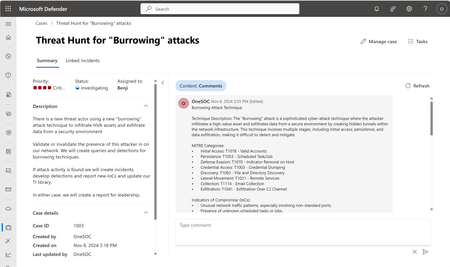
Are you using a 3rd party case management system for the SecOps work you do in Microsoft Sentinel or Defender XDR? Do you struggle to find a solution that encompasses the specific needs of your security team? We are excited to announce a new case management solution, now in public preview. This is our first step towards providing a native, security-focused case management system that spans all SecOps workloads in the Defender portal, removing customer reliance on 3rd party SIEM/XDR and ticketing systems. This will be available for all Microsoft Sentinel customers that have onboarded to the unified SecOps platform.5KViews2likes0Comments