azureai
70 TopicsThe Business Foundation: Why Most Companies Aren’t Ready for Agentic AI
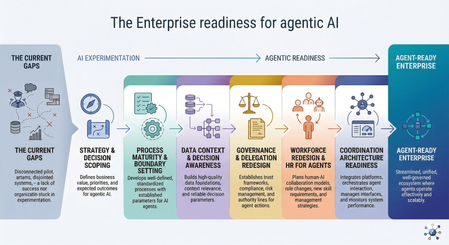
Before agents can execute decisions, organizations must redesign how they structure responsibility, data, governance, and operational context before autonomy can scale. The enterprise AI landscape has shifted. Organizations are moving beyond chatbots and isolated predictive models toward systems that can plan, decide, and execute multi-step work across finance, engineering operations, supply chains, and customer service. Many analysts now expect agentic AI to unlock major productivity gains across knowledge work. But despite the momentum, adoption remains limited. As of 2025, only about 2% of organizations have deployed agent-based systems at real operational scale, while most remain stuck in pilots. The reason is not model capability. It is readiness. The Core Problem Most organizations still treat AI adoption as a technical rollout exercise and measure progress through deployment indicators such as copilots enabled, pilots launched, or models evaluated. These metrics reflect experimentation activity, but they do not show whether an organization is ready to operate systems that make decisions and execute actions inside business workflows. Agentic systems do more than generate insights; they participate directly in operational processes. The gap between deploying AI tools and safely delegating decision-making authority to them is where many transformation efforts begin to stall. True enterprise readiness for agentic AI is not defined by how many models an organization deploys or how many pilots it launches. It depends on whether the organization can safely delegate bounded decisions to autonomous systems. In practice, this requires: Strategy and decision scoping: identifying where autonomous execution creates value and where human oversight must remain in place Process and decision-system maturity: redesigning workflows for human-agent collaboration with clear escalation boundaries Context-ready data foundations: ensuring agents operate on consistent, policy-aware operational context rather than fragmented data silos Governance and accountability structures: defining what agents may recommend, execute, escalate, or never touch, supported by auditability and oversight Team readiness and lifecycle management: preparing teams to supervise autonomous execution and managing agents as ongoing operational participants rather than static tools Coordination architecture readiness: aligning multiple agents across domains so local optimization does not create organizational conflict This article explains why traditional enterprise environments are not yet prepared for autonomous agents, what true agentic readiness actually looks like in practice, and the sequence of organizational changes required before decision-capable systems can be deployed safely at scale. I. The Readiness Illusion and the Root Causes of Failure Most organizations are deploying agentic systems into environments designed exclusively for human execution. That mismatch produces predictable friction across five structural layers. 1. Fragmented Operational Context (The Data Problem) Enterprises have a lot of data. What they often lack is usable context. Traditional systems record what happened. Agents also need to understand why something happened, how systems are connected, and where policy limits apply. In most organizations, customer systems, telemetry platforms, identity services, and finance tools do not stay aligned in real time. As a result, agents operate across disconnected information rather than a shared operational picture. This creates real risk. With generative AI, poor data quality usually produces a weak answer. With agentic AI, poor data quality can produce the wrong action at scale. More APIs, more pipelines, and more dashboards do not fix this by themselves. Without a shared semantic context across systems, agents can still make decisions that are internally logical but operationally wrong. For example, an agent may see that a customer received a large discount and conclude that future discounts should be limited, while missing that the original discount was approved because of a service outage and a retention risk. The data is available, but the business meaning behind it is not. 2. Undocumented Decision Systems Most organizations document workflows. However, very few document decision authority clearly enough for autonomous execution. Agents need to know where they are allowed to act, when they must escalate, and which decisions remain human-only. Without these boundaries, organizations often follow the same pattern: the first unexpected situation appears, confidence drops, and the agent is switched off. This is not a model problem. It is a decision-structure problem. Before deploying agents, organizations must be able to explain which decisions can be delegated and who remains responsible for each step. Many cannot yet do this. 3. The Governance Paradox Agentic systems do not fit traditional governance models. Most organizations still assume a simple structure: user → application → resource Agent-based systems introduce a new layer: user → agent → tools → resource This change affects access control, compliance processes, and audit visibility. Organizations usually buy agents like software tools but must manage them more like team members. That gap is rarely addressed before deployment begins. This issue is already visible today. Many enterprises are using vendor copilots and embedded AI features inside business systems without clear ownership, audit coverage, or governance rules. This creates a growing “shadow AI” layer even before intentional agent programs start. 4. Identity and Accountability Ambiguity Many organizations cannot clearly answer a simple question: who is responsible when an agent makes a mistake? In practice, agents often receive permissions that are broader than necessary, execution traces are difficult to follow across multiple systems, and accountability is split between IT, compliance, and business teams. Without clear attribution, autonomy introduces hidden risk instead of efficiency. Delegation without accountability is not automation. It is unmanaged risk. 5. Organizational Misalignment Most transformation programs still assume employees will use AI as a tool. Agentic environments change the role of employees from operators to supervisors. People are expected to review outcomes, guide behavior, and manage exceptions instead of executing every step themselves. Research from BCG shows that around 70% of AI project challenges come from people and process issues rather than technology. Organizations that invest in change management are significantly more likely to see successful results. Organizational readiness is not something to address later. It is required before agents can operate safely. Common Failure Patterns at a Glance Common failure patterns like these are already visible in real deployments. The Klarna case illustrates the challenge well. After replacing several hundred customer service roles with AI, the company later reported lower resolution quality for complex cases, declining satisfaction scores, and higher escalation rates, which led to renewed hiring in support roles. The outcome did not point to a failure of the model itself. It highlighted what happens when autonomous systems are introduced without the supporting process, governance, and team structures required for sustained operation. II. Defining True Agentic Readiness Agentic readiness is not just about having the right tools in place. It is about whether the organization has the capability to use autonomous systems safely and effectively. Definition Agentic readiness is the ability to safely delegate bounded operational decisions to autonomous systems while maintaining accountability, observability, and policy alignment across the full execution chain. Research consistently shows that organizations benefit from AI only when multiple maturity layers advance together. The MIT CISR AI Maturity Model, based on data from 721 companies, demonstrates that financial performance improves as organizations progress through the stages. Companies in early stages often perform below industry averages, while those reaching later stages perform significantly better. The key insight is that maturity is cumulative. Organizations cannot skip foundational steps and still expect reliable outcomes. For agentic systems, those cumulative layers include strategy alignment, decision-ready processes, context-ready data, governance structures, organizational roles, and technical architecture. When only some of these elements are in place, organizations produce pilots. When they advance together, organizations produce transformation. From Activity Metrics to Outcome Metrics One of the clearest signs of readiness is how an organization measures progress. Organizations at an early stage usually focus on activity: Number of models deployed Pilots launched Features enabled User onboarding numbers and API call volume More mature organizations focus on outcomes: Better decision quality and fewer errors Higher throughput for clearly defined tasks Consistent operation within safe autonomy boundaries Complete audit trails and accurate escalation handling This is not a semantic distinction. Organizations measuring activity invest indefinitely in pilots because they have no signal telling them a pilot has succeeded or failed. The measurement framework is itself a prerequisite for the transformation sequence. III. The Transformation Sequence Most Organizations Skip Many organizations begin agent adoption in the wrong order. Platforms are procured before governance is defined. Models are evaluated before workflows are structured. Autonomy is introduced before decision authority is mapped. The result is not faster progress. It is earlier failure, followed by expensive cleanup later. In traditional cloud transformation, architecture precedes automation. Agentic transformation follows the same rule: decision structure must exist before delegation can scale. Step 1: Strategic Alignment and Decision Scoping Organizations should begin by identifying where autonomy creates value safely — not where it is technically possible and not where ambitions are highest. Strong early candidates usually share the same characteristics: structured decisions, bounded scope, reversible actions, and high execution frequency. Typical examples include incident triage and routing, capacity classification, environment status updates, and prioritization support. These are good starting points not because they are simple, but because failures are visible, recoverable, and useful for learning. Delegation should grow gradually from bounded decision spaces toward broader authority. Organizations that struggle often start with highly visible, high-risk use cases because the business case looks attractive. Organizations that succeed usually begin with frequent, lower-impact decisions where feedback loops are short and improvements can happen quickly. Step 2: Process Maturity and Boundary Setting Agents do not fix broken workflows. They execute them faster. If a process depends on informal judgment, tribal knowledge, or undocumented exception handling, an agent will reproduce those weaknesses at machine speed. Before introducing autonomy, organizations should establish structured runbooks with clear execution paths, explicit escalation logic an agent can evaluate, defined exception-handling rules that do not rely on intuition, and clear boundaries between decisions an agent may take and those that must remain with humans. This level of discipline requires documentation precision that many organizations have never needed before. A statement such as “the engineer uses judgment” is not a runbook step. It is an undocumented dependency that will later appear as an agent failure. This is also where leaders face a practical choice: add agents on top of fragile legacy workflows, or redesign those workflows so delegation can happen safely. In many cases, the second path is slower at first but far more durable. Step 3: Data Context and Decision Awareness Agents cannot operate reliably in fragmented environments. The solution is not simply collecting more data. What they require is decision-aware context: structured knowledge about relationships between systems, service dependencies, environment classification, policy boundaries, and operational intent. This is a different challenge from building analytics platforms. Analytics depends on broad visibility across large datasets. Agentic execution depends on precise, current, and consistent information at the moment a decision is made. A customer record that is accurate enough for reporting may not be reliable enough for an agent executing a contract action. Because of this difference, data readiness becomes a leadership concern rather than only an infrastructure task. Microsoft’s digital transformation guidance captures this clearly with the principle “no AI without data”: organizations should identify critical data sources, establish governance ownership, improve quality, and define controlled access before introducing agents into operational workflows. Step 4: Governance and Delegation Redesign Organizations must explicitly define four categories of agent authority before deployment: What agents may recommend (advisory boundary) What agents may execute autonomously (execution boundary) What requires human approval before execution (escalation boundary) What remains permanently restricted regardless of confidence (prohibition boundary) These policies cannot remain static. Agentic systems require continuous supervision, not periodic review. Research supports this shift. Studies of governance professionals working with autonomous systems show that adopting traditional Enterprise Risk Management frameworks alone does not significantly reduce governance incidents. What makes the difference is integrating human oversight into execution loops and strengthening machine identity security. In practice, this means organizations need a delegated-autonomy governance function: a cross-functional group with representation from IT, compliance, legal, and business teams that continuously defines and monitors the boundaries of agent behavior. This is different from extending existing approval committees. Governance must move from acting as a gate before deployment to operating as a supervision layer throughout the lifecycle of the agent. This creates a basic operational tension: organizations adopt agents to reduce manual work, but safe autonomy requires stronger supervision, better observability, and tighter control over identity and permissions — especially in the early stages. Step 5: Operating Model Redesign: Operationalizing Human-Agent Collaboration Agentic systems create responsibilities that do not yet exist in most organizations. This shift is not mainly about replacing people with agents. It is about redesigning how people work with them, supervise them, and remain accountable for outcomes. New operational roles typically include: Agent reliability engineers who monitor performance, detect degradation, and define retraining triggers Policy designers who translate business rules into machine-evaluable decision logic Workflow supervisors who oversee autonomous execution and handle escalations Context curators who maintain the data foundations agents depend on for accurate reasoning Organizations that succeed with agents do not treat them as static automation tools. They treat them as managed participants inside workflows. That is why they need an HR layer for agents. An HR layer for agents means applying the same lifecycle thinking used for people to autonomous systems. Before an agent is allowed to operate, it needs a clearly defined role, scope, level of authority, and access to the right systems. Once deployed, its performance must be reviewed over time, its behavior monitored, and its permissions adjusted when quality drops or risks increase. When the agent no longer fits the workflow, it should be retired or replaced instead of being left running by default. In practice, this means agent management should include: Onboarding, by defining scope, authority, and access boundaries Supervision, through observability, escalation paths, and performance review Retraining or re-scoping, when quality declines or conditions change Retirement, when the agent no longer fits the process or creates more risk than value In higher-risk workflows, this HR layer must also include graceful degradation. For example, an underperforming agent may automatically lose write access, be moved to read-only mode, and hand control back to a human supervisor until its behavior is corrected. This shift also requires leadership readiness. The Harvard 2025 Global Leadership Development Study found that 71% of senior leaders now see the ability to lead through continuous change as critical, yet only 36% say AI is fully integrated into their strategy. That gap between intention and execution is where many organizational transformation programs begin to stall. Step 6: Coordination Architecture Readiness As organizations deploy agents across multiple domains, a new challenge appears: agents begin optimizing locally instead of organizationally. An agent focused on cost efficiency in one area may conflict with another agent responsible for quality assurance elsewhere. Without coordination structures, these conflicts often remain invisible until they surface as operational failures. Coordination architecture helps align agent behavior across the organization. It ensures policy consistency between agents, maintains a shared understanding of the operational environment, prevents conflicts when actions intersect, and supports stable communication between agents working together across workflows. This capability is not required for the first agent deployment. It becomes important as soon as organizations begin operating multiple agents in parallel. Many organizations encounter coordination problems earlier than expected, which is why coordination readiness belongs in the transformation sequence even if its implementation happens later. Local optimization is rarely what enterprises intend. Coordination architecture is how you prevent it from becoming what they get. IV. The Regulatory Clock Is Already Running For organizations operating in or serving European markets, readiness is no longer only a strategic question. It is also a regulatory one. The EU AI Act’s high-risk provisions take effect in August 2026, with potential penalties reaching €35 million or 7% of global revenue. Colorado’s AI Act follows in June 2026, and a growing number of U.S. states now require documented AI governance programs for specific sectors and use cases. The governance and data foundations described earlier in this article are therefore not only best practice. For many organizations, they are becoming compliance prerequisites. Treating readiness as optional before deployment increasingly means accepting regulatory exposure before value is realized. The transformation sequence described here is not a slower path to deployment. It is the only path that avoids accumulating technical and legal risk at the same time. V. Conclusion: Shifting Toward Outcome-Based Pragmatism Agentic systems rarely fail because language models are incapable. They fail because they are introduced into environments designed for human execution, governed by frameworks built for deterministic software, and evaluated using metrics that cannot distinguish a promising pilot from a production-ready capability. The readiness gap is structural and, in many cases, self-inflicted. Organizations skip foundational steps because platform procurement is faster, more visible, and easier to justify internally than operating-model redesign. The result is earlier failure, higher remediation cost, and — in regulated industries — increasing legal exposure. What this means in practice Organizations should stop measuring readiness through activity indicators and start measuring it through decision quality, execution safety, throughput improvement, and bounded autonomy performance. Governance and data foundations must be established before platform rollout. Organizational transition planning must begin before deployment. Decision authority must be defined before the first agent workflow is introduced. Only then can enterprises safely unlock the productivity gains promised by agentic systems — not because the technology suddenly becomes capable, but because the organization becomes ready to use it. Up Next in This Series Part 2 looks at the cloud foundation needed for safe agent deployment, including identity-first architecture, observability, policy controls, and the platform constraints that often appear only after design decisions have been made. Part 3 focuses on how to design agents that work reliably in enterprise environments, including RAG maturity, loop design, multi-agent coordination, and human oversight built into the architecture from the start. References Weinberg, A. I. (2025). A Framework for the Adoption and Integration of Generative AI in Midsize Organizations and Enterprises (FAIGMOE). Patel, R. (2026). Agentic AI Frameworks: A Complete Enterprise Guide for 2026. Space-O Technologies. Microsoft Learn. Agentic AI maturity model. Keenan, K. (2026). How the right context can reshape agentic AI’s productivity output. Business Insider / Reltio. Ransbotham, S., Kiron, D., Khodabandeh, S., Iyer, S., & Das, A. (2025). The Emerging Agentic Enterprise: How Leaders Must Navigate a New Age of AI. MIT Sloan Management Review & Boston Consulting Group.Azure AI Connect - March 2 to March 6 2026
The Future of AI is Connected. The Future is on Azure. Join us for a 5-day virtual event dedicated to mastering the Microsoft Azure AI platform. Azure AI Connect isn't just another virtual conference. It's a 5-day deep-dive immersion into the *connective tissue* of artificial intelligence on the cloud. We're bringing together developers, data scientists, and enterprise leaders to explore the full spectrum of Azure AI services—from Cognitive Services and Machine Learning to the latest breakthroughs in Generative AI. Explore the Ecosystem: Understand how services work *together* to create powerful, end-to-end solutions. Learn from Experts: Get direct insights from Microsoft MVPs, product teams, and industry pioneers. Gain Practical Skills: Move beyond theory with code-driven sessions, practical workshops, and live Q&As. Connect with Peers: Network with a global community in our virtual lounge. Event Details1.2KViews0likes1Comment
Missing equivalent for Python MemorySearchTool and AgentMemorySettings in C# SDK
Hi Team, I am currently working with the Azure AI Foundry Agent Service (preview). I’ve been reviewing the documentation for managed long-term memory, specifically the "Automatic User Memory" features demonstrated in the Python SDK here: https://learn.microsoft.com/en-us/azure/ai-foundry/agents/how-to/memory-usage?view=foundry&tabs=python. In Python, it is very straightforward to attach a MemorySearchTool to an agent and use AgentMemorySettings(scope="user_123") during a run. This allows the service to automatically extract, consolidate, and retrieve memories without manual intervention. However, in the https://github.com/Azure/azure-sdk-for-net/tree/main/sdk/ai/Azure.AI.Projects#memory-store-operations, I only see the low-level MemoryStoreClient which appears to require manual CRUD operations on memory items. My Questions: Is there an equivalent high-level AgentMemorySearchTool or similar abstraction in the current C# NuGet package (Azure.AI.Projects) that handles automatic extraction and retrieval? If not currently available, is this feature on the immediate roadmap for the .NET SDK? Are there any samples showing how to achieve "automatic" memory (where the Agent extracts facts itself) using the C# SDK without having to build a custom orchestration layer or call REST APIs directly? Any guidance on the timeline for feature parity between the Python and .NET SDKs regarding Agent Memory would be greatly appreciated. SDK Version: Azure.AI.Projects 1.2.0-beta.567Views0likes1CommentHow We Built an AI Operations Agent Using MCP Servers and Dynamic Tool Routing
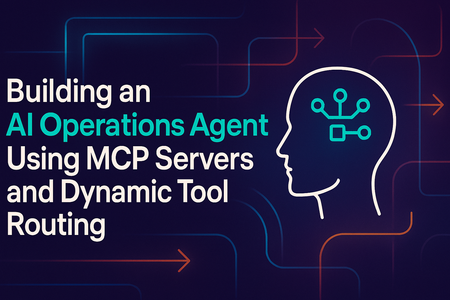
Modern operations teams are turning to AI Agents to resolve shipping delays faster and more accurately. In this article, we build a “two‑brain” AI Agent on Azure—one MCP server that reads policies from Blob Storage and another that updates order data in Azure SQL—to automate decisions like hazardous‑material handling and delivery prioritization. You’ll see how these coordinated capabilities transform a simple user query into a fully automated operational workflow369Views0likes0CommentsHow to Set Up Claude Code with Microsoft Foundry Models on macOS
Introduction Building with AI isn't just about picking a smart model. It is about where that model lives. I chose to route my Claude Code setup through Microsoft Foundry because I needed more than just a raw API. I wanted the reliability, compliance, and structured management that comes with Microsoft's ecosystem. When you are moving from a prototype to something real, having that level of infrastructure backing your calls makes a significant difference. The challenge is that Foundry is designed for enterprise cloud environments, while my daily development work happens locally on a MacBook. Getting the two to communicate seamlessly involved navigating a maze of shell configurations and environment variables that weren't immediately obvious. I wrote this guide to document the exact steps for bridging that gap. Here is how you can set up Claude Code to run locally on macOS while leveraging the stability of models deployed on Microsoft Foundry. Requirements Before we open the terminal, let's make sure you have the necessary accounts and environments ready. Since we are bridging a local CLI with an enterprise cloud setup, having these credentials handy now will save you time later. Azure Subscription with Microsoft Foundry Setup - This is the most critical piece. You need an active Azure subscription where the Microsoft Foundry environment is initialized. Ensure that you have deployed the Claude model you intend to use and that the deployment status is active. You will need the specific endpoint URL and the associated API keys from this deployment to configure the connection. An Anthropic User Account - Even though the compute is happening on Azure, the interface requires an Anthropic account. You will need this to authenticate your session and manage your user profile settings within the Claude Code ecosystem. Claude Code Client on macOS - We will be running the commands locally, so you need the Claude Code CLI installed on your MacBook. Step 1: Install Claude Code on macOS The recommended installation method is via Homebrew or Curl, which sets it up for terminal access ("OS level"). Option A: Homebrew (Recommended) brew install --cask claude-code Option B: Curl curl -fsSL https://claude.ai/install.sh | bash Verify Installation: Run claude --version. Step 2: Set Up Microsoft Foundry to deploy Claude model Navigate to your Microsoft Foundry portal, and find the Claude model catalog, and deploy the selected Claude model. [Microsoft Foundry > My Assets > Models + endpoints > + Deploy Model > Deploy Base model > Search for "Claude"] In your Model Deployment dashboard, go to the deployed Claude Models and get the "Endpoints and keys". Store it somewhere safe, because we will need them to configure Claude Code later on. Configure Environment Variables in MacOS terminal: Now we need to tell your local Claude Code client to route requests through Microsoft Foundry instead of the default Anthropic endpoints. This is handled by setting specific environment variables that act as a bridge between your local machine and your Azure resources. You could run these commands manually every time you open a terminal, but it is much more efficient to save them permanently in your shell profile. For most modern macOS users, this file is .zshrc. Open your terminal and add the following lines to your profile, making sure to replace the placeholder text with your actual Azure credentials: export CLAUDE_CODE_USE_FOUNDRY=1 export ANTHROPIC_FOUNDRY_API_KEY="your-azure-api-key" export ANTHROPIC_FOUNDRY_RESOURCE="your-resource-name" # Specify the deployment name for Opus export CLAUDE_CODE_MODEL="your-opus-deployment-name" Once you have added these variables, you need to reload your shell configuration for the changes to take effect. Run the source command below to update your current session, and then verify the setup by launching Claude: source ~/.zshrc claude If everything is configured correctly, the Claude CLI will initialize using your Microsoft Foundry deployment as the backend. Once you execute the claude command, the CLI will prompt you to choose an authentication method. Select Option 2 (Antrophic Console account) to proceed. This action triggers your default web browser and redirects you to the Claude Console. Simply sign in using your standard Anthropic account credentials. After you have successfully signed in, you will be presented with a permissions screen. Click the Authorize button to link your web session back to your local terminal. Return to your terminal window, and you should see a notification confirming that the login process is complete. Press Enter to finalize the setup. You are now fully connected. You can start using Claude Code locally, powered entirely by the model deployment running in your Microsoft Foundry environment. Conclusion Setting up this environment might seem like a heavy lift just to run a CLI tool, but the payoff is significant. You now have a workflow that combines the immediate feedback of local development with the security and infrastructure benefits of Microsoft Foundry. One of the most practical upgrades is the removal of standard usage caps. You are no longer limited to the 5-hour API call limits, which gives you the freedom to iterate, test, and debug for as long as your project requires without hitting a wall. By bridging your local macOS terminal to Azure, you are no longer just hitting an API endpoint. You are leveraging a managed, compliance-ready environment that scales with your needs. The best part is that now the configuration is locked in, you don't need to think about the plumbing again. You can focus entirely on coding, knowing that the reliability of an enterprise platform is running quietly in the background supporting every command.852Views1like0Comments
Cannot connect Azure OpenAI Embeddings model to SQL Server 2025
On SQL Server 2025, I am trying to vectorize a table. To set up the ability for SQL Server 2025 to communicate with Azure OpenAI embeddings model, I first created a master key for encryption. CREATE MASTER KEY ENCRYPTION BY PASSWORD = 'Secret'; GO Then I set up a database scoped credential. CREATE DATABASE SCOPED CREDENTIAL [MyAzureOpenAICredential] WITH IDENTITY = 'HTTPEndpointHeaders', SECRET = '{"api-key":"secret"}'; Then I created an external model. CREATE EXTERNAL MODEL AzureOpenAIEmbeddingsModel WITH ( LOCATION = 'https://{secret}-eastus2.cognitiveservices.azure.com/openai/deployments/text-embedding-3-small/embeddings?api-version=2023-05-15', API_FORMAT = 'Azure OpenAI', MODEL_TYPE = EMBEDDINGS, MODEL = 'text-embedding-3-small', CREDENTIAL = [MyAzureOpenAICredential] ); However, when I run this simple script: DECLARE @text NVARCHAR(MAX) = N'SQL Server 2025 enables AI-powered applications'; DECLARE @embedding VECTOR(1536) = AI_GENERATE_EMBEDDINGS(@text USE MODEL AzureOpenAIEmbeddingsModel); I get this error. The database scoped credential 'MyAzureOpenAICredential' cannot be used to invoke an external rest endpoint. I have read through https://learn.microsoft.com/en-us/training/modules/build-ai-solutions-sql-server/4-integrate-ai-models pertaining to this task. As well as SQL Server 2025 docs for creating a model. I have also read SQL Server 2025 docs for creating https://learn.microsoft.com/en-us/sql/t-sql/statements/create-database-scoped-credential-transact-sql?view=sql-server-ver17. I have not found any answers.63Views0likes0CommentsSubgenAI makes AI practical, scalable, and sustainable with Azure Database for PostgreSQL
Authors: Abe Omorogbe, Senior Program Manager at Microsoft and Julia Schröder Langhaeuser, VP of Product Serenity Star at SubgenAI AI agents are thriving in pilots and prototypes. However, scaling them across organizations is more difficult. A recent MIT report shows that 95 percent of projects fail to reach production. Long development cycles, lack of observability, and compliance hurdles leave enterprises struggling to deliver production-ready agents. SubgenAI, a European generative AI company that focuses on democratizing AI for businesses and governments, saw an opportunity to change this. Its flagship platform, Serenity Star, transforms AI agent development from a code-heavy, fragmented process into a streamlined, no-code experience. Built on Microsoft Azure Database for PostgreSQL, Semantic Kernel, and Microsoft Foundry, Serenity Star empowers organizations to deploy production-grade AI agents in minutes, not months. SubgenAI’s mission is to make generative AI accessible, scalable, and secure for every organization. Whether you're a startup or a multinational, Serenity Star offers the tools to build intelligent agents tailored to your business logic, with full control over data and deployment. “Many things must happen around it in the coming years. Serenity Star is designed to solve problems like data control, compliance, and decision ethics—so companies can unleash the full potential of generative AI without compromising trust or profitability” - Lorenzo Serratosa Simplifying complex AI agent development Technical and operational challenges are inherent in enterprise-wide AI agent deployments. Examples include time-consuming iteration cycles, lack of observability and cost control, security concerns, and data sovereignty requirements. Serenity Star addresses these pain points by handling the entire AI agent lifecycle while providing enterprise-grade security and compliance features. Users can focus on defining their agent's purpose and behavior rather than wrestling with technical implementation details. Its framework focuses on four essentials for AI agents: the brain (underlying model), knowledge (accessible information), behavior (programmed responses), and tools (external system integrations). This framework directly influenced the technology stack choices for Serenity Star, with Azure Database for PostgreSQL powering the knowledge retrieval and Semantic Kernel enabling flexible model orchestration. Real-world architecture in action When a user query comes in, Serenity Star uses the vector capabilities of Azure Database for PostgreSQL to retrieve the most relevant knowledge. That context, combined with the user’s input, forms a complete prompt. Semantic Kernel then routes the request to the right large language model, ensuring the agent delivers accurate and context-aware responses. Serenity Star’s native connectors to platforms such as Microsoft Teams, WhatsApp, and Google Tag Manager are also part of this architecture, delivering answers directly in the collaboration and communication tools enterprises already use every day. Figure 1: Serenity Star Architecture This routing and orchestration architecture applies to the multi-tenant SaaS deployments and dedicated customer instances offered by Serenity Star. Azure Database for PostgreSQL provides native Row-Level Security (RLS) capabilities, a key advantage for securely managing multi-tenant environments. Multi-tenant deployments allow organizations to get started quickly with lower overhead, while dedicated instances meet the needs of enterprises with strict compliance and data sovereignty requirements. Optimizing for scale The same architecture that powers retrieval, routing, and multi-channel delivery also provides a foundation for performance at scale. As adoption grows, the team continuously monitors query volume, response times, and resource efficiency across both multi-tenant and dedicated environments. To stay ahead of demand, SubgenAI actively experiments with new Azure Database for PostgreSQL features such as DiskANN for faster vector search. These optimizations keep latency low even as more users and connectors are added. The result is a platform that maintains sub-60-second response times for 99 percent of chart generations, regardless of deployment model or integration point. With this systematic approach to scaling, organizations can deploy fully functional AI agents that are connected to their preferred communication platforms in just 15 minutes instead of hours. For enterprises that have struggled with failed AI projects, Serenity Star offers not only a secure and compliant solution but also one proven to grow with their needs. Why Azure Database for PostgreSQL is a cornerstone The knowledge component of AI agents relies heavily on retrieval-augmented generation (RAG) systems that perform similarity searches against embedded content. This requires a database capable of handling efficient vector search while maintaining enterprise-grade reliability and security. SubgenAI evaluated multiple vector database options. However, Azure Database for PostgreSQL with PGVector emerged as the clear winner. There were several compelling reasons for this. One is its mature technology, which provides immediate credibility with enterprise customers. Two, the ability to scale GenAI use cases with features like DiskANN for accurate and scalable vector search. There, the flexibility and appeal of using an open-source database with a vibrant and fast-moving community. As CPO Leandro Harillo explains: “When we tell them their data runs on Azure Database for PostgreSQL, it’s a relief. It's a well-known technology versus other options that were born with this new AI revolution.” As an open-source relational database management system, Azure Database for PostgreSQL offers extensibility and seamless integration with Microsoft’s enterprise ecosystem. It has a trusted reputation that appeals to organizations with strict data sovereignty and compliance requirements such as those in healthcare and insurance where reliability and governance are non-negotiable. The integration with Azure's broader ecosystem also simplified implementation. With Serenity Star built entirely on Azure infrastructure, Azure Database for PostgreSQL provided seamless connectivity and consistent performance characteristics. The fast response times necessary for real-time agent interactions are the result, along with maintaining the reliability demanded by enterprise customers. Semantic Kernel: Enabling model flexibility at scale Enterprise AI success requires the ability to experiment with different models and adapt quickly as technology evolves. Semantic Kernel makes this possible, supporting over 300 LLMs and embedding models through a unified interface. With Serenity Star, organizations can make genuine choices about their AI implementations without vendor lock-in. Companies can use embedding models from OpenAI through Azure deployments, ensuring their information remains in their own infrastructure while accessing cutting-edge capabilities. If business requirements change or new models emerge, switching becomes a configuration change rather than a development project. Semantic Kernel's comprehensive connector ecosystem also accelerated SubgenAI's own development process. Interfaces for different vector databases enabled rapid prototyping and comparison during the evaluation phase. “Semantic Kernel helped us to be able to try the different ones and choose the one that fit better for us,” notes Julia Schroder, VP of Product. The SubgenAI team has also extended Semantic Kernel to support more features in Azure Database for PostgreSQL, which is easier because of how well-known and popular PostgreSQL is. SubgenAI has also contributed improvements back to the community. This collaborative approach ensures the platform benefits from the latest developments while helping advance the broader ecosystem. Proven impact of Azure Database for PostgreSQL across industries Because organizations struggle to deliver production-ready agents because of long development cycles, lack of observability, and compliance, the effectiveness of Azure Database for PostgreSQL and other Azure services is reflected in deployment metrics and customer feedback. Production-ready agents typically require around 30 iterations for basic implementations. Complex use cases demand significantly more refinement. One GenAI customer in medical education required over 200 iterations to perfect an agent that evaluates medical students through complex case analysis. Azure PostgreSQL and other Azure services support hour-long iteration cycles rather than week-long sprints, which made this level of refinement economically feasible. Cost efficiency is another significant advantage. SubgenAI provisions and configures models in Microsoft Foundry, which eliminates idling GPU resources while providing detailed cost breakdowns. Users can see exactly how tokens are consumed across prompt text, RAG context, and tool usage, enabling data-driven optimization decisions. Consulting partnerships validate the platform's market position. One consulting firm with 50,000 employees is delighted with the easier implementation, faster deployment, and reliable production performance. Conclusion The combination of Azure Database for PostgreSQL and Semantic Kernel has enabled SubgenAI to address the fundamental challenges that cause 95 percent of enterprise AI projects to fail. Organizations using Serenity Star bypass the traditional barriers of lengthy development cycles, limited observability, and compliance hurdles that typically derail AI initiatives. The platform's architecture delivers measurable results, including a 50 percent reduction in coding time, support for complex agents requiring 200+ iterations, and deployment capabilities that compress months-long projects into 15-minute implementations. Azure Database for PostgreSQL provides the enterprise-grade foundation that customers in regulated industries require, while Semantic Kernel ensures organizations retain flexibility as AI technology evolves. This technological partnership creates a reliable pathway for companies to deploy production-ready AI agents without sacrificing data sovereignty or operational control. Through the reliability of Azure Database for PostgreSQL and the flexibility of Semantic Kernel, Serenity Star delivers an enterprise-ready foundation that makes AI practical, scalable, and sustainable.887Views1like0Comments
Import error: Cannot import name "PromptAgentDefinition" from "azure.ai.projects.models"
Hello, I am trying to build the agentic retrieval using Azure Ai search. During the creation of agent i am getting "ImportError: cannot import name 'PromptAgentDefinition' from 'azure.ai.projects.models'". Looked into possible ways of building without it but I need the mcp connection. This is the documentation i am following: https://learn.microsoft.com/en-us/azure/search/agentic-retrieval-how-to-create-pipeline?tabs=search-perms%2Csearch-development%2Cfoundry-setup Note: There is no Promptagentdefinition in the directory of azure.ai.projects.models. ['ApiKeyCredentials', 'AzureAISearchIndex', 'BaseCredentials', 'BlobReference', 'BlobReferenceSasCredential', 'Connection', 'ConnectionType', 'CosmosDBIndex', 'CredentialType', 'CustomCredential', 'DatasetCredential', 'DatasetType', 'DatasetVersion', 'Deployment', 'DeploymentType', 'EmbeddingConfiguration', 'EntraIDCredentials', 'EvaluatorIds', 'FieldMapping', 'FileDatasetVersion', 'FolderDatasetVersion', 'Index', 'IndexType', 'ManagedAzureAISearchIndex', 'ModelDeployment', 'ModelDeploymentSku', 'NoAuthenticationCredentials', 'PendingUploadRequest', 'PendingUploadResponse', 'PendingUploadType', 'SASCredentials', 'TYPE_CHECKING', '__all__', '__builtins__', '__cached__', '__doc__', '__file__', '__loader__', '__name__', '__package__', '__path__', '__spec__', '_enums', '_models', '_patch', '_patch_all', '_patch_evaluations', '_patch_sdk'] Traceback (most recent call last): Please let me know what i should do and if there is any other alternative. Thanks in advance.475Views0likes3CommentsGet to know the core Foundry solutions
Foundry includes specialized services for vision, language, documents, and search, plus Microsoft Foundry for orchestration and governance. Here’s what each does and why it matters: Azure Vision With Azure Vision, you can detect common objects in images, generate captions, descriptions, and tags based on image contents, and read text in images. Example: Automate visual inspections or extract text from scanned documents. Azure Language Azure Language helps organizations understand and work with text at scale. It can identify key information, gauge sentiment, and create summaries from large volumes of content. It also supports building conversational experiences and question-answering tools, making it easier to deliver fast, accurate responses to customers and employees. Example: Understand customer feedback or translate text into multiple languages. Azure Document IntelligenceWith Azure Document Intelligence, you can use pre-built or custom models to extract fields from complex documents such as invoices, receipts, and forms. Example: Automate invoice processing or contract review. Azure SearchAzure Search helps you find the right information quickly by turning your content into a searchable index. It uses AI to understand and organize data, making it easier to retrieve relevant insights. This capability is often used to connect enterprise data with generative AI, ensuring responses are accurate and grounded in trusted information. Example: Help employees retrieve policies or product details without digging through files. Microsoft FoundryActs as the orchestration and governance layer for generative AI and AI agents. It provides tools for model selection, safety, observability, and lifecycle management. Example: Coordinate workflows that combine multiple AI capabilities with compliance and monitoring. Business leaders often ask: Which Foundry tool should I use? The answer depends on your workflow. For example: Are you trying to automate document-heavy processes like invoice handling or contract review? Do you need to improve customer engagement with multilingual support or sentiment analysis? Or are you looking to orchestrate generative AI across multiple processes for marketing or operations? Connecting these needs to the right Foundry solution ensures you invest in technology that delivers measurable results.112Views0likes0CommentsBuilding an Agentic, AI-Powered Helpdesk with Agents Framework, Azure, and Microsoft 365
The article describes how to build an agentic, AI-powered helpdesk using Azure, Microsoft 365, and the Microsoft Agent Framework. The goal is to automate ticket handling, enrich requests with AI, and integrate seamlessly with M365 tools like Teams, Planner, and Power Automate.720Views0likes0Comments