Thinking About Media Industry Evolution and Strategy
Over the last several years, it has been easy to focus on the magical experiences produced with AI-generated content. The media industry has responded with growing short-form video, IP licensing for quality AI generated content, and various other approaches, but the core end-to-end workflows and structures of the media industry are intact. In a recent global entertainment and media outlook, PwC forecasts that technology and live, immersive experiences will fuel global industry growth to $4.2T by 2030.
New technology imperatives, especially AI, are redefining not just how content is created, but also how it is produced, distributed, and monetized. Following this logic, it is reasonable to expect that the future of the media and entertainment industry will not be defined solely by AI-generated content, but by AI-orchestrated media operations.
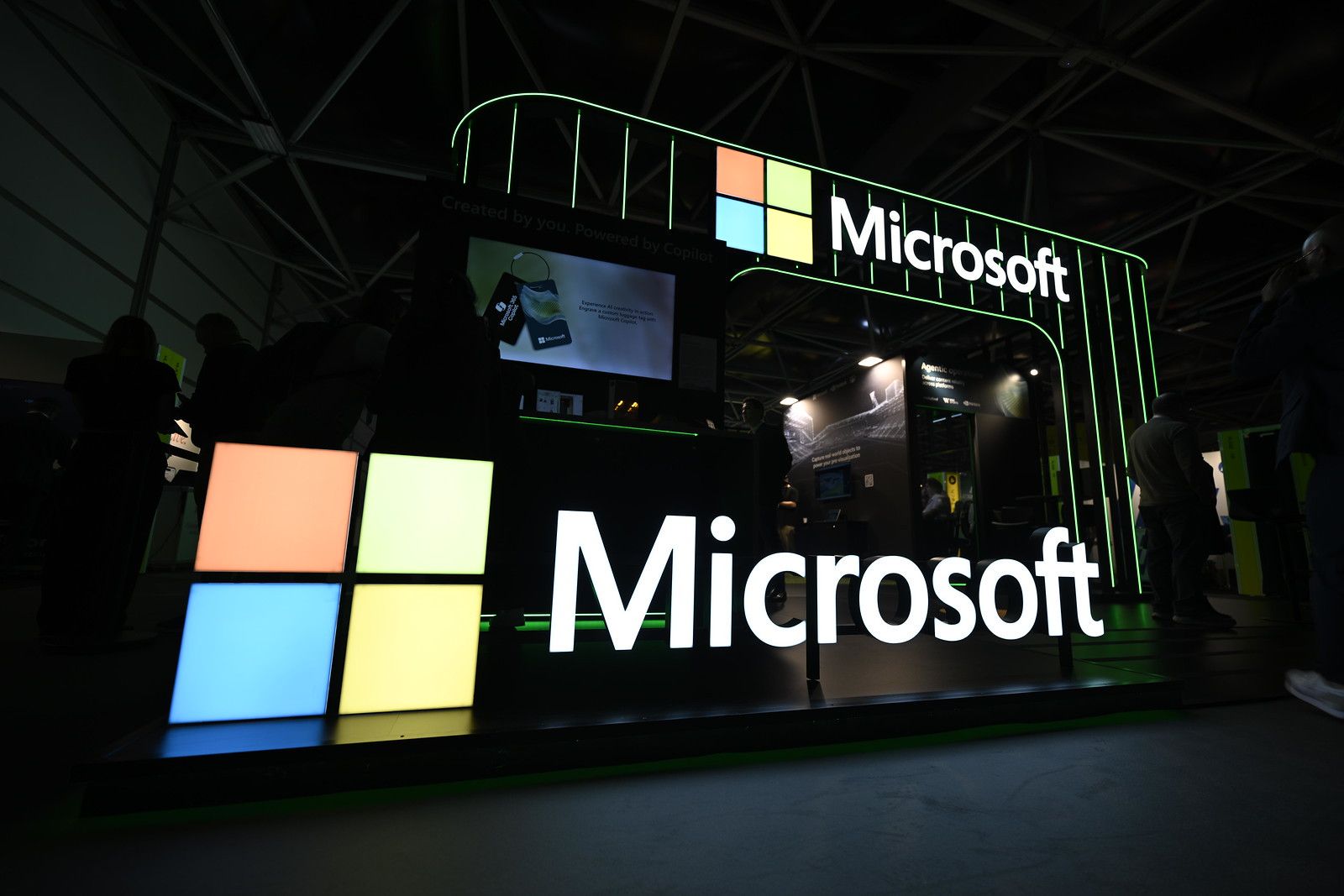
This was top of mind for customers and partners during IBC 2026. While strategies appear to vary across the media landscape, there is growing consistency in how the Media Industry is assessing, trialing, deploying, and industrializing AI solutions, regardless of whether the focus is on content production (broadcast, streaming), agencies, or data analytics and marketing firms. Social media and shifting consumer engagement patterns are exerting significant pressure on the media industry, forcing organizations to accelerate transformation efforts focused on both operational efficiency and revenue growth.
However, there are five emerging strategic themes emerging, tied closely to growth, yield, margins, IP returns, advertising outcomes, and trust:
- Increase the return on premium content and IP
- Industrialize creative and content production
- Unify fragmented workflows, data, and decision-making
- Make audience engagement and monetization real-time and measurable
- Create an AI operating model with trust, rights, governance, and economics built in
In simple terms, the industry focus on accelerating content creation and production, running and distributing media operations at-scale, and transforming insights into personalized engagement and monetization highlight the need for a Connected Media Platform foundation. There are many clear examples where this is already happening:
- The English Premier League Companion draws on 30 seasons of statistics and supports experiences for 1.8B fans across 189 countries.
- The WNET Group moved 3.6B PB of data (800,000 content hours) to Microsoft Azure, creating the foundation for ongoing management, preservation, and monetization through cloud-first workflows while taking asset recovery from 24 hours to 4 hours.
- Gutenberg has produced nearly 5,000 audiobooks with AI.
- Dentsu has seen a 90% reduction in time-to-insight for media planning analytics.
- MediaKind, Azure-first platform modernization for scalable secure video delivery, is leveraging dynamic dubbing and video captioning to create opportunities with new audiences in minutes.
Similar to other industries, AI is not just perceived as an opportunity, but as a structural capability across the media industry. The future media production platform is a governed, event-driven portfolio of specialized agents operating over a shared media knowledge plane, coordinating people, models, and tools from greenlight through monetization, with every outcome feeding the next creative and commercial decision in parallel.
Like most operational shifts, this is likely to occur in phases. Today, Phase 1, media production consists of specialized knowledge workers and teams operating highly capable tools chained together into production workflows. The production workflows are sequential with manual handoffs. Each of the stages within the production workflow are increasingly digital, and many of the tools have AI capabilities, but the lifecycle does not operate as one continuous system.
Phase 2 brings a human-AI hybrid operating model in vertical silos (ex. Development and Greenlight intelligence, Production planning and Finance, Audience feedback into creative optimization), where connected workflows are coordinated between people and agents. What makes this a phase rather than a collection of pilots is the shared media knowledge layer underneath. Agents in different domains read from and write to the same understanding of content, rights, audiences, and performance. The human role changes before the org chart does. People stop executing every step and start supervising: reviewing agent recommendations, handling exceptions, and making the calls that carry creative or financial risk. Coordination still happens across existing systems rather than replacing them, which is why this phase is achievable without a platform migration. The constraint in Phase 2 is rarely model capability. It is the quality of the shared knowledge layer and whether the governance model lets agents act on it.
AI is starting to arrive in multiple layers of the media value chain.
|
Theme |
AI Outcome |
|
Creative and Content Supply Workflows |
AI-powered creation via an industrialized supply chain. The industry opportunity is a repeatable (Deterministic) system that moves an idea through planning, production, enrichment, localization, packaging, distribution, promotion and measurement. |
|
Content and IP intelligence |
Turn every asset into a governed, semantically understood, reusable and monetizable piece of IP. Indexing and retrieval are the technical foundations to enabling reusability of decades of content catalog. |
|
Production Control Plane and orchestration |
An orchestration layer connecting data, planning, activation, measurement, and monetization. This brings together specialized agents and agentic workflows connecting shared intelligence. |
|
Data, metadata, knowledge and semantic layer |
A media intelligence fabric as the foundational layer of execution. This is not just a metadata layer, but the intelligence layer for the orchestration layer. Every media company we met with at IBC is prioritizing some version of an intelligence substrate. |
|
Real-time delivery, monitoring, and optimization |
A system that observes live production / delivery / campaign, understands context, predicts opportunity (degradation, for example), recommends and executes an intervention, and measures the result. One global broadcaster was most-explicit about prioritizing in-flight performance, near-real-time intelligence, and smarter decisioning. |
|
Real-time Content, Audience, and Monetization Intelligence |
Personalization, directly connected to monetization, including audience engagement, content discovery, and ad yield. Archive and Live are sub-patterns that drive different requirements across delivery, content rights, and metadata. |
|
Trust, rights, and governance |
Governance can no longer be viewed as compliance overhead. It’s imperative to retain customer trust. Accenture’s Life Trends highlights that 52% of people have seen deepfake news in the past year; 33% have experienced deepfake attacks or scams targeting personal information. |
Phase 3 brings together human ambition and AI, where creative intent, production operations, audience intelligence, and commercial performance operate through a single intelligence layer. Gartner expects a third of enterprise software to include agentic AI by 2028, and Capgemini puts the economic value in play at $450B on the same timeline, with trust and human-AI collaboration as the gating factor rather than model capability.
In media, workflows run through one intelligence layer spanning creative intent, production operations, audience intelligence, and commercial performance. Agents assemble their own context and replan continuously as conditions change, so a schedule slip, a rights expiry, and a shift in audience signal are handled as one connected event rather than three disconnected escalations. Creative and financial workflows stop running in sequence and start running in parallel. Audience signal feeds development rather than only post-mortems.
Humans become creative directors of agent-assisted processes, evaluators of quality, and decisionmakers at high-stakes moments. They are able to establish a creative, commercial, or operational goal, and the agent assembles the context (script, asset, rights, budget, talent, schedule, audience, distribution commitments) then executes, continuously replanning as events trigger (i.e., rights change, budget change, re-shoots). The creative workflow and financial workflow progress in parallel. This is not a shift from human to agentic workflow execution. It is a shift in which humans and agents turn creative intent into outcomes.
Content is no longer the finished output, but a reusable strategic asset that can be packaged, personalized, promoted, localized, licensed and merchandised through continuous experimentation.
Customer experience becomes an input into the media production, with audience signals influencing development, content packaged and personalized with companion experiences, and engagement starting before release and continuing after release.
Phase 3 is not a shift from human to agentic workflow execution. It’s a shift in which humans and agents turn creative intent into outcomes.
None of this is a prediction about a distant future. Phase 2 is already in production. Gartner expects a third of enterprise software to include agentic AI by 2028, and Capgemini puts the economic value in play at $450B on the same timeline, with trust and human-AI collaboration as the gating factor rather than model capability. Forrester's December 2025 modelling of a composite media and entertainment organization puts the return at 118% to 251% ROI, driven not by novel content generation but by time recaptured across content management, creation, localization, and distribution. The technology to run a connected media operation largely exists. What separates the companies that get there from the companies that don't is whether they build the shared knowledge layer and the governance model to act on it or keep buying point solutions that automate individual steps of a broken workflow. That is the choice in front of the industry, and 40% of media CEOs already suspect their current path does not survive the decade.
We'll be going deeper on all of this at Microsoft Ignite, November 17-20, 2026 at Moscone Center in San Francisco, where you'll hear it from the media companies doing the work rather than from us. If you're building toward this, come and find us there.

 Microsoft