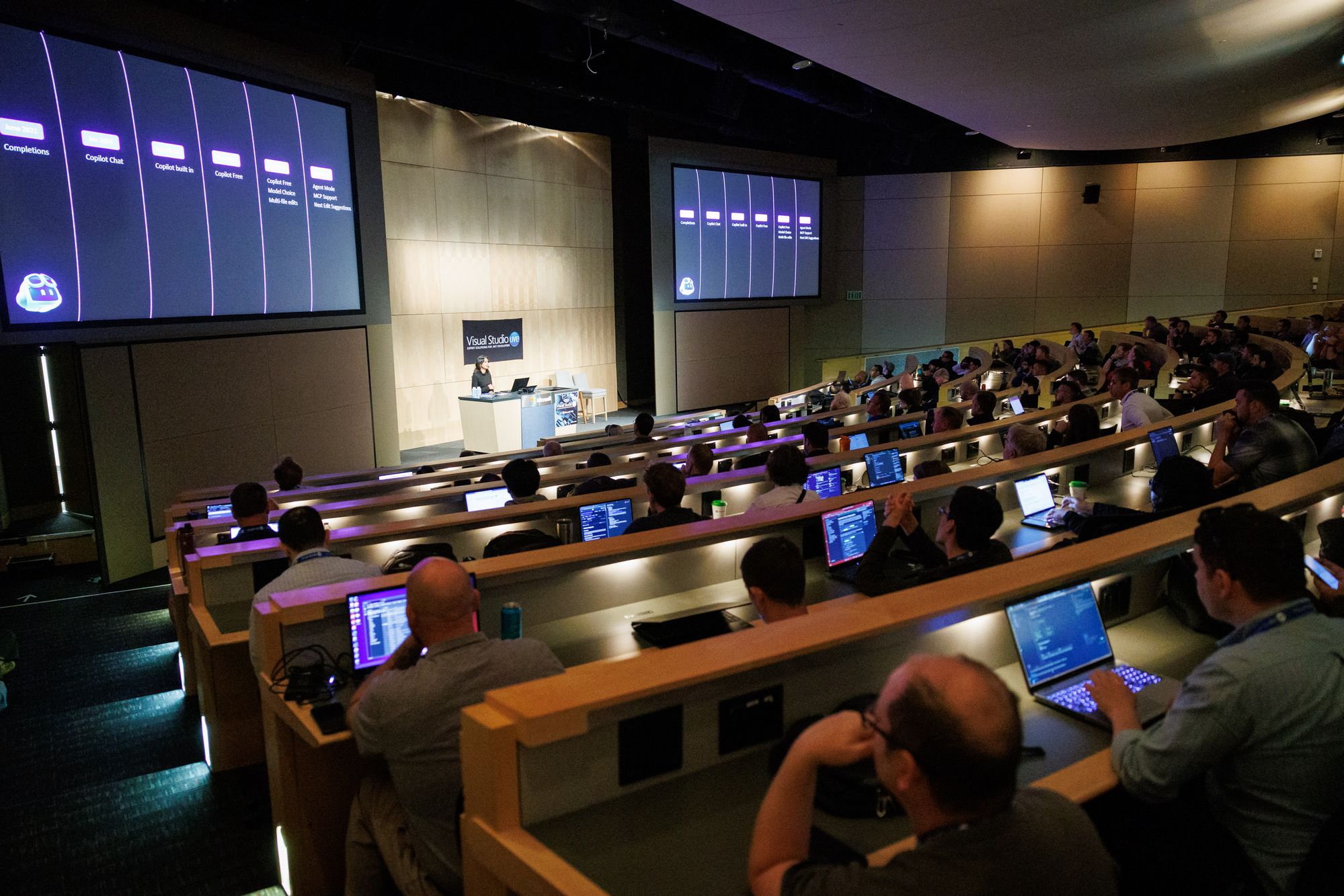
What does it take to last in tech? Visual Studio Live! is a rare example - enduring through decades of change by staying grounded in community, thoughtful content, and real developer needs. Insights from Andrew Brust and Rockford Lhotka show that its success isn’t about hype, but about trust, consistency, and meaningful connection.
In tech, longevity is rare. Platforms change. Skills evolve. Conferences come and go - often quickly. And yet, some events manage to persist, quietly earning trust over decades. Visual Studio Live! - also known as VSLive! - is one of those exceptions.
In a fast-moving industry, only a few technical conferences manage to endure. Insights from MVP and RDs Andrew Brust and Rockford Lhotka - both long-time contributors to Visual Studio Live! - offer a closer look at what enables an event to remain relevant across generations of developers and shifting technologies.
It started with community - before we called it that
Long before “ecosystem” became a buzzword in the industry, Visual Studio Live! was already bringing the concept to life. It began as VBITS (Visual Basic Insiders Technical Summit), founded by Jim Fawcette and Fawcette Technical Publications. Through initiatives like Visual Basic Programmer’s Journal, Fawcette didn’t just publish content - he helped build a community, connecting tools, third-party components, and developers around a shared platform. Over time, the event evolved alongside the industry. While its roots trace back to Fawcette, Visual Studio Live! has been under the stewardship of 1105 Communications for more than 20 years and is now part of the company’s Converge360 division - continuing to carry that same spirit of connection forward.
Andrew Brust reflects on that early intent: “VBITS was established to add a true face-to-face social community aspect to the ecosystem. From the very first event, the goal was to anchor the developer community - and that intent has held up remarkably well.”
Rockford Lhotka remembers VBITS from the attendee perspective in the mid-90s: “There were Microsoft product people alongside third-party experts. That mix was exactly what I needed at the time.”
From the beginning, Visual Studio Live! (and VBITS before it) wasn’t just about sessions - it was about connection.
Evolving with the platform without losing the plot
Andrew Brust at Visual Studio Live!Over the years, the Microsoft developer platform has gone through radical shifts: from Visual Basic to Visual Studio, from on-premises to cloud, and now into the era of AI. Visual Studio Live! has evolved alongside those changes - but not by chasing every trend.
As Andrew puts it, what changes is the content. What must not change is the conference’s sensitivity to the realities of enterprise development: “Many organizations adopt new technologies conservatively. Visual Studio Live! has always balanced what’s coming with what’s actually in use.”
That balance shows up repeatedly in the conference’s approach: helping developers stay grounded in proven technologies while gradually exploring what’s next.
Sometimes, that means placing patient, long-term bets. Rockford shares a great example: “We had sessions on Azure years before most attendees were interested. For a while, the rooms were nearly empty - but we believed it would matter. Eventually, it did.”
Credibility is built on judgment, not hype
A recurring theme from both Andrew and Rockford is credibility - and how carefully it must be protected.
For Andrew, credibility means resisting the urge to over-invest in technologies that haven’t yet earned their place in production environments: “Some coverage of emerging tech is good - but too much is irresponsible. Developers need help balancing what’s solid today with what’s exploratory.”
Rockford adds that credibility is shaped over time, through feedback and trust: “We look closely at attendee feedback, but we also give new speakers room to grow. Some of today’s most respected voices didn’t start perfect - they improved over time.”
That combination of data, experience, and human judgment is what keeps the content relevant without becoming reactive.
Interaction is not optional - it’s essential
Rockford Lhotka speaking at Visual Studio Live!One thing that has remained constant throughout Visual Studio Live!’s history is the emphasis on interaction.
Speakers aren’t treated as distant experts. They’re colleagues - available for questions, hallway conversations, lunch-table discussions, and shared experiences beyond the session room.
Rockford reflects on this especially strongly in a post-pandemic world: “You can stream content and use AI for answers - but you can’t replace shared human experience, conversation, and camaraderie.”
That focus on approachability and connection has become one of VSLive!’s defining characteristics - and one of the reasons attendees return.
The invisible work behind long‑term sustainability
Sustaining a conference for decades isn’t glamorous. Much of the hardest work happens out of sight.
Andrew describes it as maintaining quality, rigor, and integrity - not just in content and speakers, but in how the event is marketed and operated year after year: “We never aimed for enormous scale or spectacle. We aimed to be consistently helpful, accessible, and grounded.”
Rockford highlights the operational reality behind the scenes: multi-year venue commitments, complex logistics, rising costs, and constant uncertainty about what the future might bring. “Sustainability requires that every part of the process is sustainable - and that’s harder than most people realize.”
Why Visual Studio Live! endured
When asked why Visual Studio Live! has lasted while others have faded, Andrew points to consistency - of people, culture, and values: “We’ve kept the culture focused, authentic, and grounded through recessions, disruptions, and massive platform shifts. We’ve been people’s rock.”
It’s a powerful image. And it captures something many community builders intuitively understand: trust isn’t built quickly - but it can be built deliberately.
A quiet blueprint for community builders
The story of Visual Studio Live! isn’t just about a conference. It’s a reminder that sustainable communities are built through:
- Long-term thinking
- Careful judgment
- Respect for practitioners’ realities
- Intentional opportunities for connection
- And a commitment to showing up consistently
In a fast-moving industry, that kind of craft still matters. And perhaps now more than ever, it’s what endures.
Want to Learn More About the MVP & RD Program?
To find an MVP or RD and learn more about the MVP Program visit the MVP Communities website and follow our updates on LinkedIn or #mvpbuzz.
Join us for a future live session through the Microsoft Reactor where we walk through what the MVP program is about, what we look for, and how nominations work. These sessions are designed to help you connect the dots between the work you’re already doing and the impact the MVP Program recognizes - with time for questions, examples, and real conversations.

 Microsoft

