Three seconds after I clicked Assign, GitHub Copilot added an 👀 reaction to my issue. Twenty minutes later, a working pull request was ready for review.
That experience reveals an important shift in how developers work with AI. The valuable skill is no longer limited to prompting Copilot to generate code. It is learning how to define work clearly, delegate it responsibly, inspect the evidence, and decide whether the result is ready to merge.
🎥 Watch the demo: youtu.be/J3kBvO9yncY
Across meetups, user groups, and developer conversations, I kept hearing a version of the same question:
“The coding agent looks useful, but how do I actually learn to work with it?”
A demonstration can show what an agent does. It cannot give someone the experience of writing an effective issue, reviewing an agent's session, requesting a correction, or remaining accountable for the final change.
AI Teammate 101 addresses that gap by helping developers practice the judgment required to delegate work responsibly.
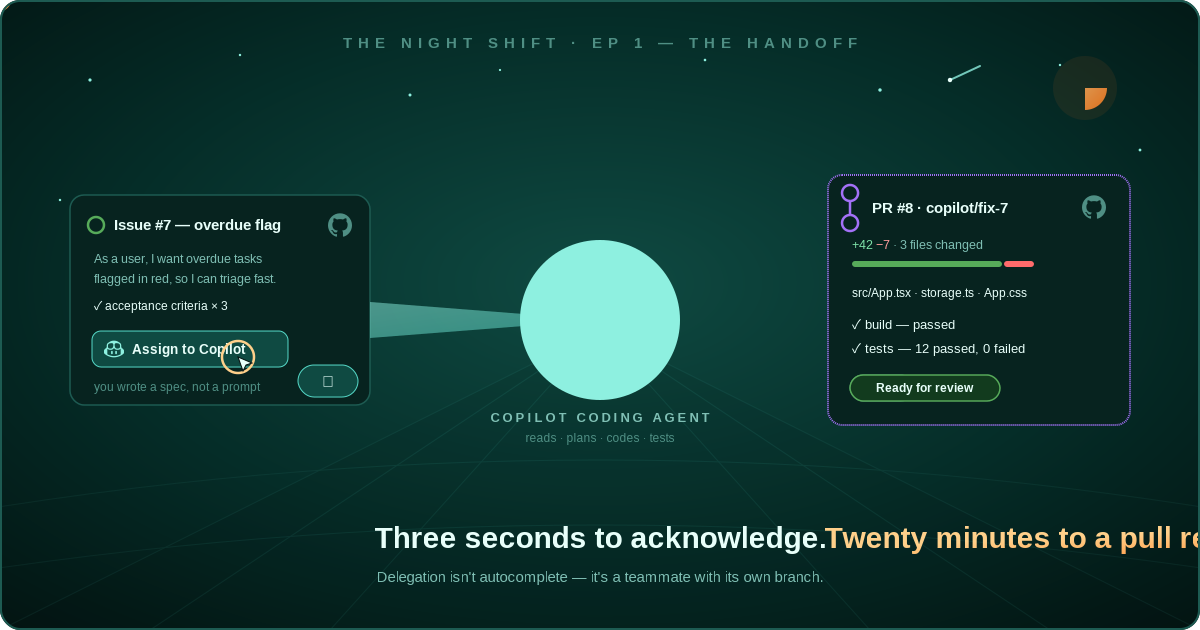
The handoff begins with a well-defined GitHub issue and ends with a pull request ready for human review.
A Workshop Built Around Practice
AI Teammate 101 is a free, open-source workshop where participants practice the complete GitHub Copilot coding-agent workflow. The application contains feature requests, missing tests, and a planted security vulnerability. However, participants cannot fix the application directly.
Participants need:
- A GitHub account
- Access to GitHub Copilot
- A web browser
- A personal copy of the workshop repository
You can review your Copilot access from GitHub Copilot settings.
Students may also be eligible for GitHub Copilot Pro through GitHub Education.
Participants create a repository from the workshop template and enable GitHub Pages, turning the workshop materials into a navigable website instead of requiring learners to work through disconnected Markdown files.
Meet TaskMango, the App You Do Not Fix by Hand
Each workshop repository includes TaskMango, a small React and TypeScript task tracker that runs in the browser and stores tasks in localStorage.
TaskMango is deliberately imperfect, with a seeded backlog, missing test coverage, well-scoped feature requests, and a planted cross-site scripting vulnerability. The central workshop rule is simple:
Participants do not fix the application code directly.
Instead, participants must communicate through GitHub issues, acceptance criteria, review comments, and merge decisions.
This constraint creates a realistic learning environment. The challenge is no longer “Can I write the code?” It becomes “Can I define the work clearly enough for another contributor to complete it, and can I verify the result?”
Learn the Delegation Loop
The workshop teaches one foundational rule:
Delegate work that is clearly defined and reviewable. If the task is vague or the result cannot be verified, involve a human more directly.
Participants practice four steps:
- Write an issue with acceptance criteria.
- Assign the issue to GitHub Copilot.
- Inspect the agent's session and pull request.
- Review, request changes, and decide whether to merge.
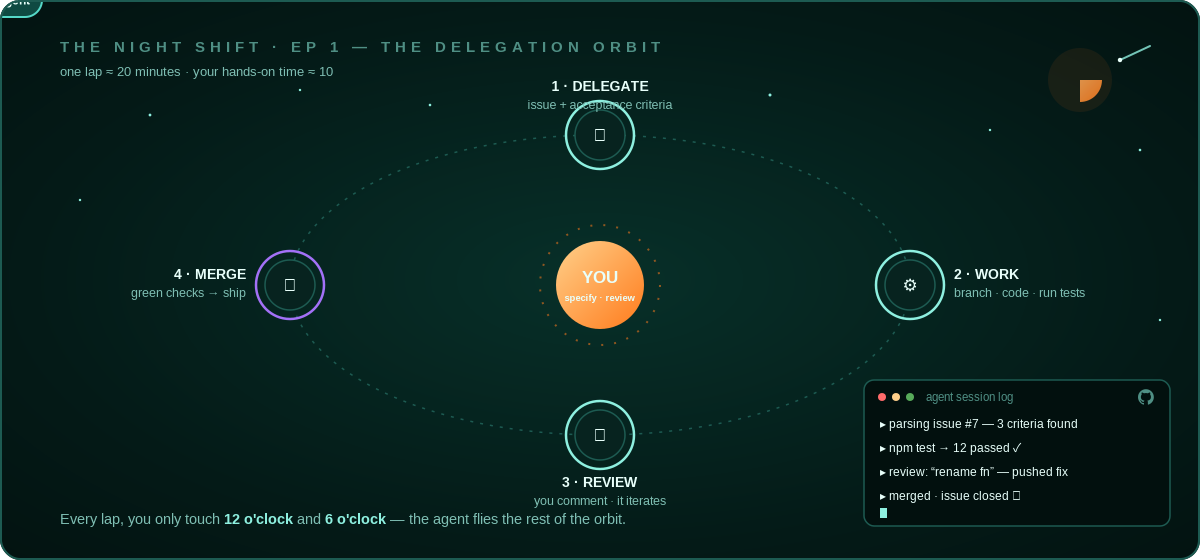
Define the work, let the agent implement it, review the evidence, and decide whether to merge.
The issue body becomes the specification. “Make the filters better” may produce a change, but probably not the intended one. A useful issue defines the outcome, scope, and verification method.
The session log then provides evidence of what the agent examined, changed, and tested. Trust should come from that evidence, not from a polished summary.
Review Like a Teammate
Participants review each pull request using six checks:
- Correct
- Verified
- Fits
- Scoped
- Safe
- Clear
They also leave meaningful feedback and observe how the agent resumes its session, responds to the review, and pushes another commit.
This is where the exercise becomes more than code generation. The learner is participating in an engineering process where AI-generated work can be questioned, corrected, or rejected.
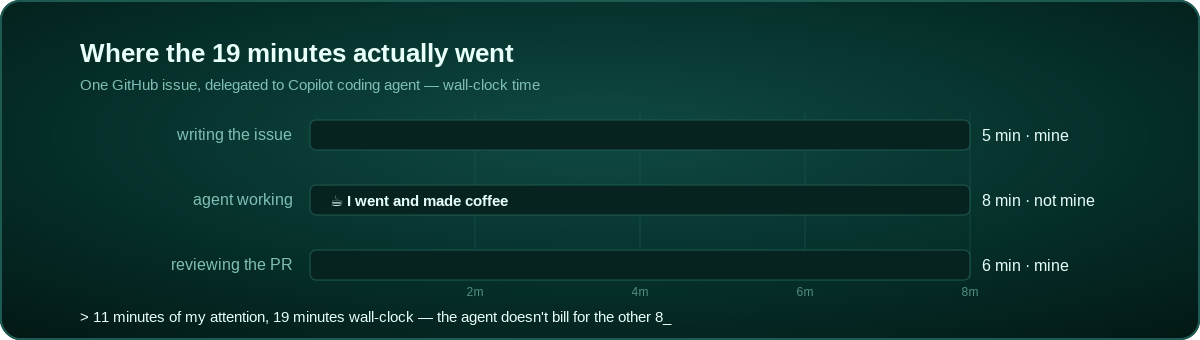
In one example run, human attention remained focused on specification and review while the agent handled implementation.
A live scorecard tracks six workshop milestones and helps learners and facilitators monitor progress.

When Agents Work in Parallel
Participants eventually assign multiple issues at the same time.
Completing one delegated task demonstrates the mechanics. Coordinating several tasks reveals the operating model.
The agents can work concurrently. The reviewer cannot approve every change at the same moment.
That role inversion is the lesson.
When implementation becomes parallel, human attention shifts toward:
- Selecting appropriate work
- Preventing overlapping scope
- Writing precise specifications
- Reviewing multiple pull requests
- Prioritizing review queues
- Identifying file or dependency conflicts
- Deciding what is ready to merge
The answer is not to eliminate review so the agents can move faster. The answer is to establish a review practice that is consistent, evidence-based, and efficient.
Participants can also explore the GitHub Copilot Agents panel, which provides another place to view and manage agent tasks.
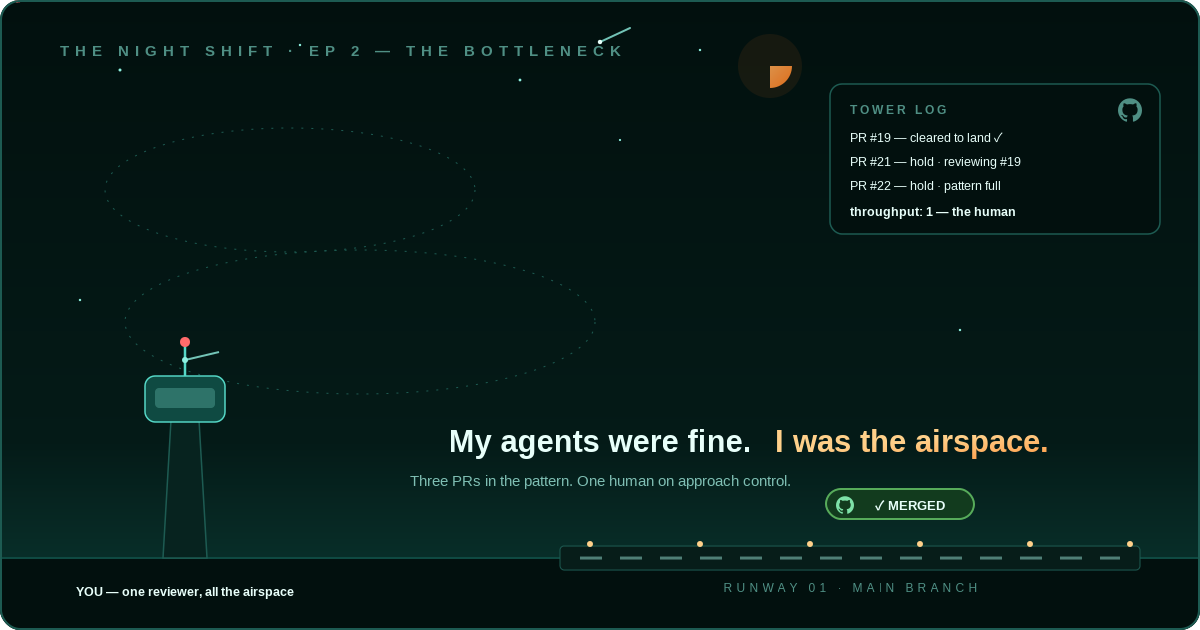
The agents can work in parallel. Human review is the shared airspace.
Practice with Real Security Stakes
TaskMango also contains a planted cross-site scripting vulnerability.
Participants use CodeQL to examine the vulnerable data path, review a proposed Copilot Autofix remediation, and verify the result before merging.
The scanner can identify the risk, and AI can suggest the fix. Human judgment remains the final control.
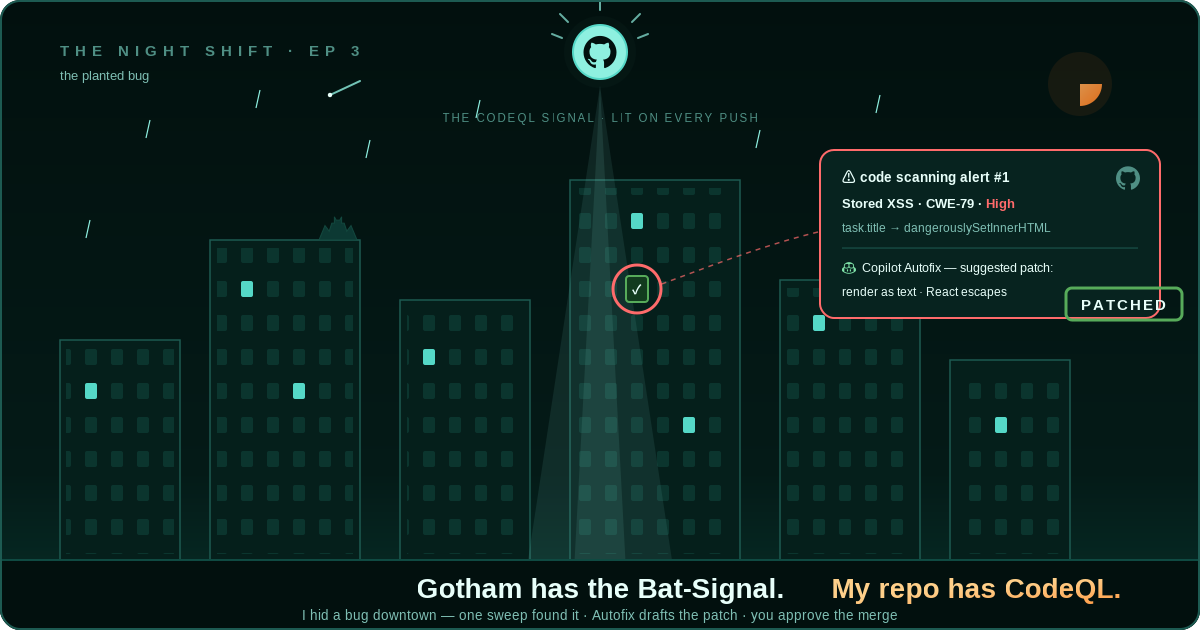
Gotham has the Bat-Signal. Your repo has CodeQL.
Create a Specialist Agent
The workshop also introduces specialist agents defined through Markdown files in .github/agents/.
Participants define an agent's role, rules, tools, and definition of done. The guiding principles are simple:
- Give each agent one clear job.
- Define what completion means.
- Provide only the tools that job requires.
This helps learners move from using a general coding agent to designing focused, accountable agent roles.
Take It, Teach It, or Improve It
AI Teammate 101 was designed for individual learners, user groups, classrooms, internal guilds, and community workshops.
Because it is template-based and MIT-licensed, organizers can:
- Fork and translate it
- Adapt it for their audience
- Replace TaskMango with another application
- Add new exercises
- Submit feedback and improvements
The goal is bigger than completing a workshop. It is to help the developer community establish a shared practice for delegating work to AI while keeping verification, security, and accountability with people.
Watch the 11-minute demo or explore AI Teammate 101.
Take it. Teach it. Remix it. Help improve it for the next learner.