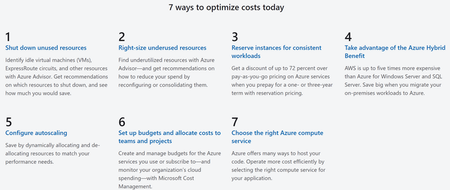
One pattern that often gets missed in cost optimisation guides is the lifecycle disconnect between provisioning and cleanup. Teams get good at tagging resources at creation time but rarely build the enforcement layer that actually acts on those tags. An Azure Policy with a `deny` effect on untagged resources stops new drift, but it does nothing about the years of accumulated orphaned disks, detached NICs, and stopped VMs already sitting in production subscriptions.
Another underappreciated area is Premium SSD usage on VMs that never exceed a few hundred IOPS. The disk SKU gets chosen during initial sizing and almost never revisited, even when the workload profile changes. A Standard SSD or even Standard HDD is perfectly adequate for most dev/test and lightly accessed data disks, and the savings per disk add up fast across a large estate.
It's also worth calling out that Azure Advisor recommendations have a lag. they reflect a 7–30 day lookback window, so recently provisioned resources won't appear until they've aged into the dataset. Prunr (prunr.cloud) fills that gap by scanning your subscription on demand in under 30 seconds and surfacing orphaned resources and oversized VMs with the exact monthly savings per finding.