Thanks for sharing this, varghesejoji. The attention to evidence quality stands out, especially reconciling costs against the billing total and keeping snapshots reproducible through child analyses. For a structured FinOps review, that level of rigor is valuable.
I'd like to raise one design question. For the ongoing operational side, why not build on Databricks AI/BI Genie, which is already available in Azure Databricks?
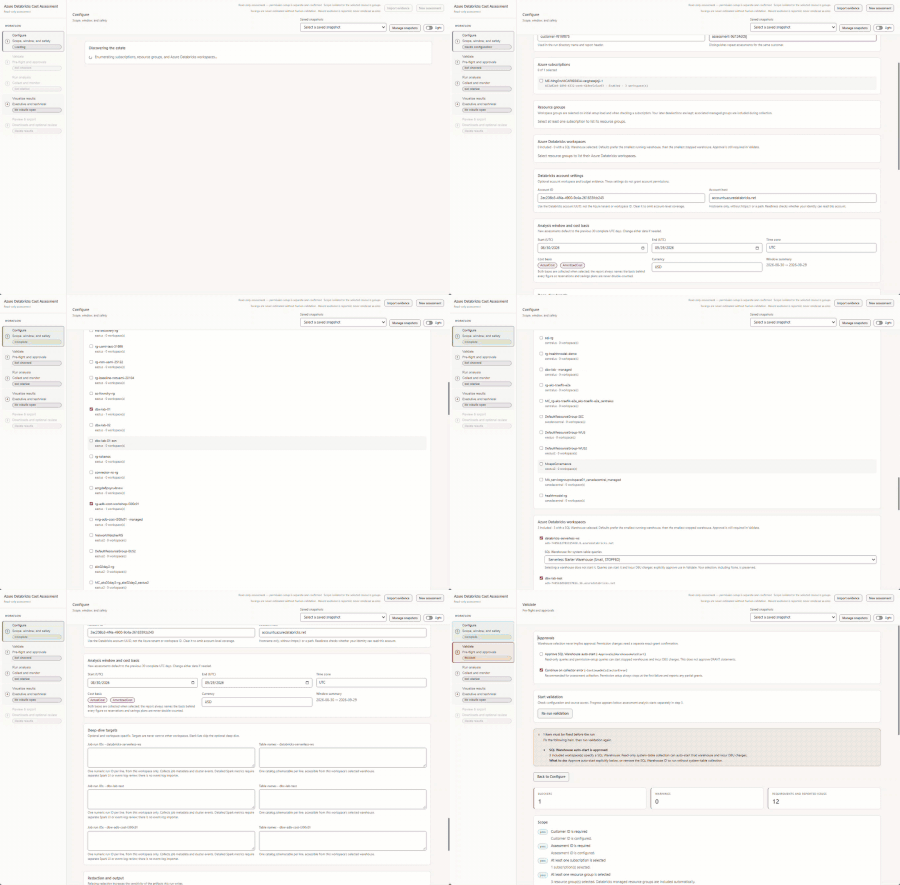
A Genie space over the system.billing, system.compute and system.lakeflow tables would let an engineer simply ask "Why did DBU spend jump this week?" or "Which jobs failed and were retried most?" and get an answer against current data. They could also turn the results into an AI/BI dashboard in minutes. That removes the Configure → Validate → Collect → Export cycle for everyday questions. Unity Catalog permissions govern access, instead of exported files that need redaction before sharing.
The gap I see is Azure-side cost. System tables show DBUs, not the VM, disk and networking charges from Cost Management. One option would be to land Cost Management exports into a Unity Catalog table and join on workspace and cluster tags. Genie could then answer the full cost question, and your rules engine could run on the same tables to produce findings.
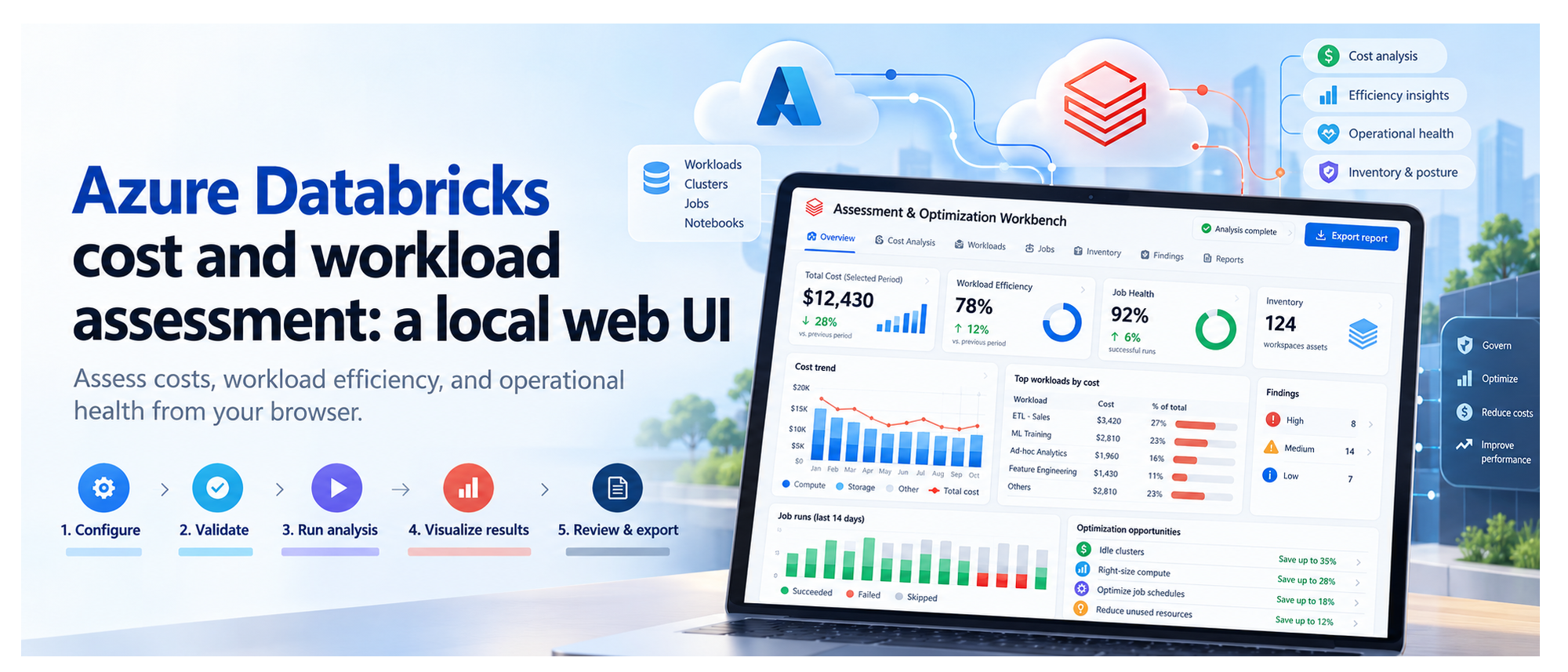
This would still leave the local workbench as the right tool for formal, point-in-time assessments, particularly for consultants who can't leave anything running in a customer tenant. Is Genie integration something you've considered for the roadmap?
Regards
Shivanna Gundanavar

 Microsoft

