Recent Blogs

6 MIN READ
TL;DR
Every Azure Bot has a fixed identity (MicrosoftAppId) tied to either an App Registration or a Managed Identity—it cannot be changed or reused.
Azure Bot supports three identity types:
...
Dec 05, 2025108Views
1like
0Comments
TL; DR:
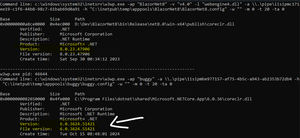
Installing the latest .NET runtime on a server does not upgrade existing applications that are built on unsupported versions (for example, anything older than .NET 8 as of Nov 2025). Appl...
Nov 28, 20251.9KViews
2likes
0Comments
Issue Observed
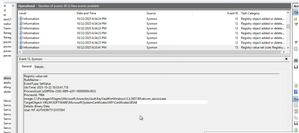
A customer removed an expired SSL certificate from their Azure VM after installing a renewed one. However, after every reboot, the old certificate reappeared, and IIS site bindings a...
Oct 29, 2025127Views
0likes
0Comments
Troubleshooting File Upload Error: 413 Request Body Too Large in .NET Core
When working with file uploads in .NET Core, you might encounter the 413 "Request Body Too Large" error even if the maxAll...
Sep 02, 2025247Views
1like
0Comments
Enabling Client Certificate Authentication for an Application Inside Default Web Site
In this blog, we will explore how to enable client certificate authentication for a specific application hosted...
Sep 02, 2025218Views
0likes
0Comments
Introduction
In today’s API-driven world, automated scripts—especially those using Python libraries like httpx—can pose a risk if left unchecked. While many of these scripts are legitimate, some ar...
Sep 02, 2025142Views
0likes
0Comments
Introduction
Reverse proxies are essential in modern web architectures, especially for isolating backend services and enforcing security. However, SSL certificate issues can introduce complex chall...
Sep 02, 2025243Views
1like
0Comments
🔍 Overview
If you've encountered the following error in your Windows Event Viewer:
“The IIS Admin Service service terminated with the following service-specific error: Invalid Signature”
you'r...
Sep 02, 2025222Views
1like
0Comments
2 MIN READ
Collecting memory dumps is a crucial part of diagnosing and troubleshooting application issues on Linux machines. Microsoft suggests three primary tools for this purpose: dotnet-dump, procdump, and c...
Sep 02, 2025328Views
0likes
0Comments
Issue:
In ASP.NET applications, temporary files are generated during compilation and runtime. By default, these files are stored in system directory at: C:\Windows\Microsoft.NET\Framework[64]\<ver...
Sep 02, 2025321Views
0likes
0Comments
Resources
Tags
- IIS38 Topics
- silverlight16 Topics
- ASP.NET Core13 Topics
- wcf12 Topics
- SSL9 Topics
- ria7 Topics
- web7 Topics
- TLS7 Topics
- azure6 Topics
- web development6 Topics