sql
204 TopicsImprove Campaign Reach and Measurement with Azure Confidential Clean Rooms
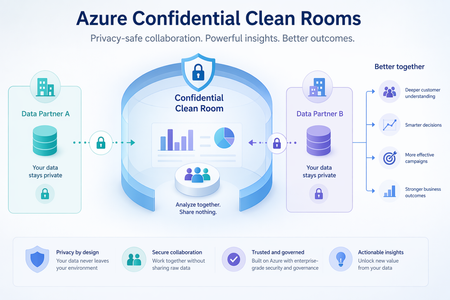
Why campaign performance now depends on trusted data collaboration For many years, third-party cookies helped advertisers, publishers, and measurement partners recognize users across parts of the open web. That model continues to evolve as browsers and mobile platforms introduce stronger privacy protections and limit access to certain cross-site and device-level identifiers. As a result, some advertisers and publishers are placing greater emphasis on the first-party data they collect directly to support audience activation and campaign measurement. Advertising partnerships may involve identifiers and behavioral data covered by privacy, data-protection, or industry rules. Data that has been altered to reduce direct identification—such as hashed email addresses or advertising identifiers—may still be linked to individuals and should not automatically be considered anonymous. Depending on the law and context, it may be treated as personally identifiable information (PII) or personal data under the European Union’s General Data Protection Regulation (GDPR). Organizations must have an appropriate legal basis and a clear purpose for using such data. The European Union’s Digital Markets Act (DMA) also affects how designated digital platforms combine certain personal data across services. In the United States, health information held by organizations covered by the Health Insurance Portability and Accountability Act (HIPAA) may be subject to additional restrictions, including for some marketing uses. The requirements for each collaboration depend on the parties, data, purpose, consent or authorization, and jurisdiction. Together, these changes create a practical challenge: campaign analysis increasingly depends on combining detailed records held by different organizations, but privacy, security, and governance obligations make unrestricted exchange of customer-level data difficult. Advertisers and publishers therefore need a controlled way to match audiences and measure outcomes using only authorized data—without exposing or freely sharing the underlying records. Azure Confidential Clean Rooms is designed to address this challenge. It allows each party’s detailed data to be used for an agreed analysis while helping protect raw data from access by other participants. This provides a controlled, verifiable environment for audience matching and campaign measurement without unrestricted file sharing. What campaign leaders should look for: the potential to broaden addressable audiences, strengthen evidence of campaign lift, reduce operational risk, and establish a repeatable model for trusted collaboration across media and measurement partners. Campaign decisions with secure multiparty analytics Azure Confidential Clean Rooms is a fully managed service that enables advertisers, publishers, agencies, and measurement partners to analyze sensitive datasets together while helping protect each participant’s raw data. The current preview supports analytics through Spark SQL queries agreed by the participants. These queries run in a hardware-protected environment called a Trusted Execution Environment (TEE), helping protect participants’ raw data from other collaborators and the Azure operator throughout its lifecycle. For a deeper explanation of the technology and architecture, see our earlier blog, Preview of multiparty analytics with Azure Confidential Clean Rooms. The following scenarios show how this model supports specific campaign decisions: Audience activation — Which high-value customers might this media partner reach? The advertiser contributes first-party customer data, such as securely transformed contact details, postal addresses, loyalty IDs, and purchase history. The publisher contributes its audience-matching data, on-site behavior, and consented interest or demographic segments. Azure Confidential Clean Rooms can compare identifiers that the participants have agreed to use for matching and release a reachable audience segment without exposing the underlying records. Campaign leaders can use the result to estimate potential reach and direct investment toward more relevant audiences. Identity enrichment — Can we improve match quality while protecting partner data? An agency or identity partner can contribute a third dataset to connect approved identifiers across email, mobile advertising IDs, devices, or households and add consented demographic or business attributes. Because the matching happens inside the confidential clean room, participants may improve match rates without exposing the identity partner’s underlying data or copying another party’s identifiers. Stronger matching can help expand reach and reduce media waste caused by fragmented customer identities. Measurement and attribution — Did the campaign contribute to additional business outcomes? The publisher contributes ad-exposure records, while the advertiser contributes outcomes such as purchases, order values, subscriptions, or app installs. Comparing these approved datasets can help measure unique reach and frequency, results across publishers, and the difference between groups that were and were not exposed to the campaign. For example, a retailer and a streaming publisher can compare exposure data with purchase outcomes to estimate campaign lift without revealing who saw a specific ad or made a purchase. This can give campaign leaders stronger evidence for campaign optimization and future budget allocation. These scenarios can help campaign leaders assess whether secure data collaboration may improve audience reach, matching quality, or confidence in campaign measurement. Why campaign leaders should consider Azure Confidential Clean Rooms The collaboration model is designed to give each participant greater control over how its data is accessed, used, and shared. Four capabilities are central to building trust among advertisers, publishers, agencies, and measurement partners: No centralized data pooling — Collaborators can keep source datasets in their own storage instead of copying them into a shared, permanent repository. The confidential environment verifies that expected code is running before it securely retrieves authorized data for temporary processing. This can reduce unnecessary data movement and exposure while supporting an approved analysis across partners. Controlled release of approved results — Before analysis begins, collaborators can agree which data may be used, approve the analysis, and specify who may receive the results. Safeguards can also prevent results for very small groups from being released, helping reduce the risk of identifying an individual. Verifiable governance and tamper-resistant audit trails — Participants can verify key properties of the environment instead of relying only on the clean-room provider’s claims. Open-source components and hardware-backed verification help participants confirm that the expected Microsoft-provided code is running. Tamper-resistant audit trails generated in the confidential environment can support compliance reviews. Data protection throughout the process — Each party can encrypt its data before it leaves its environment. Participants allow access to encryption keys only after the confidential environment verifies that expected code is running. Try Azure Confidential Clean Rooms Consider a campaign where better partner data could help improve audience reach, matching quality, or measurement confidence. Sign up to participate in a preview of multiparty analytics with Azure Confidential Clean Rooms. The Microsoft team will contact you to discuss the campaign scenario, participating datasets, and governance requirements. Learn more Sign-up: Preview of multiparty analytics with Azure Confidential Clean Rooms Preview blog: Multiparty analytics with Azure Confidential Clean Rooms Azure documentation: Confidential Clean RoomsMicrosoft Defender for Cloud Customer Newsletter
*This will be the last monthly MDC newsletter. To keep up with the latest, please visit: What's new in MDC What's new in Defender for Cloud? Multiple container security features are now Generally Available: Container-level misconfiguration recommendations for Kubernetes, Upgrade AKS version recommendations, VA for runtime-discovered container images on EKS and GKE, Kubernetes notes VA for EKS and GKE, scanning support for Docker hardened container images. For more information, see this page here. Database-level recommendations for SQL VA now GA The SQL vulnerability assessment recommendations created as part of the transition from grouped to individual recommendations are now generally available. Each SQL vulnerability assessment rule is surfaced as its own recommendation, reported directly on the affected SQL database resource. For more details, please refer to this documentation . Blogs of the month In July, our team published the following blog posts we would like to share: 1. Built to Protect: The Architecture Behind Codename MDASH Customer journey Discover how other organizations successfully use Microsoft Defender for Cloud to protect their cloud workloads. This month we are featuring NTT Data. NTT Data, a top global IT services provider, leverages Azure, OpenAI and Microsoft Defender to launch their AI agents, adopting secure by design principles, to help enhance, competitiveness organization change and data usage. Defender for AI, and Defender CSPM, as part of the Defender family, address the emerging risks and threats like prompt injection and data poisoning that come with generative AI. Join our community! We offer several customer connection programs within our private communities. By signing up, you can help us shape our products through activities such as reviewing product roadmaps, participating in co-design, previewing features, and staying up-to-date with announcements. Sign up at aka.ms/JoinCCP. We greatly value your input on the types of content that enhance your understanding of our security products. Your insights are crucial in guiding the development of our future public content. We aim to deliver material that not only educates but also resonates with your daily security challenges. Whether it’s through in-depth live webinars, real-world case studies, comprehensive best practice guides through blogs, or the latest product updates, we want to ensure our content meets your needs. Please submit your feedback on which of these formats do you find most beneficial and are there any specific topics you’re interested in https://aka.ms/PublicContentFeedback. Note: If you want to stay current with Defender for Cloud and receive updates in your inbox, please consider subscribing to our monthly newsletter: https://aka.ms/MDCNewsSubscribe
Feature Proposal: Ability to Exclude a column/subset of Columns in Select.
Summary I would like to propose a new T-SQL feature that allows developers to select all columns from a table while explicitly excluding a small subset of columns. Currently, when a table contains many columns and only one or two need to be omitted, developers are forced to mention every remaining column manually in the "Select" SQL. This leads to verbose queries, reduced maintainability, and a higher chance of mistakes when the schema evolves. Motivation Consider a table with 20 or more columns. Current approach, SELECT EmployeeId, FirstName, LastName, Department, Designation, Email, PhoneNumber, DateOfBirth, Address, City, State, Country, PostalCode, ManagerId, JoiningDate, LastModifiedDate, Status, IsActive, CreatedDate FROM Employees; If the intention is simply to exclude a single sensitive column such as Salary, the query becomes unnecessarily long. A more concise alternative could be: SELECT * FROM Employees EXCLUDE (Salary); The engine would expand * internally and remove the specified columns before execution. Benefits 1. Reduces boilerplate code. 2. Improves readability for wide tables. 3. Makes queries easier to maintain as schemas evolve. 4. Reduces the likelihood of accidentally omitting newly added columns. 5. Makes it simpler to exclude sensitive or internal-use columns from result sets. Expected Behavior Single column exclusion SELECT * FROM Employees EXCLUDE (Salary); Returns all columns except Salary. Multiple column exclusion SELECT * FROM Employees EXCLUDE (Salary, PasswordHash); Returns all columns except Salary and PasswordHash. Suggested Validation Rules 1. Every excluded column must exist in the projected result set. If an excluded column does not exist, compilation should fail with an appropriate error. 2. Duplicate column names in the exclusion list should either: be ignored, or produce a validation error. 3. If the exclusion list removes every projected column, the statement should fail. Example: SELECT * FROM Employees EXCLUDE (Employee, Name, Salary); If these are the only columns in the table, an error could be raised such as: The EXCLUDE clause cannot eliminate all columns from the SELECT list. Returning a zero-column result set would likely be confusing and less useful. Additional Considerations This syntax could also be valuable when selecting from joins, views, or derived tables, where developers frequently want "everything except a few fields." Closing Thoughts I believe this would be a practical quality-of-life enhancement for T-SQL that addresses a common developer pain point while remaining simple to understand and implement. It would reduce repetitive code and improve maintainability without affecting existing queries.339Views0likes1Comment
Windows server 2025 SQL patching cluster problem.
Dear Team, I have a problem when I am patching upgrade windows server 2025 with KB5091157. After patching is the clustering is not able to join back; it shows the error with credentials. The log error is "Cannot connect sqlxxxxxxx." you do not have administrative privileges on the cluster. Contact your network administrator to request access. Note: The server is not in a different VLAN network.377Views0likes1CommentPreview of multiparty analytics with Azure Confidential Clean Rooms
Today, we are excited to announce the preview of multiparty analytics feature of Azure Confidential Clean Rooms, a fully managed service that allows customers and their partners to securely analyze privacy-sensitive datasets from multiple parties. It uses confidential compute enabled Apache Spark-based big-data analytics (Spark SQL) which helps protect their raw data from other collaborators and from the Azure operator by performing computations in a Trusted Execution Environment (TEE). Privacy-sensitive datasets include personally identifiable information (PII), protected health information (PHI) and cryptographic secrets. Organizations across industries are increasingly looking to supplement their data with data from business partners, to build a complete view of their business. For example, brands, publishers, and their partners need to collaborate using datasets containing Intellectual Property (IP) to improve the relevance of their campaigns. Confidential data clean rooms help solve this challenge by enabling organizations to share and analyze granular datasets in a secure environment that helps prevent raw data exfiltration—protecting intellectual property, preserving customer privacy, and addressing concerns around regulatory compliance. You can sign up for the preview here Key Features Fully Managed: Azure takes care of the infrastructure provisioning and scaling with no user intervention. This significantly reduces your onboarding effort allowing you to focus on the queries and insights, not on infra management. Confidential Spark SQL: Spark SQL allows you to query large datasets and run complex queries in a distributed computing environment. In the confidential computing enabled version, the Spark driver and executors are fully attested policy-governed enclaves running as virtual nodes on confidential Azure Container Instances (ACI) which helps prevent exfiltration of collaborators’ data during query execution. Governance: Helps manage membership to cleanrooms, enables and verifies approval for queries from relevant collaborators before executing them and verifies consent to access sensitive collaborator data. It also helps generate tamper-resistant audit trails containing salient clean room events. This is made possible with the help of an implementation of the Confidential Consortium Framework (CCF). Telemetry: Throughout every clean-room run, detailed logs are streamed out in real time to monitor performance, troubleshoot issues, and keep the analytics healthy — all without ever exposing the collaborators’ data at any time. Verifiable trust: Cryptographic remote attestation viz. full attestation based on confidential hardware reports allows independent verification of the TEE along with along with all components that are part of it, without just trusting the cloud provider, before sensitive data and decryption keys are made available to the TEE Open-source containers: All Microsoft provided cleanroom containers and sidecars are open-sourced here and can be verified for provenance and integrity guarantees using GitHub artifact attestation Use Cases Multi-party confidential big-data analytics unlocks value in scenarios where data sensitivity, regulatory pressure, or competitive concerns previously blocked collaboration. These are some early scenarios that can benefit from this. Media & Advertising Collaboration of advertiser CRM data with publisher data for audience targeting and segment activation. Collaboration of audience data with measurement partners for measurement and attribution. Banking & Finance Collaboration between banks and insurance firms to upsell relevant products to existing bank customers without sharing raw data from either side Collaboration with retailers to generate customized offers for bank customers, without exposing either party’s underlying data. Government & Public Sector Secure collaboration of data across government departments to deliver better citizen welfare outcomes. Secure collaboration between government and private enterprises on shared-interest workloads such as traffic monitoring and weather systems. Healthcare Enable healthcare firms — including biopharma organizations — to combine their data with third-party institutions to accelerate clinical development, like identifying eligible participants for a clinical trial, without exposing underlying patient data. Combine patient datasets across hospitals to study disease patterns or outcomes without exposing sensitive protected health information. "A higher standard for protecting user privacy and trust, the phase-out of third-party cookies, and global regulations demand more sophisticated data collaboration tools to support advertising marketplaces. Azure Confidential Cleanrooms (ACCR) provides a secure, feature-rich, and flexible foundation to implement privacy-preserving functions and enable insights without sharing privacy-sensitive data outside of organization boundaries. Built on the Azure Confidential Compute (ACC) platform and offering cohesion with Azure's diverse set of services, ACCR offers the attestation, audit, fine-grained access control, and verifiable trust tools required for secure and privacy-safe data collaboration in today's world." — Andrei Mackenzie, Engineering Manager, Microsoft AI "Azure Confidential Clean Rooms enabled our team to evaluate how clean room capabilities can support secure, governed data collaboration at scale. Through the Proof-of-Concept (PoC), we explored how privacy-preserving workflows, trusted access controls, and scalable compute can create a stronger foundation for responsibly leveraging first-party data. This helps reduce operational friction while supporting business growth, improving customer engagement, and enabling more relevant customer experiences." — Nic Dregne, Director, Microsoft AdTech Engineering Beyond Spark SQL Realizing other multi-party scenarios like custom analytics, ML training and inferencing on Azure Confidential Clean Rooms is in our roadmap. If you have such a scenario to be realized, you can fill in and submit the preview signup form with the details of your scenario and we’ll get back to you. Learn More · Signup for the preview of Azure Confidential Clean Rooms for Analytics · Confidential Consortium Framework (CCF) · Virtual Nodes on Azure Container InstancesSQL Server 2025 Express - service starts with delay of some hours after restart of computer
Dear Community, we started using SQL Server 2025 Express but experienced problems with the start of service at startup. When the computer is restarted, the service is not started. I observed this on nearly all installations and in one case it took kinda exactly 2 hours to start the service (or it was somehow delayed but without any trace in settings or windows logs). When we start the service manually or by batch script it is starting properly at startup ... What exactly causes this? We only have this issue with 2025 Express and i have not yet found similar cases in the internet. Thank you, kind regardsSolved623Views1like3Comments
Unable to install SQL Server 2022 Express (installer glitch + SSMS error)
Hi, I recently purchased a new Lenovo laptop, and I am trying to install Microsoft SQL Server 2022 Express along with SSMS. SSMS installed successfully, but SQL Server installation fails, and sometimes the installer UI glitches or does not load properly. Because of this, I am getting connection errors in SSMS like "server not found" and "error 40". I am not very familiar with technical troubleshooting. Can someone guide me step-by-step in a simple way to install SQL Server correctly? Thank you.544Views0likes1CommentModern Database Protection: From Visibility to Threat Detection with Microsoft Defender for Cloud
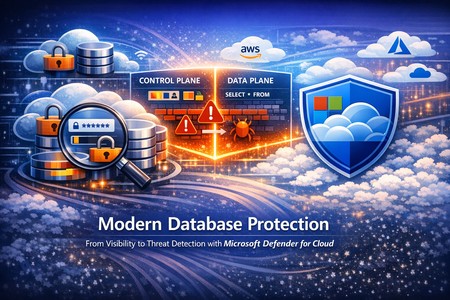
Databases sit at the heart of modern businesses. They support everyday apps, reports and AI tools. For example, any time you engage a site that requires a username and password, there is a database at the back end that stores your login information. As organizations adopt multi-cloud and hybrid architectures, databases are generated all the time, creating database sprawl. As a result, tracking and managing every database, catching misconfigurations and vulnerabilities, knowing where sensitive information lives, all becomes increasingly difficult leaving a huge security gap. And because companies store their most valuable data, like your login information, credit card and social security numbers, in databases, databases are the main target for threat actors. Securing databases is no longer optional, yet getting started can feel daunting. Database security needs to address the gaps mentioned above – help organizations see their databases to help them monitor for misconfigurations and vulnerabilities, sensitive information and any suspicious activities that occur within the database that are indicative of an attack. Further, database security must meet customers where they are – in multi-cloud and hybrid environments. This five part blog series will introduce and explore database-specific security needs and how Defender for Cloud addresses the gaps through its deep visibility into your database estate, detection of misconfiguration, vulnerabilities and sensitive information, threat protection with alerts and Integrated security platform to manage it all. This blog, part one, will begin with an overview of today’s database infrastructure security needs. Then we will introduce Microsoft Defender for Cloud’s unique database protection capabilities to help address this gap. Modern Database Architectures and Their Security Implications Modern databases can be deployed in two main ways: on your own infrastructure or as a cloud service. In an on-premises or IaaS (Infrastructure as a Service) setup, you manage the underlying server or virtual machine. For example, running a SQL Server on a self-managed Windows server—whether in your data center or on a cloud VM in Azure or AWS—is an IaaS deployment (Microsoft Defender for Cloud refers to these as “SQL servers on machines”) that require server maintenance. The other approach is PaaS (Platform as a Service), where a cloud provider manages the host server for you. In a PaaS scenario, you simply use a hosted database service (such as Azure SQL Database, Azure SQL Managed Instance, Azure Database for PostgreSQL, or Amazon RDS) without worrying about the operating system or server maintenance. In either case, you need to secure both the database host (the server or VM) and the database itself (the data and database engine). It’s also important to distinguish between a database’s control plane and data plane. The control plane includes the external settings that govern your database environment—like network firewall rules or who can access the system. The data plane involves information and queries inside the database. An attacker might exploit a weak firewall setting on the control plane or use stolen credentials to run malicious queries on the data plane. To fully protect a database, you need visibility into both planes to catch suspicious behavior. Effective database protection must span both IaaS and PaaS environments and monitor both the control plane and data plane because they are common targets for threat actors. Security teams can then detect suspicious activity such as SQL injections, brute-force attempts, and lateral movement through your environment. A Unified Approach to Database Protection Built for Multicloud Modern database environments are fragmented across deployment models, database ownership, and teams. Databases run across IaaS and PaaS, span control and data planes, and in multiple clouds, yet protection is often pieced together from disconnected point solutions Microsoft Defender for Cloud is a cloud native application protection platform (CNAPP) solution that provides a unified, cloud-native approach to database protection—bringing together discovery, posture management, and threat detection across SQL (Iaas and Paas), open-source relational databases (OSS), and Cosmos DB databases. Defender for Cloud’s database protection uses both agent-based and agentless solutions to protect database resources on-premises, hybrid, multi-cloud and Azure. A lightweight agent-based solution is used for SQL servers on Azure virtual machines or virtual machines hosted outside Azure and allows for deeper inspection, while an agentless approach for managed databases stored in Azure or AWS RDS resources provide protection with seamless integration. Additionally, Defender for Cloud brings in other signals from the cloud environment, surfacing a secure score for security posture, an asset inventory, regulatory compliance, governance capabilities, and a cloud security graph that allows for proactive risk exploration. The value of database security in Defender for Cloud starts with pre and post breach visibility. Vulnerability assessment and data security posture management helps security admins understand their database security posture and, by following Defender for Cloud’s recommendations, security admins can harden their environment proactively. Vulnerability assessments scans surface remediation steps for configurations that do not follow industry’s best practices. These recommendations may include enabling encryption when data is at rest where applicable or database server should restrict public access ranges. Data security posture management in Defender for Cloud automatically helps security admins prioritize the riskiest databases by discovering sensitive data and surfacing related exposure and risk. When databases are associated with certain risks, Defender for Cloud will provide its findings in three ways: risk-based security recommendations, attack path analysis with Defender CSPM and the data and AI dashboard. The risk level is determined by other context related to the resource like, internet exposure or sensitive information. This way, Security admins will have a solid understanding of their database environment pre-breach and will have a prioritized list of resources to remediate based on risk or posture level. While we can do our best to harden the environment, breaches can still happen. Timely post-breach response is just as important. Threat detection capabilities within Defender for Cloud will identify anomalous activity in near real time so SOC analytes can take action to contain the attack immediately. Defender for Cloud monitors both the control and the data plane for any anomalous activity that indicates a threat, from brute force attack detections to access and query anomalies. To provide a unified security experience, Defender for Cloud natively integrates with the Microsoft Defender Portal. The Defender portal brings signals from Defender for Cloud to provide a single cloud-agnostic security experience, equipping security teams with tools like secure score for security posture, attack paths, and incidents and alerts. When anomalous activities occur in the environment, time is of the essence. Security teams must have context and tools to investigate a database resource, both in the control plan and the data plane, to remediate and mitigate future attacks quickly. Defender for Cloud and the Defender portal brings together a security ecosystem that allows SOC analysts to investigate, correlate activities and incidents with alerts, contain and respond accordingly. Take Action: Close the Database Blind Spot Today Modern database environments demand more than isolated controls or point solutions. As databases span hybrid and multiple clouds, security teams need a unified approach that delivers visibility, context, and actionable protection where the data lives. Microsoft Defender for Cloud provides organizations the visibility into all of your databases in a centralized Defender portal using its unique control and data plane findings so that security teams can identify misconfigurations. prioritize them based on cloud-context risk-based recommendations or proactively identify other attack scenarios using the attack path analysis while SOC analysts can investigate alerts and act quickly. Follow this story for part two. We’ll go into Defender for Cloud’s unique visibility into database resources to find misconfiguration gaps, sensitive information exposure, and contextual risks that may exist in your environment. Resources: Get started with Defender for Databases. Learn more about SQL vulnerability assessment. Learn more about Data Security Posture Management Learn more about Advanced Threat Protection Reviewers: YuriDiogenes, lisetteranga, talberdahMicrosoft Defender for Cloud Customer Newsletter
Check out monthly news for the rest of the MTP suite here! What's new in Defender for Cloud? Now in public preview, Defender for Cloud provides threat protection for AI agents built with Foundry, as part of the Defender for AI Services plan. Learn more about this in our documentation. Defender for Cloud’s Defender for SQL on machines plan provides a simulated alert feature to help validate deployment and test prepared security team for detection, response and automation workflows. For more details, please refer to this documentation. Check out other updates from last month here. Blogs of the month In February, our team published the following blog post we would like to share: Extending Defender's AI Threat Protection to Microsoft Foundry Agents Defender for Cloud in the field Revisit the announcement on the new Secure Score model and the enhancements available in the Defender Portal. New Secure Score model and Defender portal enhancements GitHub Community Module 12 in Defender for Cloud’s lab has been updated to include alert simulation! Database protection lab - module 12 Customer journey Discover how other organizations successfully use Microsoft Defender for Cloud to protect their cloud workloads. This month we are featuring ContraForce. ContraForce, a cybersecurity startup, built its platform on Microsoft’s robust security and AI ecosystem. Contraforce, while participating in Microsoft for Startup Pegasus program, addressed the issue of traditional, complex, and siloed security stacks by leveraging Microsoft Sentinel, Defender XDR, Entra ID and Microsoft Foundry. ContraForce was able to deliver enterprise-grade protection at scale, without the enterprise-level overhead. As a result, measured key outcomes like 90%+ incident automation, 93% reduced cost per incident, and 60x faster incident response. Join our community! We offer several customer connection programs within our private communities. By signing up, you can help us shape our products through activities such as reviewing product roadmaps, participating in co-design, previewing features, and staying up-to-date with announcements. Sign up at aka.ms/JoinCCP. We greatly value your input on the types of content that enhance your understanding of our security products. Your insights are crucial in guiding the development of our future public content. We aim to deliver material that not only educates but also resonates with your daily security challenges. Whether it’s through in-depth live webinars, real-world case studies, comprehensive best practice guides through blogs, or the latest product updates, we want to ensure our content meets your needs. Please submit your feedback on which of these formats do you find most beneficial and are there any specific topics you’re interested in https://aka.ms/PublicContentFeedback. Note: If you want to stay current with Defender for Cloud and receive updates in your inbox, please consider subscribing to our monthly newsletter: https://aka.ms/MDCNewsSubscribe