ml
19 TopicsUnlocking the potential of Privacy-Preserving AI with Azure Confidential Computing on NVIDIA H100
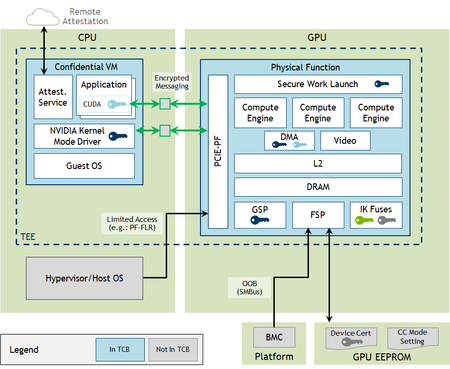
Learn how Azure and NVIDIA enable high-performance privacy-preserving machine learning scenarios by augmenting Azure Confidential VMs with confidential computing enabled NVIDIA H100 GPUs21KViews0likes0Comments
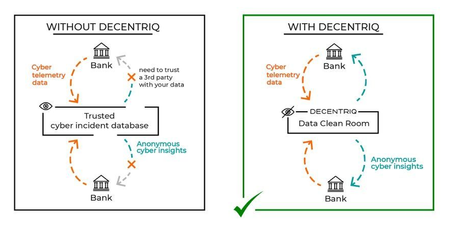
Confidential Data Clean Rooms – The evolution of sensitive data collaboration
Secure data collaboration between multiple parties has the potential to revolutionize societies, businesses and industries for the better. Collaborating on sensitive data assets facilitates innovation to unlock new value for organizations.Accelerating Distributed Training in Azure Machine Learning service using SR-IOV
Author: Ravi Shankar Kolli This post is co-authored by Mathew Salvaris, Aashna Garg, Vaibhav Jain, Reyhan Patia, Caghan Demirci, Alex Sutton Today’s state of the art deep learning models like BERT require distributed multi machine training to reduce training time from weeks to days. Interconnect is one of the key components to reduce communication overhead and achieve good scaling efficiency in distributed multi machine training. Azure Machine Learning users can now speed up their training time by taking advantage of the Azure Virtual Machines with SR-IOV and InfiniBand support. In September 2018, Azure introduced the NC, ND, and H-series of VMs dedicated InfiniBand networks. All RDMA-enabled sizes are capable of leveraging that network using Intel MPI. SR-IOV stands for “single root input/output virtualization” which optimizes sharing of PCI Express devices in a system with virtual machines. In Azure, SR-IOV for InfiniBand enables near bare-metal performance for any MPI library. MPI, or message-passing interface, is a communication library commonly used for distributed training between GPUs on many systems. Nvidia’s NCCL software uses MPI to make distributed training easier in deep learning frameworks like PyTorch and TensorFlow. Azure now supports using any MPI library with SR-IOV enabled VM families such as NCv3, NDv2, and HC or HB for HPC applications. Older GPU hardware with InfiniBand such as NCv2 and NDv1 will be updated for SR-IOV in 2020. Intel MPI version 5.x will continue to be supported as will all subsequent Intel MPI versions. In addition, all other MPIs supported by the Open Fabric Enterprise Distribution (OFED), OpenMPI, and Nvidia’s NCCL2 library, providing optimized performance for GPUs are supported. These enhancements will provide customers with higher InfiniBand bandwidth, lower latencies, and most importantly, better distributed application performance. Infiniband connectivity provides higher throughput and lower latencies compared to the ethernet based connection. SR-IOV enables communication over an Infiniband network using any flavor of MPI. A reference implementation of Bert in Azure Machine Learning using SR-IOV and Infiniband can be found on Github. Throughput Improvement in BERT SR-IOV and Infiniband provided up to 75% improvement in the throughput of BERT Large model. When SR-IOV is enabled, throughput improves to about 28 sequences/second/GPU which is 75% better than the baseline. Below charts show the throughput improvement of BERT large pretraining on 16 Azure StandardNC24s_v3 VMs. Model is in PyTorch and used Torch.Distributed and Open MPI for multi-node training. Note that the below charts do not reflect the best throughput of BERT on Azure. Throughput Improvement in ResNet In order to observe the improvements in speed for PyTorch we ran a selection of ResNet models from Torchvision on synthetic data at full precision. This allowed us to estimate the throughput without having to worry about IO overhead. Below we can see figures for clusters with SR-IOV enabled vs those that didn’t have SR-IOV. We were using NC24rs_v3 vms each equipped with 4 V100 GPUs. Therefore, when we report 8 GPUs it is across 2 nodes and 16 is across 4. We can see that across models and GPU configurations SR-IOV offers 2-3 times improvement over No SR-IOV. In the figures below the number reported in the center of the bar is the scaling efficiency on RDMA-enabled VMs. As we can see for Horovod and DistributeDataParallel both using NCCL the scaling efficiency is over 90% across all three models with the performance almost doubling with the doubling of GPUs. Summary SR-IOV yielded significant throughput improvements to distributed multi machine training. Bert large throughput increased by 75% with SR-IOV and certain Resnet models were faster by about 2-3x with SR-IOV. Throughput also scaled linearly on Resnet models as the number of NC24rs_v3 nodes scaled from 1 to 2, 4 and 8 instances. Stay tuned for our next blog on scaling distributed deep learning training on Azure NDv2 VMs. These VMs feature 8 NVIDIA Tesla V100 NVLINK interconnected GPUs, 32GB HBM2 memory per GPU and 100Gbps EDR Infiniband interconnect. Get started with Distributed Deep Learning training on Azure Machine Learning. Report any implementation issues or observed throughput improvements of SR-IOV on Azure Machine Learning at Stack Overflow.10KViews2likes1Comment
Fill the Gap: EDDI for Multivariate Time Series Missing Value Imputation
This blog provides some guidance on using a recent deep generative model developed by Microsoft researchers at Cambridge for missing-value imputation and shares the best practices to impute missing values in multivariate time-series datasets.7.1KViews0likes0Comments
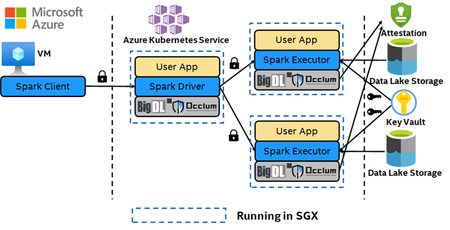
BigDL Privacy Preserving Machine Learning with Occlum OSS on Azure Confidential Computing
This blog introduces you to a confidential computing solution for Privacy-Preserving Machine Learning (PPML) made available by Open-Source Software Occlum Library OS for Intel SGX and BigDL on the Azure cloud. This blog demonstrates the solution using a sample analytics application built for the NYTaxi dataset. This sample application leverages Azure Confidential Computing (ACC) components such as SGX Nodes for Azure Kubernetes Service (AKS), Microsoft Azure Attestation, Azure Key Vault (AKV), etc, as well as Occlum LibOS and BigDL PPML.6.5KViews1like0CommentsHow to score ONNX models in Azure Data Explorer
Are you training ML models using different frameworks and want to score streaming data in ADX? Just convert the model to ONNX format and export it to ADX. You can now score new data directly in ADX, near the data, using ADX existing compute nodes.5.7KViews3likes1CommentFrictionless Collaborative Analytics and AI/ML on Confidential Data
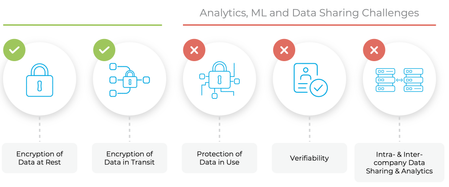
Secure enclaves protect data from attack and unauthorized access, but confidential computing presents significant challenges and obstacles to performing analytics and machine learning at scale across teams and organizational boundaries. In this article, we'll explore the Opaque platform and describe how it can enable multiple parties to easily collaborate and analyze shared data while keeping it fully confidential.5.4KViews2likes0Comments