machine learning
106 Topics
Adding multi-language support for Azure AI applications quickly
There is a growing demand for applications which support speech, language identification, translation or transliteration from one language to another. Common questions that customers encounter as they consider possible solutions are: How do we identify which language is being spoken/typed by the user? How do we translate one language to another for the user? Is there a way to transliterate text from one language to another? Can we determine the intent of a user utterance? How do we incorporate natural language understanding into our chatbot application for multiple languages? Complex problems such as these can now be solved using advanced APIs that are readily available without having to reinvent the wheel – no machine learning expertise required! This blog starts off with a brief introduction to machine translation and then explores various topics like identifying the language and how to perform translation/transliteration of spoken or typed text using Microsoft’s Translator Text API. In addition, we also discuss how translated or transliterated text can be integrated with LIUS.
Pre-train and Fine-tune Language Model with Hugging Face and Gaudi HPU.
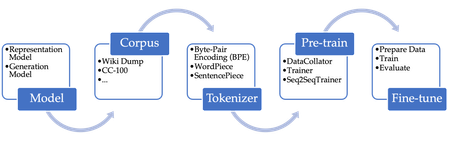
In this blog, we provide a general guideline of pre-training and fine-tuning language models using Hugging Face. For illustration, we use pre-training language models for question generation (answer-agnostic) in Korean as running example.13KViews0likes0CommentsAnthropic State-of-the-Art Models Available to Azure Databricks Customers
Our customers now have greater model choices with the arrival of Anthropic Claude 3.7 Sonnet in Azure Databricks. Databricks is announcing a partnership with Anthropic to integrate their state-of-the-art models into Databricks Data Intelligence Platform as a native offering, starting with Claude 3.7 Sonnet http://databricks.com/blog/anthropic-claude-37-sonnet-now-natively-available-databricks. With this announcement, Azure customers can use Claude Models directly in Azure Databricks. Foundation model REST API reference - Azure Databricks | Microsoft Learn With Anthropic models available in Azure Databricks, customers can use the Claude "think" tool with business data optimized promote to guide Claude efficiently perform complex tasks. With Claude models in Azure Databricks, enterprises can deliver domain-specific, high quality AI agents more efficiently. As an integrated component of the Azure Databricks Data Intelligence Platform, Anthropic Claude models benefit from comprehensive end-to-end governance and monitoring throughout the entire data and AI lifecycle with Unity Catalog. With Claude models, we remain committed to providing customers with model flexibility. Through the Azure Databricks Data Intelligence Platform, customers can securely connect to any model provider and select the most suitable model for their needs. They can further enhance these models with enterprise data to develop domain-specific, high-quality AI agents, supported by built-in custom evaluation governance across both data and models.12KViews2likes0Comments