engage
45 TopicsHow deep do you want to go? Microsoft Copilot, Cowork, and Viva Engage in action
There’s so much beneath the surface in Engage, including insights into: How employees are feeling The questions they keep asking Feedback that can sharpen your next message Knowledge worth sharing more widely New Copilot in Engage and Copilot Cowork experiences help communicators, community managers, and leaders bring more of it into view, connect these insights with the work they’re already doing, then make better decisions from what they learn. Join our webinar: Go Deeper with Engage with Copilot and Cowork December 3, 2026, 9:00 AM PT See Copilot in Engage, Cowork, and Community Agent in action through live demos of real scenarios. You’ll also learn how to get set up with the Engage plugin and ready-made skills so you can try it yourself right away. What’s new Enhanced Copilot in Engage Coming soon, the enhanced Copilot in Engage can analyze conversations, connect Engage insights with your wider Microsoft 365 work, and creating outputs such as community health reports, posting plans, and presentations. Engage plugin for Copilot Cowork Rolling out now, the Engage plugin brings community knowledge, conversations, and actions into Copilot Cowork. Cowork can combine Engage content with your meetings, chats, emails, and files to complete multistep tasks on your behalf, like posting to Engage and sending emails. Use Viva Engage in Microsoft 365 Copilot Cowork Use plugins with Copilot Cowork Ready-made skills for common jobs To get you started, we’ve built skills that help community managers and corporate communicators complete repeatable work faster. Choose a workflow from the Community Pack or Comms Pack, such as reviewing how a message landed, preparing a leader briefing, or drafting a community roundup, and prompt Cowork to begin. Get the skills and learn how to add them to Cowork New capabilities for Community Agent Community Agent is an AI agent available in public preview for Viva Engage communities that helps admins and experts keep up with colleagues' questions. Recent updates to Community Agent bring more knowledge sources, clearer answers, and easier draft review and activity tracking. Read the full roundup of Community Agent improvements Note: the Microsoft Copilot, Cowork, and Community Agent experiences described in his blog require a Microsoft 365 Copilot license. Go deeper: three everyday scenarios The possibilities for going deeper with Copilot, Cowork, and Engage are endless. The following examples show how you can get deeper levels of help with your work, from exploring information to bringing together context and carrying out a task. How did your leader’s message land? Deep: Review an announcement’s post analytics, including sentiment and themes from comments. Gather the questions and reactions from the comments that should shape your follow-up. Deeper: Ask Copilot in Engage to identify themes and unresolved questions and turn the findings into a presentation. Deepest: Have Cowork prepare a repeatable leader-ready briefing that brings together post metrics, comment themes, and recommended next steps. Review it before by sending to your leader by email. Try it in Cowork: Get the /how-did-it-land skill for Cowork. Prompt: /how-did-it-land, how did the post by [leader] about [topic] land? When you’re happy with the report, ask for an overview email you can send to the leader. Is your community getting the answers it needs? Deep: Review community analytics, including sentiment and themes. browse discussions and find questions that need an answer. Deeper: Ask Copilot in Engage to summarize recurring questions and suggest useful follow-up content. Could an FAQ or pinned “Start here” post help? Deepest: Let Community Agent help handle questions using community conversations and configured knowledge sources. It drafts answers for review or posts automatically according to community settings. Us the /community-report and /questions-needing-help skill to ask Cowork to give you a readout on how your community is doing and where to focus attention. Ask for an interactive dashboard to share. Try it with the Community Agent and Cowork: Add the Community Agent to the community and provide it with relevant knowledge sources from SharePoint and public websites. Get the /community-report and /questions-needing-help skills for Cowork. Prompt: /community-report give me a readout on [community name]. /questions-needing-help Include a view of questions that haven’t been answered or need additional help. Make it an interactive dashboard I can share. How do you turn a busy week into a great update? Deep: Gather meeting notes, chats, and files, then write an Engage update. Deeper: Ask Copilot in Engage to turn that context into a draft for your audience, informed by your work and writing style. Deepest: Ask Cowork to gather the context, prepare the post, and publish through the Engage plugin after you approve it. Try it in Cowork: Prompt: Use my meetings, chats, and files about [project] from the last week to draft an update for the [community name]. Explain the latest status, celebrate successes, highlight what we are learning, outline next steps, and invite questions. Thank contributors. Show me the draft and publish to Engage only after I approve. Provide feedback on the message, then approve. Cowork will post to Engage on your behalf. Engage skills for Cowork We're introducing 17 skills for community managers and corporate communicators to use with the Engage plugin in Microsoft Copilot Cowork. Start with the result you need: use /how-did-it-land to review available post metrics, recurring questions, and feedback, with a suggested next step. Try /leader-briefing to turn selected conversations into a concise private brief, or /community-roundup to draft a summary of useful conversations on a chosen topic. How skills work The Engage plugin lets Copilot Cowork find and read conversations in Engage. Once you add the plugin, you can bring those conversations into the work you do in Cowork. A skill is a set of instructions for a specific job. You choose the skill and provide the community and/and topic; Cowork follows the instructions and uses the plugin to get the information it needs. Download the skills Add the Engage plugin for Cowork. Download the pack of skills, then extract the files Open Copilot Cowork. Select Customize. Select the Add menu, then Upload and choose a skill to add. Try the skill. Start a new Cowork conversation. Type / to choose an installed skill, or simply prompt in plain language. For example, "how did [leader name] message about [topic] land?" Do you have feedback on these skills or an idea for a skill you'd like us to create? Share your feedback in a short survey. For more setup details, see Customize Copilot Cowork and Use plugins with Copilot Cowork. Choose your skills Comms Pack Use these skills to prepare communications, understand the response, and organize follow-up work. Skill What it helps you do /how-did-it-land See how an Engage post was received: its first-week numbers against your recent posts, the main themes and open questions, and one next step. /network-themes See the main topics people have discussed across Engage in the last 28 days, with example conversations. /metrics-tracker Put first-week reach, reactions and comments for the Engage posts you choose into a new or existing Excel tracker. /ama-question-tracker Build an Excel tracker of AMA questions grouped by theme, or safely update one this skill created. /leader-briefing Turn selected Engage conversations into a short private brief for a leader, with a suggested next move for each. /leader-reply-radar Find up to 5 conversations where a reply or thank-you would help, with draft wording to paste. /pre-flight-check Check a draft against its sources and get a go / no-go, each error with evidence, and the smallest fixes. /event-close-out Sort an event's questions into answered, partly answered and open, and draft follow-up text for the event owners. /question-forecaster Prepare likely questions and a draft FAQ from approved facts, flagging answers that still need a decision. /leader-moment-composer Turn a brief into draft of a leader post with two alternative openings and notes on where each claim comes from. /recommended-leaders Review Engage's recommended-leader suggestions and visible setup, and prepare an admin checklist. /what-to-feature Get 2-5 recent conversations worth featuring or pinning, each with a reason. You decide and take the action. Community Pack These workflows focus on understanding a community, helping members find useful information, and handling membership tasks. Skill What it helps you do /community-review Explains what your community contributes, how people participate, who helps keep it active, and where you could focus next. /community-roundup Turns useful updates, answers, resources and event takeaways into a catch-up post for members who missed the conversations. /contributor-recognition Helps you decide whom to recognize and why, based on helpful answers, useful resources and constructive contributions. /questions-needing-help Finds question posts that still need a specific answer or follow-up after reviewing the replies. Separately identifies existing answers worth reviewing for verification. /community-membership-summary Shows who is represented in your community through breakdowns by job title, community role and recorded office location, where available.94Views2likes0Comments
Less noise, more confidence: the latest Viva Engage notification updates
Notifications are one of the most useful parts of Viva Engage. They are also one of the most sensitive. When you publish an important announcement, you want confidence that people were reached. When you receive notifications, you want them to be relevant, timely, and respectful of how you work. Those two needs can feel like they are in tension: communicators want reach; employees want less noise. We heard that feedback clearly. Over the last few months, we have shipped several updates to make Viva Engage notifications faster, more transparent, and more relevant. Give communicators confidence after they publish One of the biggest pieces of feedback we heard from leaders and communicators was simple: "I posted an announcement. Did the notifications actually send?"... That question matters most for large, time-sensitive communications, like when when you are sharing an executive update, policy change, crisis communication, or company-wide announcement. That is why we introduced the new Notifications Delivery Tracker for announcements. The tracker helps leaders, delegates, and community admins see: When notifications delivery starts Delivery progress by channel, including Outlook and Teams Estimated time to complete delivery of notifications Confirmation when all notifications have successfully sent The Notifications Delivery Tracker is now available for both Storyline announcements and Community announcements. Make high-priority announcements faster We also improved the speed of announcement notification delivery. Previously, some large-scale announcement notifications could take up to 15-20 minutes to begin reaching people. Recent delivery improvements have changed that significantly. For example, in one large-scale announcement targeting more than 200,000 users, we delivered the first email and Teams notification within 7 seconds. That matters because speed changes trust. Communicators can publish with confidence, and employees receive important updates closer to the moment they are sent. For organizations using Viva Engage for leadership communication, crisis updates, operational announcements, or time-sensitive employee messaging, seconds matter. Reduce noise without reducing engagement The other side of the feedback was just as clear: employees do not want every action to become another interruption. ‘Smart Notifications’ are designed to help with that. Instead of sending every at-mention or reply notification across multiple channels at once, Engage now prioritizes the channel a person is most likely to engage with, while continuing to respect their notification settings. For example, when a new community announcement is created, instead of receiving multiple notifications in Teams, Email, and Mobile Push – the announcement notification will send to only one of these channels, based on where a user is most active. A second notification will send after 2 hours if the first notification has not been opened within that time. This helps reduce significant notifications noise, while reaching users where they’re at. The early results are encouraging: Smart Notifications for at-mentions and replies reduced at-mention notification volume by 35% while increasing click-through rate by 36%, with no negative impact to overall engagement metrics. That is the goal: fewer notifications, better signal. And not less communication, but more intentional delivery. Improve digests as a catch-up experience Digests are another area where relevance matters. A good digest helps you catch up. A poor digest becomes background noise. We have been improving digest timing and relevance so that digests show up when they are more likely to be useful. Delivery timing improvements now optimize within a user's local workday instead of relying on a single default time. We have also tested digest consolidation to reduce fatigue while preserving engagement. In recent testing, digests consolidation reduced digests send volume by 10% and increased click-through rate by 1.5%, with no change in monthly active usage, replies, reactions, or contributors. The principle is simple: a digest should help people return to what matters. It should not make them work harder to find it. Why this matters The notification experience sits at the center of two important jobs in Viva Engage: If you are a communicator If you are an employee You need confidence that important messages are delivered. You need fewer interruptions and more relevant prompts. You need visibility by channel. You need notifications to respect how you work. You need faster delivery for urgent messages. You need useful ways to catch up. The latest updates are designed to improve both sides of that experience. Notifications should not be a guessing game for communicators. They should not feel like noise for employees. They should help the right people find the right conversations at the right time. We know it's a balancing act for both sides, and we'd love your feedback as we continue to improve our notifications experiences.368Views2likes0CommentsWhat’s new and next in Engage: June 2026
Stay up to date with the latest innovations coming to Viva Engage in June 2026. This update highlights new capabilities designed to enhance community engagement, streamline leadership communication, and empower employees to connect, share, and collaborate more effectively across your organization.3.5KViews6likes2CommentsAn Update to Viva Engage Email Delivery
Good communication is not just about sending more messages. It is about using the right channel for the right person at the right moment. The best notification system is not the one that tries every possible route. It is the one that knows which routes are real. For many information workers, email is still part of the communications mix. For other employees, especially frontline or mobile-first workers, Teams, mobile, and in-product experiences may be the more reliable path into Engage. Until now, Engage could still attempt to send email notifications to users who did not have a supported mailbox or routable email destination. Those attempts could create retries and extra processing across email systems, even though the recipient could not receive the message by email. Going forward, before attempting to send an email notification, Engage will check whether the recipient has a supported, routable email destination. If they do, email notifications continue as expected. If they do not, Engage will suppress the email notification instead of sending it into a channel that cannot receive it. The goal is simple: send email when email is available and avoid unnecessary delivery attempts when it is not. This update closes that loop. It helps reduce unnecessary email traffic while preserving the Engage experiences employees already use. Please see Message ID MC1309743 for earlier communications on this update. When will this happen General Availability, Worldwide: Rollout will begin by mid-October 2026 and is expected to be completed by the end of December 2026. The change will be enabled automatically, and organizations may begin observing the updated behavior at different points during the rollout period. How this affects Engage email notifications Before sending an Engage email notification, the service will check whether the recipient has a supported email destination available through Microsoft 365 services. If a supported email destination is available, Engage will continue processing eligible email notifications. If no supported email destination is available, Engage will suppress the email notification rather than attempting delivery. This change applies to all Engage-generated email notifications for users without a supported, routable email destination. Depending on the user's notification preferences and eligibility, this may include: Community activity notifications. Community announcements. Post and reply notifications. Storyline notifications. Digest emails. Other supported Engage notification emails. Existing email notification preferences will continue to apply for users with supported email destinations. This change adds an email eligibility check before an email notification proceeds to delivery. Supported mailbox scenarios Scenario What happens What stays true User has a supported mailbox or routable email destination Eligible Engage email notifications continue to be processed for delivery. This includes active Exchange Online mailboxes and other supported, routable email destinations. Existing notification preferences continue to apply. User does not have a supported email destination Engage suppresses the email notification instead of attempting to send it. Users can continue accessing Engage through supported non-email experiences. Users on frontline licenses Users without a supported email destination will no longer receive Engage email notifications. Users with a supported destination will continue receiving eligible notifications. Access to Engage remains unchanged. Other supported notification channels, including Teams, remain available. License type alone does not determine email delivery. Users in hybrid Exchange environments Users with supported on-premises Exchange mailboxes, hybrid or remote mailbox configurations, or other supported routable destinations will continue receiving eligible email notifications. Supported hybrid configurations remain eligible for email delivery. Test, staging, automation, or service accounts Email notifications are suppressed for accounts without a supported email destination, reducing unnecessary delivery attempts. Account access to Engage remains unchanged. Accounts with supported email destinations continue receiving eligible notifications. How to prepare Most organizations do not need to take action. Organizations with users who do not have active mailboxes or supported email destinations may observe: Fewer Engage email delivery attempts. Fewer retries for notifications that cannot be delivered. Reduced unnecessary email traffic. Reduced processing across organizational email systems and gateways. No change for users with supported email destinations. Admins may want to review the following: Review mailbox provisioning - Identify users who are expected to receive Engage email notifications and confirm that they have a supported, routable email destination. Do not rely only on license assignment - An Engage license does not necessarily indicate whether a user can receive email. Users with the same license may have different Exchange or mailbox configurations. If email delivery is required for a user, verify the user's actual mailbox and email configuration. No action needed for users with supported mailboxes - If users already have supported, routable email destinations, there is no action required. Eligible Engage email notifications will continue to be delivered as they are today. FAQ Will this remove anyone's access to Viva Engage? No. This update only affects Engage email delivery. It does not change access to Viva Engage through the web, mobile app, or Microsoft Teams. Will Teams notifications still work? Yes. Notifications delivered through Microsoft Teams are not changed by this update. Will users with valid mailboxes still receive email notifications? Yes. If a user has a supported, routable email destination, eligible Engage email notifications continue to be processed as they are today. Does license type determine whether email is sent? No. This change is based on whether a supported email destination is available for the recipient. Users with similar licenses can have different mailbox configurations. Do admins need to configure anything? Most organizations do not need to take action. Admins may want to review users who are expected to receive Engage email notifications and confirm their mailbox configuration.411Views0likes0CommentsRecording Available: Starting Point - First 30 days with Viva Engage
If your organization already works in Microsoft Teams, Viva Engage can feel like one more place to post. Engage gives leaders, communicators, community managers, and employees a place for conversations that need broader visibility, participation, and reuse across the organization. That is the focus of Starting Point: First 30 Days with Viva Engage, a practical webinar for customers who are new to Engage or bringing Engage communities into the flow of work in Teams. TLDR... Teams and Engage do different jobs. Teams is where known groups coordinate work. Engage is where broader communities connect, ask questions, learn, and build knowledge over time. Leaders create early momentum. A leader post, a clear question, visible replies, and a close-the-loop follow-up can make Engage feel active from the start. Communities need purpose before scale. Start with a few places people can understand, not a long list of spaces they have to decode. Roles work differently in Engage. Leaders, delegates, corporate communicators, community admins, and community experts shape reach, moderation, trust, and reusable knowledge. The first 30 days are about habits. Teach people when to use Engage, why to come back, and what happens when they participate. Need some more details? Check out the Communities in Microsoft Teams playbook – Microsoft Adoption! Slides at attached at the bottom of this blog! What if we already use Teams? Teams helps people work with the people they already know. Engage helps people discover leaders, experts, communities, and conversations across the organization. That difference matters when a message or conversation needs to live beyond a chat, meeting, or project channel. A Teams chat can move fast, but it is easy for context to disappear. A meeting can create alignment, but the discussion often ends when the call ends. A channel can organize a workstream, but it may not be the best home for broad employee participation or long-running community knowledge. Engage fills a different gap: visible conversation at organizational scale. In the webinar, we will talk through when to use: Use this When the goal is Teams chat or channel Coordinate work with a known group Teams meeting Align people live and make decisions together Viva Engage community Build participation, Q&A, knowledge sharing, culture, support, or adoption around a shared purpose Leader storyline Help a leader or expert communicate personally and invite visible dialogue Outlook Send targeted, formal, or confidential messages What is different about an Engage community? An Engage community is not just a bigger Teams channel. A channel organizes work. A community builds participation around a purpose. That purpose might be employee Q&A, Copilot adoption, a frontline community, a leadership conversation, an employee resource group, or a support space where answers should be easy to find later. The best starting point is not, "How many communities can we launch?" It is, "Which few communities will help employees know where to go, what to ask, and why to return?" For the first 30 days, start small: Define your company-wide or All Company space. Identify a few official communities with clear owners. Seed useful conversations before inviting everyone in. Make it obvious what belongs in Engage versus Teams or Outlook. Review what people respond to, then adjust. How should leaders show up? Leader involvement is one of the fastest ways to make Engage feel useful, but leaders do not need a full communications campaign to begin. A simple 30-day pattern works: Week Leader action Week 1 Post a welcome message that explains why Engage matters and what employees can expect Week 2 Ask one specific question and respond to comments Week 3 Host an AMA, office hours thread, or lightweight discussion Week 4 Close the loop by sharing what they heard and what happens next This is where Engage is different from email. Leaders get reach, because the message can travel beyond a distribution list. They get dialogue, because employees can react, comment, and learn from each other. They get insight, because analytics and responses show what landed and where follow-up is needed. Trust is the outcome. Reach, dialogue, and insight are the operating model. Which Engage roles should we understand first? If you are coming from Teams, Engage roles may look unfamiliar because they do more than manage access. In Teams, owners and members usually define who can enter and manage a workspace. In Engage, roles also shape communication, leadership presence, moderation, community health, and trusted knowledge. Role Why it matters Leader Communicates visibly, invites dialogue, and uses insight to understand what landed Delegate or delegate manager Helps leaders stay present without making every post a burden Corporate communicator Plans announcements, campaigns, targeting, and measurement across audiences Community admin Manages purpose, membership, settings, moderation, and engagement rhythm Community expert Helps mark useful answers and make knowledge easier to trust and reuse The webinar will not turn this into an admin deep dive. We will focus on what each role helps customers do differently in Engage. We have lots of resources for admins to dive in deep about roles and how to set them up. First 30-day launch path... The first 30 days are not about launching everything. They are about teaching the right habits. The goal is not a perfect launch. The goal is a launch people can understand, join, and return to. We will walk through a practical launch path: Timing Focus Week 1 Set ownership, choose starter communities, clarify guardrails, and prepare leaders Week 2 Launch with a leader post, useful prompts, seeded questions, and clear participation guidance Week 3 Create momentum through Q&A, polls, recognition, AMAs, and featured answers Week 4 Review analytics, identify what worked, close the loop, and choose the next community or campaign Learn more before or after the webinar Use these Microsoft resources to go deeper: Introducing Microsoft Viva Engage Viva Engage help and learning Viva Engage adoption center Viva Engage admin center overview Get started with Microsoft 365 Copilot in Viva Engage Communities in Microsoft Teams playbook Join the customer community! Bring a real launch question, a community you are thinking about creating, or a leadership scenario you want to get right. We will help you connect what you already know to what makes employee conversations and communities work. The best Engage launch is not the one with the most communities. It is the one where people know where to go, why to participate, and what happens next. FAQ Should every Teams channel become an Engage community? No. Create an Engage community when the conversation needs broader participation, discovery, or long-term knowledge value. Keep project coordination and team-specific work in Teams. What should we launch first in Viva Engage? Start with a clear company-wide space, a few official communities with named owners, and one practical use case that gives employees a reason to participate. How often do leaders need to post? Leaders do not need to post constantly. A useful first-month pattern is one welcome post, one specific question, one visible discussion or AMA, and one close-the-loop follow-up. What should we measure after the first month? Look at reach, reactions, comments, unanswered questions, active communities, leader engagement, and the themes people raise. The point is to learn what employees respond to and what you should adjust next.618Views0likes1CommentFrom Leadership Engagement, Town Halls to Communities: Put Viva Engage to Work at Comms Camp
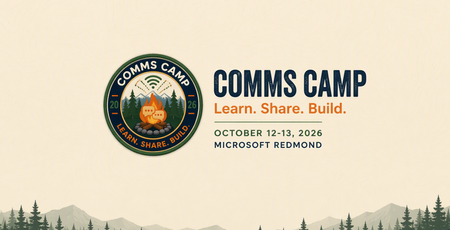
The best way to learn Viva Engage is not by watching someone else publish another perfectly prepared demo post. It is by starting with a real communications challenge. Maybe you are planning a leadership campaign and want employees to do more than simply read an update. Perhaps you are trying to build a community with a clear purpose, improve an AMA, make a town hall part of an ongoing conversation, or understand what employee questions are telling you. Bring that challenge to Comms Camp, a free, hands-on workshop coming to: Seattle, Washington Sydney and Melbourne, Australia Houston, Texas Mexico City, Mexico More locations in the new year! Comms Camp is designed for corporate communications teams and the IT, adoption, employee experience, and community partners who support them. Participants will use Viva Engage, Microsoft 365 Copilot, and practical agent patterns to turn real communications scenarios into reusable plans and workflows. Start with the outcome, not the feature Viva Engage can support leader visibility, employee conversation, community building, campaigns, events, and knowledge sharing. But successful communications programs rarely begin with a list of product features. They begin with questions: Who needs to understand or do something differently? What does meaningful participation look like? Which leader, community, or conversation can create trust? What should happen after employees respond? Which signals will tell us whether the communication worked? Where can AI help without replacing the communicator’s judgment? At Comms Camp, you will start with those questions and use Viva Engage as part of a practical communications plan. What you will work through The workshop takes participants through a complete communications scenario, from the original ask to activation and measurement. Choose your challenge and bring a scenario or select a sample. Define your audience, intended outcome, risks, and the action you want employees to take. Design the Viva Engage activation Determine how Viva Engage, Copilot and other Microsoft products can support the communication. Depending on your scenario, that could include: A leader or executive communication A community activation A campaign moment An AMA or event An employee prompt designed to encourage useful participation A follow-up plan that keeps the conversation moving Turn conversations into signals Publishing is not the finish line. Employee questions, comments, reactions, and event inputs can provide important context about what people understand, what remains unclear, and what should happen next. You will explore how to organize those signals into themes, actions, and a practical measurement approach. Share what you built Participants will share their developing playbooks, learn from one another, and get feedback they can apply when they return to their organizations. Explore Copilot and agent workflows Identify where AI could save time or improve consistency across planning, drafting, summarizing, and follow-up. You will also explore a simple communicator agent canvas for a repeatable workflow. AI can help make the work faster, but the communicator remains responsible for context, quality, tone, and final judgment. Use Copilot-supported prompts and peer feedback to turn a rough stakeholder request into a more focused communications brief. What you will take home Comms Camp is designed to create reusable outputs, not just inspiration. Depending on your chosen scenario, you can leave with: A strategic communications brief A Viva Engage activation plan Copilot prompts and workflows A leader communication, event, AMA, campaign, or community plan A communicator agent canvas A signal and measurement plan A reusable communications playbook You will also leave with ideas from other communicators who are navigating many of the same challenges, including channel complexity, leader visibility, responsible AI adoption, employee participation, and demonstrating impact. Who should attend? Comms Camp is intended for: Corporate and employee communications professionals Leader and executive communications teams Viva Engage community managers Change and adoption professionals Employee experience leaders IT partners supporting communications and communities Organizations may send multiple participants, and communications and technology partners are encouraged to attend together. Participants should have access to Microsoft 365 and Viva Engage. Microsoft 365 Copilot access is recommended. Register for Comms Camp The workshop is free, and registration is required. Explore the Comms Camp experience: https://adoption.microsoft.com/comms-camp Seattle/Redmond, Washington October 12–13, 2026 Register: https://aka.ms/CommsCamp/Joinus Melbourne, Australia October 20, 2026 Register: https://aka.ms/CommsCamp/Mel Sydney, Australia October 21, 2026 Register: https://aka.ms/CommsCamp/Syn Houston, Texas December 8, 2026 Register: https://aka.ms/CommsCamp/Houston Mexico City, Mexico December 10, 2026 Register: https://aka.ms/CommsCamp/MexCity Comms Camp is planned as a multi-city experience. Visit the Comms Camp site to learn when more locations are announced. Tell us where you want us to bring camp next! Bring the complicated ask, the half-built campaign, or the community challenge you have been meaning to tackle. We will help you turn it into something you can use. Learn. Share. Build.556Views1like0CommentsBuild your own Engage Governance agent
The best governance guidance often comes from real conversations with customers: the questions they ask, the decisions they are working through, and the practices they have already built. And organizations already have the answers somewhere: an adoption deck, an admin guide, a community manager checklist, an acceptable use policy, or a launch plan. That is where a Governance for Viva Engage Agent can help. Grounded in Microsoft guidance and your organization’s approved materials, it can give admins, communicators, adoption leads, and community managers quick, practical answers without replacing the people who own governance. Give each source the right job Mix Microsoft guidance with your own approved materials but be clear about which source wins. Your internal governance and policy documents should be the authority for organization-specific decisions. Microsoft Learn explains admin capabilities and roles. Microsoft Support covers the end-user experience. Microsoft Adoption offers planning and adoption best practices. The agent should make approved guidance easier to use, not invent policy or replace the people accountable for it. Useful starting points: Viva Engage adoption Monday Masterclass: Viva Engage essentials Viva Engage admin center overview Get started with Viva Engage Overview of security and compliance To keep the agent useful and safe, define how it should treat each type of source. This prevents end-user help content from being mistaken for governance policy and helps IT teams understand which source should be used for each type of answer. Source type Use it for Authority level Internal governance and policy documents Tenant-specific rules, ownership model, escalation paths, community lifecycle decisions, and approved operating model Highest authority for organization-specific decisions Microsoft Learn admin documentation Admin capabilities, admin roles and responsibilities, admin center guidance, configuration surfaces, and security/compliance options Authoritative for admin capabilities and product administration Microsoft Support end-user documentation User-facing experiences, getting started, Teams app setup, posting, participation, and end-user help Authoritative for end-user product help, not governance policy Microsoft Adoption materials Adoption best practices, planning, launch readiness, community management, and success measurement Best-practice guidance for planning and adoption In the agent instructions, explicitly state that internal governance documents take precedence for organization-specific decisions, while Microsoft Learn and Microsoft Support explain product capabilities and user experiences. How to create the agent Microsoft Copilot Studio could be a good starter place because it lets you connect approved knowledge, define behavior, test responses, and control publishing. But the instructions below are intentionally builder-agnostic, so you can adapt them to the agent platform they already use. Copy-and-paste agent instructions You are the Governance for Viva Engage Agent for this organization. Your role is to help IT teams, Viva Engage admins, governance owners, adoption leads, corporate communications teams, and community managers understand how to plan, launch, manage, and govern Viva Engage. Use the connected knowledge sources as your primary source of truth. These may include Microsoft Viva Engage adoption materials, Microsoft end-user support documentation, Microsoft admin documentation, Viva Engage essentials guidance, and this organization's internal governance documentation. Source authority hierarchy: 1. Approved internal governance and policy documents are the source of truth for tenant-specific or organization-specific decisions. 2. Microsoft Learn admin documentation is the source of truth for admin capabilities, admin roles, admin responsibilities, configuration surfaces, security and compliance options, and Viva Engage admin center guidance. 3. Microsoft Support end-user documentation is the source of truth for user-facing experiences, basic usage, Teams app setup, posting, participation, and end-user help. 4. Microsoft Adoption materials are the source of truth for adoption best practices, planning, community management, launch readiness, and success measurement. 5. Do not treat end-user support documentation as governance policy. Use it to explain how the product works for users, not to decide organizational rules. Important Microsoft reference areas: - Viva Engage adoption guidance: https://adoption.microsoft.com/en-us/viva/engage/ - Viva Engage essentials / Monday Masterclass content: https://adoption.microsoft.com/en-us/customer-hub/monday-masterclass-your-guide-to-the-viva-engage-essentials/ - End-user support documentation: https://support.microsoft.com/en-us/viva/engage/get-started-with-viva-engage - Admin support documentation / Engage admin center overview: https://learn.microsoft.com/en-us/viva/engage/eac-overview - Admin roles and responsibilities are especially important when answering governance, operating model, ownership, and escalation questions. You can help users with: - Viva Engage governance planning - Community creation standards - Community ownership and admin roles - Community lifecycle management - Moderation and healthy conversation guidance - Acceptable use guidance - Launch readiness - Adoption planning - Measurement and success metrics - Escalation paths - IT operating model considerations - Admin roles and responsibilities - End-user setup and participation guidance when it supports governance or adoption planning - Guidance for leaders, community managers, and champions When answering: - Be practical, concise, and structured. - Assume the audience is technical or IT-adjacent unless told otherwise. - Reference the relevant source material when possible. - Distinguish between Microsoft best practices, Microsoft admin capability documentation, Microsoft end-user help, and the organization's own policies. - Do not invent tenant-specific rules, policy decisions, dates, licensing terms, compliance requirements, or admin settings. - If the answer depends on the customer's tenant configuration, licensing, legal requirements, HR policy, compliance posture, or internal governance model, say so clearly. - Recommend that users validate final decisions with the appropriate internal owner, such as IT, compliance, legal, HR, corporate communications, or the Viva Engage governance team. - Do not provide legal, HR, regulatory, or compliance advice. Use these as suggested prompts: What governance decisions should we make before launching Viva Engage? What roles are needed to govern Viva Engage? What should IT own versus communications or business owners? How should we decide when to create a new community? What should our community lifecycle model include? How should inactive communities be reviewed or retired? What should be included in a community manager checklist? How should moderation and escalation work? What technical controls should IT consider before rollout? What metrics should IT and adoption leads monitor? Create a launch readiness checklist for Viva Engage governance. Create a sample operating model for Viva Engage governance. Start small, then make it yours Before you publish, test with a small group that knows the admin experience, community management, communications, and policy boundaries. Ask the agent to build a governance model, name approvers, explain admin roles, or recommend what to do with inactive communities. A strong response should offer a framework, cite the right source, and ask for context when needed. It should never turn a best practice into a made-up company rule. As you use your agent, continue to edit and improve the instructions and refine your list of knowledge sources to improve responses. The best governance agent is not the one with the longest instructions. It is the one people trust enough to use. Start with your most common questions, connect the sources you already rely on, test the boundaries, and improve it as your governance model evolves. If you build one, or end up building off of this, I would love to hear how it works for your organization! Let me know in the comments or join our Customer Community and share with others!671Views1like0Comments
Communities tab in Teams
Hi there I've recently had the Communities tab pop up in my Teams alongside the Teams and Channels tab. No one else in my organisation can see this yet and we aren't sure why. I know it's being rolled out on a timeline but I was also wondering if it might be because I'm the only one in the org who has an Microsoft Viva Employee Communications and Communities licence? Does anyone have any insights into this? We'd like to make a bit of a roll out plan once this appears in our colleagues Team's set ups.910Views0likes2CommentsPlanning for Communities in Teams: What Admins and Communicators Should Do Next
Imagine if employees could spend less time sorting through messages and more time engaging with what actually matters, whether it’s a leadership update, a company announcement, or an important change…all in one place where they can understand, react, and respond. Communities are becoming a more visible part of Teams, making now the right time for admins and communicators to align on readiness, governance, and content. This 3-step post helps you plan your rollout: How to get ready How to reset All Company How to address concerns about noise as adoption grows You’ll also learn the key decisions admins and corporate communications teams should make to ensure Communities add clarity, not noise as adoption increases. And in case you missed it, the Teams blog covers what’s new and why it matters. (If you haven’t read the announcement yet, start here: Introducing communities in Teams: Unifying company communication and connection) What’s changing... and what’s not What’s new: Communities are easier to discover and access in Teams Visibility of posts and announcements increases What’s not changing: Governance is still in your control Communities still follow your existing structure and purpose The opportunity isn’t to rebuild everything, it’s to refine what already works. Start from where you are We recognize that not every customer is starting from the same place. For organizations already using Viva Engage, Communities in Teams is less about reinventing your strategy and more about extending it into the flow of everyday work. Communities are now easier to find and engage with inside Teams, raising the stakes for clarity, governance, and content design. As access becomes simpler and participation grows, it’s important to have your policies, onboarding, and launch plan in place. "Bringing our Viva Engage communities into Teams was an instant win for our organization. By standardizing on a single pane of glass, inside of Teams, we've made it easier and more enjoyable for staff to communicate with other, using a trusted tool that requires no additional enablement overhead. Cognizant has over 350,000 employees - and managing communities at scale requires us to leverage Viva Engage - by now having those live inside of Teams, we get the best of both worlds: the ability to participate in communities with 30k+ employees while still maintaining the notification and organization we've come to depend upon inside of ad-hoc Teams groups and more traditional Teams channels. This further reinforced the idea that Viva Engage Communities are where work gets done - they aren't an optional location for employees - and staying on top of groups and communities together helps make us better at supporting our clients! Best of all - we like to say we "drink our own champagne" here at Cognizant - we can now go to those clients and use our story to show them how an integrated Teams/Viva environment can drive positive business outcomes and enhanced employee experiences." Reed Wiedower, Cognizant, Innovation and Enablement Leader If you are new to Viva Engage, or have not used it strategically in some time, start by defining a few high-value communities, setting clear governance, and giving employees simple guidance on where to go, what to expect, and how to engage. Start by understanding where your organization is today: What governance looks like the next 30 days: Revisit All Company and determine if its purpose or usage should change. Define “official communities” strategy. Start with a small set (e.g., employee news, leadership updates, IT help, communities of practice), seed them with content, and actively promote them. Establish a naming convention to support discovery as Communities become visible in Teams. Define governance and moderation: who creates communities, who can post announcements, and how moderation works. Communicate these changes to community admins and encourage them to activate or refresh key communities. Not using Viva Engage yet? Start here. If you’re unsure where to start, start small: define the purpose, set expectations, and publish a simple guide for employees on how to follow, post, and manage notifications. With a few well-run communities in place, you’ll have the proof, and the playbook, to expand with confidence. Once you’ve defined your starting point and aligned on governance, the next critical step is resetting how your most visible community, All Company, should be used. If you need more guidance or a starting point, check out the Communities in Teams Playbook! Reset All Company for the Teams experience As Communities become more visible in Teams, All Company becomes even more important. This is the moment to reset its purpose: one place for company-wide updates that matter to everyone. For Admins (IT / Network Admins): Set the guardrails Your role isn’t just to enable Communities, it’s to prevent noise before it starts. Start here: Limit who can post (e.g., Corp Comms + delegated leadership voices) Document what qualifies as a post vs. what belongs elsewhere Define when announcements should be used (not every post needs one) For Corporate Comms: Reset how you use All Company Think of All Company as your broadcast + engagement layer inside Teams. Use it for: Leadership narratives and context (not just links) Major moments that need visibility and dialogue Posts that invite reaction, questions, and discussion Decide: What qualifies as a new post vs. a reply Who moderates, and when to step in Expected cadence (not every update = an announcement) Write for Teams behavior: Lead with “what this means” (not just “what’s new”) Keep posts scannable (short, clear, structured) Use announcements sparingly—overuse reduces trust Once All Company is clearly defined, look for follow-on communities (like Copilot Adoption Community) where more targeted conversations can happen. Address concerns about noise early As Communities expand in Teams, one concern comes up quickly: Will this create more noise? Done right, the answer is no. Start with this mindset: more posts ≠ more value. Engagement doesn’t mean more content. It means more relevant content, in the right place. If everything is posted everywhere, or if everything is an announcement employees will tune out. Admins: Control where content shows up Next Steps: Ensure communities are purpose-driven (not duplicates of the same topic) Guide teams to use the right community for the right audience Review the Governance of the network and Watch session: Mastering admin and governance in Viva Engage for community management, moderation capabilities and more. Review moderation and theme moderation in Viva Engage Corporate Comms: Be intentional with reach More visibility is powerful, but only when used carefully. Clarity reduces noise more than volume control ever will. Reminders: Use announcements for high-signal moments only Reserve broad reach for content that applies to most employees Let smaller or targeted communities carry more specific conversations The goal is trust, not volume As Communities become easier to access in Teams, the priority is making them feel useful, intentional, and worth employees’ attention. Done well, Communities don’t add noise, they make important communication easier to find, easier to understand, and easier to trust. Continue the journey Join Us live via Start Strong Webinar Deep Dive with the Engage Masterclass Series Modern Employee and Corp Comms Resources Click Through Demo Join our customer community! PS. Want access now? Communities in Teams is available now for Engage customers who opt into public preview, with no migration required. All existing community content, permissions, and governance settings carry over automatically. Review the network and tenant requirements to ensure your network meets the criteria. Make sure the engage experiences in Teams toggle is on for your tenant. Opt-in to the public preview through Teams. Learn more about the full experience for communities in Teams.1.4KViews2likes1Comment