co-sell
93 TopicsCo-sell Coaching: Episode 1, Carve Partners - AMA
PLEASE NOTE: If you are planning to attend this event, please either use the 'Add to calendar' option below the "Attend" button, or create your own calendar reminder. Clicking attend will not automatically add this event to your calendar, and you will not receive any email notifications reminding you about the event. Join us for Co-sell Coaching, where your peer Microsoft partners will walk you through their best practices on how to co-sell effectively through the marketplace. Our first community event in this series will feature Carve Partners. Join to learn: Unlock Faster Growth: Why you should prioritize co-selling Get Started the Right Way: How to create a co-sell strategy and get started Maximize Your Impact: How to prioritize deals and build your co-sell pipeline Engage Microsoft Sellers: What to expect and how to get their attention Keep Winning: What to do after a co-sell win to build ongoing momentum Each Co-sell Coaching event features a live Q&A with Microsoft partners and Microsoft subject-matter experts.Ignite 2025: Drive the next era of software innovation with AI
Artificial intelligence is unlocking new possibilities and redefining what’s achievable. Software companies, startups, ISVs and AI Natives are leading the charge, using AI to speed up delivery, scale effectively, and unlock new business potential. Microsoft empowers software companies to unlock growth through AI-driven innovation, empowers their developers to ship faster and scale through programs, incentive and Microsoft Marketplace. There is clear momentum in AI innovation, led by forward-thinking software companies. For instance, Microsoft Marketplace now offers 4,000+ AI Apps and Agents—more than any other marketplace—as well as additional cloud solutions designed to help customers accelerate their innovation. Software company acceleration at Microsoft Ignite. This week at Ignite, Microsoft is empowering software companies across three key areas: 1. Unlock growth with AI Software companies can access a broad choice of models, tailor them to their use case, and create AI apps and agents that deliver outcomes while using responsible AI to protect data and reduce risk. New announcements: Unified tools catalog in Microsoft Foundry (Public preview) New Microsoft Foundry updates in preview will enable developers to enrich agents with real-time business context, multimodal capabilities and custom business logic through a unified Tools catalog of Model Context Protocol (MCP) servers built with security and governance in mind. The catalog includes Unified tool discovery, deep business integration, new tools for prebuilt AI services, and custom tool extensibility. Managed instance on Azure App Service (Public preview) Enables organizations to move web applications to the cloud with just a few configuration changes, saving the time and effort of rewriting code. Whether .NET web apps are running on-premises or in virtual machines, developers will be able to modernize them into a fully managed platform-as-a-service (PaaS) environment and future-proof their infrastructure. The result is faster app modernization with lower overhead and access to cloud-native scalability, built-in security and Azure’s AI capabilities. Cohere joins Microsoft Foundry’s first-party model lineup (Public preview) Cohere’s leading language models (Command A, Embed 4 and Rerank) are now available directly from Azure, giving customers fast, secure, and compliant access without third-party dependencies. Delivered with Azure-native governance, observability, networking, and billing, Cohere on Azure enables organizations to build high-performance retrieval, classification, and generation workflows at enterprise scale. Introducing Anthropic's Claude models in Microsoft Foundry (Public preview) Microsoft and Anthropic are expanding their existing partnership to provide broader access to Claude for businesses. Customers of Microsoft Foundry will be able to access Anthropic’s frontier Claude models including Claude Sonnet 4.5, Claude Opus 4.1, and Claude Haiku 4.5. This partnership will make Claude the only frontier model available on all three of the world’s most prominent cloud services. Azure customers will gain expanded choice in models and access to Claude-specific capabilities. 2. Accelerate development Ship faster with AI-assisted workflows, build across clouds and open-source stacks, and use databases that speed data access and analysis to quickly move from prototype to production. New announcements: Systems innovation (Private preview) Remote storage throughput of up to 20 GBps, up to 1 million remote storage IOPS and network bandwidth of up to 400 Gbps, enabling significant performance improvements for the latest Azure VM series. Azure Boost is a server subsystem designed by Microsoft consisting of purpose-built software and hardware that offloads server virtualization processes traditionally performed by the hypervisor and host OS. Various storage and network intensive workloads will benefit the most from these new performance specifications. Microsoft Defender for Cloud + GitHub Advanced Security (Preview) With Microsoft Defender for Cloud and GitHub Advanced Security, you can protect cloud-native applications across the full app lifecycle from code to cloud. This natively integrated solution helps connect software developers and security teams while staying in the tools they use every day; to prioritize the most critical risks exposed in production and fix these risks faster with AI-powered remediation. Azure HorizonDB PostgreSQL (Private preview) A new PostgreSQL cloud database service delivering high speed and elastic scalability for building or modernizing mission-critical applications. Integrated with Microsoft Foundry, Microsoft Fabric, Visual Studio Code and more, Azure HorizonDB streamlines development. Modern authentication with Microsoft Entra ID and security features like Microsoft Defender and private endpoints support enterprise-grade protection. 3. Scale with confidence Turn innovation into revenue with Microsoft Marketplace by expanding your reach through the partner ecosystem, unlocking go-to-market benefits, and differentiating with offers that stand out. New announcements: Global release of Microsoft Marketplace (General availability) Microsoft Marketplace — your trusted source for cloud solutions, AI apps, and agents — is now globally available following its launch in the United States in September. All traffic from legacy storefronts (Azure Marketplace and AppSource) is now redirected to Marketplace.Microsoft.com. Featuring the industry’s largest catalog of AI apps and agents, Marketplace extends the Microsoft Cloud, helping customers accelerate their AI-first transformation with tens of thousands of vetted solutions from our partner ecosystem. These solutions integrate easily with Microsoft products, delivering faster time-to-value. Microsoft Agent 365 (Preview) Extend the existing infrastructure that you use for managing people to agents. Agent 365 equips your agents with the same apps and protections, tailored to agent needs, saving IT time and effort on integrating agents into business processes. It includes leading Microsoft security, productivity and collaboration solutions: Defender, Entra and Purview to protect and govern agents; Microsoft 365 productivity and collaboration apps and Semantic Index to accelerate their productivity; and Microsoft 365 admin center to manage agents. We're already seeing great examples from Devin, Genspark, Glean, Kasisto, Manus AI, n8n, ServiceNow, Workday, and more. Unified programs for software companies – App Accelerate (Public preview) Our Partner Program is focused on delivering more value for software companies, and we’ve identified an opportunity to simplify the Microsoft AI Cloud Partner Program (MAICPP) offers available to software companies today. We're announcing a new offering for software development companies, available in 2026—combining incentives, benefits, and co-sell resources across existing offerings such as ISV Success, and Marketplace Rewards—into one streamlined pathway for partners. App Accelerate brings together ISV Success, Marketplace Rewards, and more into a single-entry point, creating a unified and simplified experience to help partners accelerate their growth through Microsoft Marketplace. Early access to co-sell benefits (Pilot) As part of our new unified offer, we’re creating an additional route for software companies to access co-sell benefits. This pathway is designed for partners who may not have reached the $100K milestone in Marketplace Billed Sales (MBS) or Azure Consumed Revenue (ACR) but demonstrate readiness in other critical areas. This early access option is nomination-based, with eligibility determined by criteria such as Microsoft Azure Consumption Commitment (MACC), customer traction, and pipeline strength. Resale enabled offers (General availability) Analysts estimate nearly 60% of cloud marketplace business will be channel-led by 2030. With a partner ecosystem of 500K+ —Microsoft Marketplace is fully embracing the channel-led Marketplace opportunity with the general availability of resale enabled offers. Resale enabled offers enable software companies to empower channel partners to manage their Marketplace listings through a repeatable model designed for scale. This helps software companies break through to new markets without adding overhead while channel partners maintain their customer relationships while getting the added value of Marketplace. Sales of eligible solutions also count toward customers’ Azure consumption commitments, opening the door to larger, more strategic deals funded by pre-committed cloud budgets—creating stickier relationships and fueling growth. Featured Ignite sessions Whether you're attending Ignite in person or joining online, these sessions are designed to help software companies build smarter, scale faster, and unlock new growth opportunities. Tuesday, November 18 – 1:00pm PT Agents, apps, and acceleration: Helping software companies grow Explore the opportunity for AI apps and agents. Learn how to build experiences that matter and get best practices from other leading software companies. Wednesday, November 19 – 10:15am PT Benefits for accelerating software company success Discover resources available across the build, publish, and grow journey in MAICPP. Hear how peers are using AI investments and go-to-market benefits to grow. Wednesday, November 19 – 5:00pm PT Executing on the channel-led Marketplace opportunity for partners Discover practical strategies across diverse dealmaking scenarios to grow business and deepen Microsoft partnerships. Keep the momentum going—explore more Ignite sessions and activities created with software companies in mind. Let’s create the future together You are redefining what’s possible with AI. Microsoft is here to help you create the future. Get started Get resources to help grow your software development company Use ISV Success to build faster with AI tools, services, and expert support Publish your solution and reach millions of customers on the Microsoft Marketplace Access App Advisor and get step-by-step guidance to build, publish, and sell your app or agent2.2KViews10likes0CommentsMeet customer business needs with flexible billing schedules in the marketplace
Co-authored by Trevor_Yeats Today, we’re announcing that Microsoft now offers flexible billing schedules through private offers to better align with customer needs. Flexible billing schedules are available globally to all marketplace-supported currencies. Watch these demo videos to learn more about flexible billing schedules. The value for your customers and for you With flexible billing schedules, customers can buy with confidence knowing that private offers can be customized for virtually any contract value and billing timeline to align with their requirements. Partners can tailor customer private offers and multiparty private offers to meet those requirements. This streamlines sales and accelerates deal velocity. With over 100 partners in our private preview, we’re excited to make this capability publicly available. Many of these partners have achieved remarkable success, closing deals worth millions of dollars. “Flexible billing in Microsoft marketplace has significantly improved how our sales teams engage with customers. It allows them to meet each organization's and customer's procurement needs, whether it's aligning with fiscal year budgets or accelerating project timelines from evaluations to implementations. Additionally, it helps with managing cloud commitment benefits. This flexibility has made it easier for our customers to purchase and deploy solutions faster, without waiting for specific budgets to become available. We can now set up flexible billing schedules to accommodate their needs.” Brett Ferancy, Global Alliance Leader, Abnormal AI Example use cases See below for some real-world examples of how partners and customers are leveraging flexible billing. Variable pricing with specific dates. In this example, the customer pays a setup fee at the start of billing, followed by variable pricing throughout the contract to match consumption patterns and budget cycles. 3-year deal $80M total Notes Immediate charge when billing starts $2M Setup fee – 1 st month 01 Jan 2025 $5M Year 1 installment #2 15 Jul 2025 $3M Year 1 installment #3 01 Jan 2026 $10M Year 2 installment #1 15 Jul 2026 $10M Year 2 installment #2 01 Jan 2027 $20M Year 3 installment #1 15 Jul 2027 $30M Year 3 installment #2 Variable quarterly billing. In this example, the customer pays a setup fee at the start of billing, followed by variable pricing each quarter. 1-year deal $10M total Notes Immediate when billing starts $2M Q1 01 Jun 2025 $3M Q2 01 Sep 2025 $2M Q3 01 Dec 2025 $3M Q4 Delayed start for billing. In this example, the customer gets the first two months free, followed by varied payments throughout the contract to match budget cycles 2-year deal $25M total Notes Immediate when billing starts $0M Free – 2 months 01 Mar 2024 $10M Year 1 fee 15 Jan 2025 $5M Year 2 installment 1 01 Jul 2025 $10M Year 2 installment 2 How it works To start using flexible billing for private offers: The software partner creates a private offer in the marketplace. Currently flexible billing supports SaaS flat rate offers, VM software reservations, and professional services. Partner must choose “Customize SaaS plans and Professional Services” or “Customize VM software reservations” when creating a new private offer. On the configure pricing page, under “billing frequency,” the partner will select “flexible schedule when the contract duration is 1-year or greater.” The software partner creates the billing schedule with up to 70 installments up to $100,000,000 USD, or any of the currencies supported by marketplace, over the length of the deal. There is also an option to book an immediate charge when billing starts or delay the first charge to a date in the future. Private offers can have up to ten included product plans. Each plan has its own billing frequency and may include a unique flexible schedule. A flexible schedule does not apply to all plans included in the private offer and must be set up independently. The software partner can also create a schedule in their customer’s local billing currency using the market pricing template. The customer accepts and purchases the private offer with the flexible billing schedule. For a multiparty private offer, the process is the same except: The software partner sends the private offer to the channel partner. The channel partner adds their price adjustment percentage aligned to the flexible billing schedule and passes it to the customer. Eligibility Any company who is part of the Microsoft AI Cloud Partner Program can sell on the marketplace through private offers with flexible billing. Details are provided in our documentation, but at a high-level: Be a member of the Microsoft AI Cloud Partner Program (it’s free to join) Sign the marketplace publisher agreement Publish your offer Sell private offers with flexible billing In addition, we have many support resources for partners depending on where they are on their marketplace journey. For example, software development companies can join ISV Success for tools and resources that help them publish their solution and maximize its reach on the marketplace. Get started with flexible billing on marketplace We invite you to start leveraging these new improvements to flexible billing today. Learn more by visiting aka.ms/flexbill-docs.2KViews4likes0CommentsLock in marketplace terms for up to five years with multiyear contract durations
Co-authored by Trevor_Yeats We’re excited to announce that the Microsoft marketplace now supports multiyear contract durations—enabling customers and partners to lock in terms and pricing for up to five years. New options include four and five-year terms for SaaS and Professional Services, and two, four, and five-year terms for Virtual Machine Software Reservations (VMSR). These contract durations are available globally across all marketplace-supported currencies. The value for your customers and for you With multiyear contract durations, customers can buy with confidence knowing they will have stability and continuity of service, making it easier to plan and forecast expenses and lock in substantial savings that often come with longer contracts. Partners benefit by supporting customers’ budget needs, strengthening customer relationships, reducing administrative burdens, and growing reliable revenue streams. “Our customers value five-year contracts for the stability and long-term value they provide. With multiyear contracts now available in Microsoft marketplace, we can better align with their operational timelines, reduce renewal cycles, and focus on building lasting relationships—while driving predictable revenue.” Sue Wilkinson, Global Director of Partners, IFS How it works To enable multiyear contract durations, software partners must take the following steps: Create a public offer with multiyear contract durations. Partners must ensure their public offers include extended contract terms before they can create private offers with those durations. Partners have two options: Update an existing public plan to support new options for extended durations (i.e., four and five-year options for SaaS offers and two, four, and five-year options for VMSR), or Create a new public plan that includes multiyear contract durations. Create private offers with multiyear contract durations. Once a public offer with multiyear contract durations is published, partners can configure private offers that leverage those durations. Notes: As of October 31, multiyear contract durations are available for CSP offers. Existing customer agreements cannot be modified mid-term to extend contract length. Customers must cancel their current plan and purchase a new one that includes the desired extended duration. Creating multiyear contracts with flexible billing schedules Partners can create private offers that combine multiyear contract durations with flexible billing options—like quarterly, semiannual, or bimonthly—making it easier to align with customer needs and streamline sales. “Microsoft’s recent launch of multiyear contracts and flexible billing has been a game changer, simplifying the buying process and enhancing the customer experience. We can now build private offers in the Microsoft marketplace in a more natural way that mirrors our contracts in the platform.” Sue Wilkinson, Global Director of Partners, IFS Learn more about flexible billing schedules and capturing the marketplace opportunity. Eligibility for multiyear contracts and how to get started Any company who is part of the Microsoft AI Cloud Partner Program can sell on the marketplace with multiyear contract durations. Details are provided in our documentation, but at a high-level: Be a member of the Microsoft AI Cloud Partner Program (it’s free to join) Sign the marketplace publisher agreement Publish your public offer with multiyear contract durations. Sell private offers with multiyear contract durations. In addition, we have many support resources for partners depending on where they are on their marketplace journey. For example, software development companies can join ISV Success, within the Partner Program, for tools and resources that help them publish their solution and maximize reach through the marketplace. Learn more by visiting: Microsoft commercial marketplace transact capabilities FAQs: https://aka.ms/multiyear-FAQs1.6KViews2likes1CommentMicrosoft Marketplace Rewards FY26: Partner incentives, Azure sponsorships, and growth strategies
As Microsoft continues to expand its commercial marketplace ecosystem, the Microsoft Marketplace Rewards program introduces powerful new FY26 incentives for software development companies and channel sellers. From Azure sponsorships to co-sell enablement and performance-based marketing benefits, this program is designed to accelerate partner growth and drive cloud solution adoption. In this article, we break down the key updates, eligibility criteria, and strategic actions partners can take to maximize their presence and profitability in the Microsoft commercial marketplace. Marketplace Rewards Overview The Marketplace Rewards program is available to all participants in the Microsoft AI Cloud Partner Program who publish and sell software in the Microsoft Marketplace and now includes channel partners who are enrolled in multiparty private offers (MPO). Whether you are publishing your own solution or reselling third-party offers, the program is structured to recognize and support your contribution to Microsoft’s ecosystem. Rewards are based on Marketplace Billed Sales (MBS) over the trailing 12 months. As performance increases, partners gain access to benefits that enhance visibility, marketing reach, and seller engagement. To get started, software companies should ensure their offers are transactable and channel partners should enroll to sell multiparty private offers. Monitoring performance through the Revenue Dashboard in Partner Center is essential to track progress and unlock benefits. Performance-Based Benefits Marketplace Rewards are tiered based on billed sales, with each level unlocking specific benefits designed to amplify brand visibility and accelerate demand generation. For example, reaching $100K in billed sales qualifies a partner for press release support featuring a Microsoft quote and $10,000 in Azure Sponsorship which can be used to sell future marketplace offers. At $500K, partners can participate in a Marketplace Rewards testimonial. A $1M threshold unlocks the opportunity to publish a partner or customer success story. At $8M, partners gain access to Microsoft seller webinars and Azure sponsorships of $200,000. These benefits are designed to reward high-performing partners and provide strategic marketing and sales support aligned with Microsoft’s go-to-market initiatives. Azure Sponsorships Azure sponsorships offer free Azure usage to customers, helping partners and resellers accelerate deal closure and adoption. These sponsorships are available for EA and PAYG subscriptions only and are not applicable to CSP or MCA agreements. The duration of the sponsorship depends on deal size. Deals under $100K qualify for a 90-day sponsorship, while deals of $100K or more are eligible for 180 days. For deals under three years, the sponsorship amount must not exceed 3% of the Total Contract Value (TCV). To take advantage of this benefit, submit requests using the Azure Sponsorship Submission Form. Co-Sell Enablement Partners and channel sellers who meet co-sell criteria gain access to Microsoft’s global sales force. This includes opportunities to participate in internal webinars and receive direct seller engagement. To qualify, offers must be transactable and correctly tagged in Partner Center. Documentation should clearly articulate the value proposition and include compelling customer success stories. By aligning with Microsoft’s co-sell strategy, partners can significantly expand their reach and accelerate pipeline development. Getting Started To activate Marketplace Rewards and Azure sponsorships, software companies must publish a transactable offer in Microsoft marketplace and channel partners must first enroll in Multiparty Private Offers. Monitoring performance in Partner Center is critical to understanding eligibility and tracking progress. For onboarding support, channel partners are encouraged to contact channelready@microsoft.com. Microsoft’s FY26 Marketplace Rewards program presents a strategic opportunity for software development companies and channel sellers to grow their business, increase visibility, and deepen engagement with Microsoft. By aligning go-to-market strategies with marketplace performance goals, partners can unlock resources that accelerate success. To explore the full program details and hear directly from Microsoft experts, watch the Marketplace Rewards for FY26 – Office Hours Recording1.2KViews1like1CommentCo-sell Coaching: Episode 2, Abnormal Security - AMA
PLEASE NOTE: If you are planning to attend this event, please either use the 'Add to calendar' option below the "Attend" button, or create your own calendar reminder. Clicking attend will not automatically add this event to your calendar, and you will not receive any email notifications reminding you about the event. Join us for Co-sell Coaching, where your peer Microsoft partners will walk you through their best practices on how to co-sell effectively through the marketplace. Our second community event in this series will feature Brett Ferancy, Global Alliance Leader at Abnormal Security. Join to learn: The value of co-selling with Microsoft Proven best Practices for effective co-sell execution Scaling through the marketplace and multiparty private offers (MPOs) Each Co-sell Coaching event features a live Q&A with Microsoft partners and Microsoft subject-matter experts.How leading partners drive co-sell success with Marketplace
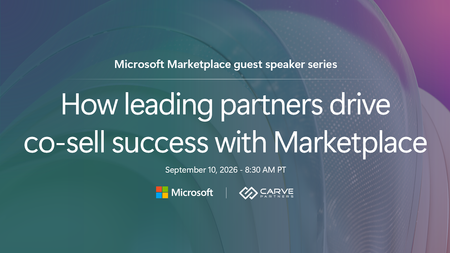
See how successful software companies expand their reach, strengthen co-sell relationships, and create repeatable paths to revenue through Microsoft Marketplace. Join Reis Barrie, advisor to software companies building Microsoft Marketplace growth and co-sell strategies, to learn how leading partners create momentum and generate co-sell opportunities through the Microsoft partner ecosystem. You’ll learn the practical steps toward transactable offers and Azure IP co-sell eligibility, the seller behaviors that consistently generate Marketplace opportunities, and practical strategies that help partners build momentum sooner. You’ll also discover how successful partners identify high-potential accounts, engage Microsoft sellers effectively, and use Marketplace as a repeatable growth motion. Bring your questions. The final fifteen minutes will be reserved for live Q&A. About the speaker: Reis Barrie is the CEO of Carve Partners, where he helps software development companies grow through Microsoft Marketplace and co-sell programs. With over a decade of experience in the Microsoft ecosystem, Reis specializes in turning strategic partnerships into measurable revenue growth. Attendees will gain practical insights on how to maximize Microsoft partnership opportunities, accelerate co-sell success, and drive sustainable business growth. What you’ll learn: Identify the fastest path to transactable offers and Azure co-sell eligibility. Learn the four habits Marketplace-ready sellers use to identify, create and advance co-sell opportunities. Understand how top partners engage Microsoft sellers to accelerate opportunities and strengthen co-sell motions. Discover Marketplace signals, funding opportunities, and deal strategies that help prioritize accounts and shorten sales cycles. Who should attend? Sales leaders and account executives responsible for Microsoft Marketplace growth. Partner business leaders looking to strengthen co-sell engagement with Microsoft. Marketplace, alliance, and channel managers seeking to accelerate transaction readiness. Revenue, sales operations, and go-to-market teams focused on growing Marketplace-driven opportunities. How do I participate? Registration is not required. Add this event to your calendar, then sign in to the Tech Community and select ‘Attend’ to receive reminders. Post your questions in advance, or any time during the live broadcast.AI-powered automation for Marketplace private offers and IP co-sell
Tune in to learn how software development companies can use AI‑powered automation to simplify buying through Microsoft Marketplace, streamline Microsoft Marketplace private offers, and maximize the effectiveness of co-selling opportunities. Join Jon Yoo, Co-Founder & CEO at Suger, as he explores how reducing operational friction in Partner Center can help you accelerate deal velocity, improve collaboration with Microsoft sellers, and drive Azure adoption. What you will learn: How to simplify Microsoft Marketplace private offers by automating the connection between your customer relationship management (CRM) systems and Partner Center, enabling faster deal execution and a better buying experience. How to improve Microsoft IP co‑sell engagement with automated referral validation, accurate account targeting, and stronger alignment with Microsoft sellers. How AI helps accelerate Azure adoption and partner success by reducing Marketplace complexity, improving data accuracy, and scaling go‑to‑market operations. How do I participate? Select Add to calendar to save the date, then click the Attend button to save your spot, receive event reminders, and participate in the Q&A.* If you can’t make the live event, don’t worry. You can post questions in advance and catch up on the answers and insights later in the week. This session will be recorded and available on demand immediately after airing. It will feature AI-generated captions during the live broadcast. Human-generated captions and a recap of the Q&A will be available by the end of the week. * Don’t see the Attend button? Sign in to your Marketplace Tech Community account or register for the Tech Community and join the conversation!Activating channel partners on Microsoft Marketplace: A sales and marketing playbook
You already sell through channel partners today. Now, you can bring those partnerships into Microsoft Marketplace and jumpstart new revenue streams. This playbook provides guidance and ready-to-use assets to help software companies recruit, enable, and grow channel and distribution partnerships through Microsoft Marketplace. Customize these marketing materials to enable your channel to sell your cloud and AI solutions through Microsoft Marketplace. Microsoft continues to invest in channel-led sales through Marketplace, making it easier for software companies, channel partners, and distributors to work together at scale. The value for channel partners Streamline transactions, payments, and customer procurement through a single commercial platform. Access customers looking to apply their Azure consumption commitments toward eligible third-party solutions. Expand sales opportunities across markets with built-in support for cross-currency transactions and global commerce. Get the marketing materials for channel-led sales. Implement your Marketplace channel strategy This playbook provides step-by-step guidance and customizable assets to help software companies build and scale a channel-led sales motion through Marketplace. Use the guidance, templates, and tools to recruit, enable, and grow channel partnerships that support your go-to-market strategy. Step 1: Identify your target markets Start by identifying which countries have the highest revenue potential and where your existing channel partners already have customer traction. Map your current channel footprint by auditing where your channel partners are actively selling today, and which markets are generating the most partner-sourced revenue. These are good target markets in which to start a Microsoft Marketplace channel-led sales motion. Microsoft Marketplace provides multiple sales motions for software companies to engage with channel partners and distributors. As you define your channel partner recruitment strategy, select the right model. Next, determine what solutions you want your distributors or channel partners to sell. Use multiparty private offers to go-to-market together with channel partners on specific customer opportunities. Use resale enabled offers to enable channel partners to resell your solution at scale to customers. For markets that have resale enabled offers and multiparty private offers available, engage your distributors to scale through their channel partners. See available markets here. Step 2: Build your target partner list Select a shortlist of existing partners to onboard first, based on their market coverage, current depth of partnership with your company, and readiness or openness to selling through Marketplace. Create a list of your current channel partners who sell your software in your target markets. Segment partners based on their customer base size in your target markets. Prioritize partners with proven sales capabilities and customer relationships with Microsoft customers. If you need help prioritizing partners, Microsoft publishes a list of eligible channel partners each month, which is a good starting point for identifying channel partners engaged with Marketplace. If you plan to sell with resale enabled offers, you may choose to prioritize partners with whom you have existing direct payment relationships. If you want to sell through distributors, prioritize partners based on the strength of their reseller community. Resources: Channel partner outreach email template to engage existing and prospective channel partners about reselling your solutions through Microsoft Marketplace. Target channel partner list template to prioritize and track target channel partners by country, resale motion, and relevant solutions. Step 3: Articulate the value to your channel partners Marketplace helps channel partners participate in more opportunities by streamlining procurement and payments, unlocking access to customers with Azure commitments, and making it easier to sell across borders through a global commercial platform. Use the Microsoft co-branded partner enablement pitch deck template to help your channel partners understand the opportunity. Step 4: Set up preferred deal construct(s) with your target partners Depending on your chosen sales model(s), ensure that your partners have completed your company’s requirements. You should first agree on pricing and terms and conditions for reselling your software through Marketplace. If using resale enabled offers, you will need to sign appropriate agreements outside of Marketplace. Agreements between parties must be in place before authorizing a channel partner for resale enabled offers. These agreements should specify who is responsible for the Microsoft Marketplace agency fee and payout mechanisms between you and the channel partner. If your channel partners are outside the United States, they may be able to take advantage of tax treaty benefits. For resale enabled offers, authorize your target partners and create and manage resale enabled offers in Partner Center. You will also need your channel partner’s seller ID to create resale enabled offers. For multiparty private offers, ensure that your target partners have met all prerequisites to sell multiparty private offers to customers in your target markets. Your channel partners with a tax profile in the United States need to file resale certificates with Microsoft. Guide your channel partners to contact channelready@microsoft.com for support with tax and payment profile pre-requisites. Step 5: Enable channel partner sales teams Once your partners are authorized to resell through Microsoft Marketplace, the next step is to help them sell your products to their customers through Marketplace. Enable your channel partners on why this motion matters, how to position your offer to their customers, and how to grow their revenue through Marketplace-led sales with you. Enable channel partner sellers with a simple sales enablement kit that provides clear messaging on how to pitch your product, why customers should buy through Microsoft Marketplace, how the partner can attach services, and how your incentives and programs apply. Provide them with a clear process for contacting you with questions, deal support requests, sales blockers, and run regular sales enablement sessions at the start of the motion to quickly enable your channel partners’ sales team(s) to sell your offers on Marketplace. Offer sales incentives to your channel partners’ sales teams, such as SPIFFs, bonuses, and revenue sharing opportunities, which motivate your channel partners’ sales teams to identify and close Marketplace opportunities. Share leads and map accounts together. Compare customer and prospect lists to identify account overlaps and prospects that may have pre-committed cloud budget that could be used to purchase your solution via Marketplace. If you participate in Marketplace Rewards, use the customer propensity list to prioritize customers. Use available Microsoft incentives and resources to help your channel partners sell your products to their customers. As a best practice, remove internal channel conflict by working with your finance and sales operations teams to ensure your direct sales team is not penalized when a channel partner closes a Marketplace deal. Use the Internal sales enablement template to ensure your internal sales and channel teams are enabled on the channel-led Marketplace opportunity and operational steps. Resources: Sales enablement kit for channel partners: Microsoft co-branded partner enablement pitch deck template to help your channel partners understand the Microsoft Marketplace opportunity, value proposition for working with you, and how to get started. Customer-facing brief that channel partner sellers can use to promote your solutions to their customers. Internal sales enablement template to train your internal sales and channel teams on your Microsoft Marketplace channel-led sales motion Step 6: Track pipeline, optimize, and scale Track and measure Marketplace activities with your channel partners, including pipeline and sales by country, to identify which partners are the most active, which countries are driving the most revenue, where deals are progressing and where additional channel partner enablement is needed. You can also track metrics such as average deal size and time to close for Marketplace versus non-Marketplace deals, percentage of pipeline and revenue utilizing pre-committed cloud spend, and the impact of sales incentives on driving adoption of Marketplace channel-led sales. Use Microsoft Partner Center Insights to monitor sales, customer acquisition, and channel partner performance in the Insights workspace. Use the Referrals space to see if your channel partners’ customers and prospects have pre-committed cloud budget that they could use to purchase your solution. Based on early results of your Microsoft channel-led sales motion, build your ideal target partner profile, optimize your channel sales collateral and incentives, and expand your target partner list in your target markets. Reach out to your existing channel partners at scale using the channel partner outreach email and LinkedIn ad templates to drive awareness of your Marketplace channel-led sales motion. Resources: Channel partner outreach email template to engage existing and prospective channel partners about reselling your solutions through Microsoft Marketplace. Channel partner outreach LinkedIn ad template to capture the attention of existing and prospective channel partners by highlighting the opportunity to sell your solution through Marketplace and attach services. In summary Select your markets: identify the countries where you want to activate Microsoft Marketplace channel-led sales with your existing channel partners. Build your target partner shortlist: select 3-5 channel partners to activate first, starting with those who have existing customers and pipeline in your target markets. Articulate the value to your channel partners: reach out to your target partners and share the opportunity to transact through Marketplace. Choose your deal construct(s): decide which Marketplace channel-led sales models best fit your channel strategy and your channel partners’ sales motions. Activate your Marketplace channel-led sales motion: use this channel recruitment playbook to authorize, onboard and enable your channel partners at scale. Optimize and scale: use early learnings to refine your strategy and content, activate additional existing channel partners to your Marketplace channel-led sales motion, and recruit net new channel partners to expand your ecosystem of Marketplace channel-led sales partners. Assets to help you activate your Microsoft Marketplace channel-led sales motion Multiparty private offer channel partner onboarding guide Resale enabled offer channel partner onboarding guide Repository containing: Internal sales enablement template to train your internal sales and channel teams on your Microsoft Marketplace channel-led sales motion Target channel partner list template to prioritize and track target channel partners by country, resale motion and relevant solutions Channel partner outreach email template to engage existing and prospective channel partners about reselling your solutions through Microsoft Marketplace Channel partner outreach LinkedIn ad template to capture the attention of existing and prospective channel partners by highlighting the opportunity to sell your solution through Marketplace and attach services Microsoft co-branded partner enablement pitch deck template to help your channel partners understand the Microsoft Marketplace opportunity, value proposition for working with you, and how to get started Customer-facing brief that channel partner sellers can use to promote your solutions to their customers800Views1like1CommentTurning co-sell readiness into real Microsoft Marketplace revenue
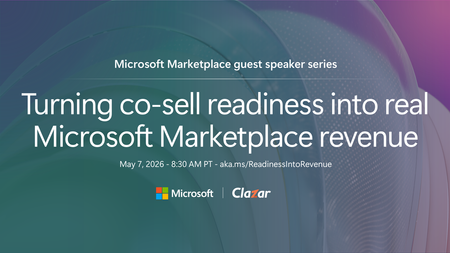
Achieving co-sell readiness in Microsoft Marketplace is only the beginning. Many software development companies reach this milestone but struggle to translate it into meaningful pipeline and consistent seller engagement. Join Microsoft partner and special guest Trunal Bhanse, CEO and co-founder at Clazar, as he breaks down what separates companies that are simply “co-sell ready” from those that successfully build active, revenue-generating partnerships with Microsoft sellers. Drawing on real-world insights from hundreds of marketplace partners, we’ll explore the operational habits, processes, and strategies that drive faster deal velocity, larger deal sizes, and stronger collaboration with the Microsoft field. You'll learn: How to create seller-focused collateral that drives Microsoft field engagement Best practices for working effectively with your Partner Development Manager (PDM) How to improve referral response times to increase co-sell opportunities You'll walk away with: A practical checklist to improve Microsoft seller engagement immediately Proven strategies to generate more co-sell opportunities A clearer understanding of how to operationalize your marketplace motion for consistent growth How do I participate? Select Add to calendar to save the date, then click the Attend button to save your spot, receive event reminders, and participate in the Q&A.* If you can’t make the live event, don’t worry. You can post questions in advance and catch up on the answers and insights later in the week. This session will be recorded and available on demand immediately after airing. It will feature AI-generated captions during the live broadcast. Human-generated captions and a recap of the Q&A will be available by the end of the week. * Don’t see the Attend button? Sign in to your Marketplace Tech Community account or register for the Tech Community and join the conversation!