business applications
110 Topics
Earn the new Clinical Applications specialization for Dragon Copilot
Starting today, eligible partners can earn the new Clinical Applications specialization, which recognizes proven expertise in deploying Dragon Copilot for healthcare customers. Earning the specialization can unlock co-sell and referral eligibility with Microsoft sellers, along with funding opportunities, Azure bulk credits, deployment support, and go-to-market assets designed to support you as you scale your healthcare practice. Review the requirements now and start on the path to attainment today.133Views0likes0CommentsKeeping or earning four Business Applications specializations just got simpler
Starting on August 24, 2026, Microsoft is simplifying eligibility requirements for the Sales, Service, Finance, and Supply Chain specializations. Eligible deployments will be measured using monthly active users (MAU) instead of monthly consumption value (MCV), and the gross growth performance requirement is being removed. In addition, Microsoft Marketplace tags are also being refreshed to better align with current products. These updates are designed to align qualification requirements with market demand and apply across all four specializations, so there's no need to track separate changes for each one.276Views0likes0Comments
Introducing Everpure Cloud Azure Native for Azure VMs
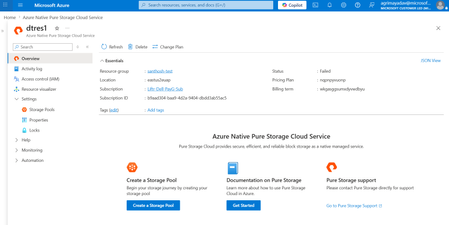
Overview We're excited to announce Everpure Cloud Azure Native for Azure Virtual Machines (VMs). With this release, Azure customers can provision enterprise-grade block storage volumes and attach it directly to their Azure VMs, all managed natively within the Azure portal. No appliances to manage, no complex storage stack to stitch together — just elastic, high-performance block storage that behaves like any other Azure disk. This release solves three persistent challenges Azure VM customers face with traditional Managed Disks: Pay for capacity what you actually use, not what you provision — Billing follows effective capacity after deduplication and compression, helping customers avoid overprovisioning and reduce storage costs (by up to 40%) Scale storage independently from compute — Grow capacity and tune performance without resizing your VM or touching the VM SKU, giving you finer control over both cost and performance. Enterprise data services built in — Thin provisioning, deduplication, and compression — all native to Everpure. What you can expect Familiar building blocks — storage pools, volume groups, and volumes that map cleanly to your applications and VMs. Independent scaling of capacity and IOPS — dial storage performance up or down without disturbing compute. Seamless guest-OS integration — mounted volumes appear as standard Windows disks; no special drivers or custom tooling required. Step-by-step: Setting up Everpure Cloud Azure Native storage for your Azure VM Step 1 — Deploy Everpure Cloud service Find Azure Native Everpure Cloud in the Azure Marketplace and deploy it into your subscription. The service is provisioned natively as an Azure resource and enables the service in selected region. Step 2 — Create a Storage Pool Create a storage pool — Choose an availability zone for resiliency and use the performance slider to set your desired IOPS independently of capacity Step 3 — Create a volume group Create a volume group — a logical container that groups related volumes together, for example all the disks belonging to a single application, database, or VM. Operating at the group level makes access control and day-2 management simpler at scale. Step 4 — Create volumes Within the volume group, create the volumes your VM will consume. Specify a name and size — this size is a logical limit, not pre-allocated capacity. Volumes can be resized live and shared across multiple VMs when needed. Step 5 — Mount to your Azure VM From the volume group, select Mount on VM. The Azure VM connection experience opens, letting you attach the volume to your chosen Azure Virtual Machine. Step 6 — Bring the disk online inside the guest OS Once mounted, the final step happens inside the VM. The Everpure volumes appear as standard, uninitialized Windows disks. Open Disk Management, initialize the disks with GPT, run the New Simple Volume Wizard, and format them as NTFS. Within seconds, the Everpure-backed volume becomes a regular drive letter (for example, F:) ready for any workload. Get Started Today Everpure Cloud Azure Native for Azure VMs is available now in the Azure Marketplace. Deploy it into your subscription to start bringing enterprise-grade Everpure to your Azure VMs Start Your Free Trial of Everpure Cloud Azure Native Check out the Everpure Cloud release notes for detailed guidance on supported configurations, capacity points, and operational considerations. Read the Everpure GA announcement blog to learn how Everpure Cloud Azure Native for Azure VMs helps reduce costs and simplify storage operations. Have feedback or questions? Drop a comment below — we'd love to hear how you plan to use Everpure Cloud for your Azure workloads.620Views2likes0CommentsAdoption and Change Management specialization retired June 25, 2026
The Adoption and Change Management specialization retired on June 25, 2026. Rather than maintain a standalone specialization, adoption and change management capabilities are now measured within AI Business Solutions product-aligned specializations, such as Microsoft 365 Copilot, Secure AI Productivity, and Modernize Endpoints. Spreading these change management skill requirements across several specializations gives partners the opportunity to showcase their expertise in the context of specific, in-demand solutions. What this means for partners The Adoption and Change Management specialization is no longer available for enrollment or renewal. If you currently hold the specialization, it remains active until your anniversary date. If you currently hold or are pursuing adoption and change management capabilities as part of your Solutions Partner or incentives strategy, review your specialization status in Partner Center and identify the AI Business Solutions specialization that supports your business goals. Assess any remaining requirements, create a transition plan, and enroll in or continue progressing toward that specialization to protect benefit continuity. If you work with a Partner Development Manager or Partner Technology Strategist, engage them to support your transition. Why this matters Adoption and change management capabilities are now evaluated within AI Business Solutions product-aligned specializations, so partners can demonstrate their expertise in the context of specific, in-demand solutions. Go to Specialization Dashboard in Partner Center to check your anniversary date and specialization status, and review the other AI Business Solutions-aligned specializations.225Views0likes0CommentsNew eligible workloads for the Solutions Partner designation for Business Applications
The pathway to attaining and renewing the Solutions Partner designation for Business Applications has been widened thanks to the addition of two new eligible workloads: Microsoft Dynamics 365 Contact Center and Copilot Studio. Contact Center has been added across both performance and customer success metrics, while Copilot Studio has been added to performance. A Business Applications designation demonstrates your capabilities delivering solutions on Dynamics 365 and Power Platform, so if you don't already hold this designation, we encourage you to pursue it now. Partners approaching their renewal window can start preparing for renewal today. Visit the Business Applications dashboard in Partner Center to view how this addition has affected your progress toward attaining or renewing the designation. Go to the Business Applications dashboard to learn more.243Views1like0Comments
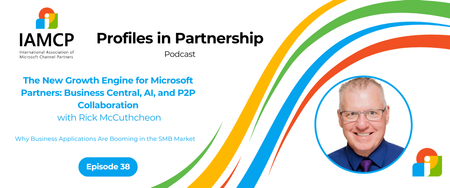
Ep 38 | The New Growth Engine for Microsoft Partners: Business Central, AI, and P2P Collaboration
The Microsoft Partner Ecosystem Is Entering a New Growth Phase The Microsoft partner ecosystem is evolving rapidly as organizations accelerate cloud adoption and digital transformation, creating new opportunities—and challenges—across the SMB and mid-market landscape. Three forces are reshaping the ecosystem: Rapid adoption of Microsoft Business Central and other Business Applications The accelerating push toward AI-enabled services Increasing reliance on partner-to-partner collaboration (P2P) to deliver complex solutions These trends are converging to create a new growth model for Microsoft partners. The key takeaway: Success will rely on integrated solutions, deeper specialization, and stronger ecosystem relationships. In the latest episode of IAMCP Profiles in Partnership, “How Microsoft Partners Can Grow Faster with Business Central, AI, and P2P Collaboration,” hear insights from longtime Microsoft MVP and industry leader Rick McCutcheon as he sits down with Anthony Carrano and Rudy Rodriquez to discuss how these shifts are unfolding and what partners should be doing to stay competitive. Why Business Applications Are Booming in the SMB Market One of the strongest signals in the Microsoft partner ecosystem today is the growth of Business Applications, particularly Microsoft Business Central. The SMB and mid-market segments are experiencing a surge in ERP modernization. Several factors are driving this expansion: Companies migrating from Microsoft Dynamics NAV Organizations moving off Dynamics GP Businesses outgrowing QuickBooks Enterprise The increasing demand for cloud-based ERP platforms Business Central sits at the center of this transition. Microsoft recently announced that the platform surpassed 50,000 customers, and many partners expect continued double-digit growth as migrations accelerate. For Microsoft Dynamics partners, this shift is a significant opportunity. As legacy systems reach end-of-life and SMBs modernize, demand for ERP consulting, implementation, and integration continues to rise, but the opportunity extends beyond ERP deployments alone. Modern ERP Is Becoming an Ecosystem A modern ERP implementation rarely exists in isolation. Instead, it increasingly acts as a platform that integrates multiple solutions from the broader Microsoft ISV ecosystem. In a typical Business Central deployment today, partners often integrate five to ten independent software vendor (ISV) solutions that extend ERP functionality. Common integrations include: Accounts payable automation Marketing automation platforms Warehouse management systems Logistics and shipping solutions CRM integrations Industry-specific vertical applications This shift means ERP deployments are now comprehensive business platforms. The key takeaway is that partners can now deliver end-to-end solutions rather than just single software tools. This shift greatly expands consulting opportunities for partners. A single ERP project can evolve into a broader transformation initiative involving workflow automation, analytics, and operational modernization. AI Is the Next Major Opportunity, But Data Readiness Matters While ERP modernization is driving immediate demand, AI adoption is emerging as the next major wave in the Microsoft ecosystem. Microsoft’s push toward “frontier partners”—organizations capable of delivering AI-enabled solutions—is accelerating across the channel. Tools such as Microsoft Copilot and AI agents are already improving productivity within partner organizations themselves. Examples include: Automating proposal writing Accelerating RFP responses Summarizing meetings and documentation Supporting research and content creation However, deploying AI within customer environments is far more complex. The biggest barrier to AI adoption is not the technology, it is data readiness. Many organizations still operate with fragmented systems, including: CRM platforms disconnected from marketing automation ERP systems that do not fully integrate with customer data Multiple databases containing duplicate or inconsistent records Without strong data governance, AI systems struggle to produce reliable insights. For partners delivering AI solutions, data architecture is becoming a core capability. Before deploying AI tools, partners must often help clients: Consolidate data sources Standardize data models Improve data quality Establish governance policies The main takeaway: Only after data consolidation and governance can AI offer meaningful business results for clients. Why MSPs and BizApps Partners Are Converging Historically, managed service providers (MSPs) and Business Applications partners operated in separate worlds. MSPs focused on infrastructure, security, and cloud services. BizApps partners specialize in ERP, CRM, and operational systems. Today, those boundaries are dissolving. Several factors are driving convergence: The Microsoft cloud integrates Modern Work, Azure, and Business Applications. Customers expect a single partner experience. AI solutions increasingly require data, infrastructure, and application expertise. As a result, MSPs are entering the Business Applications market in several ways: Building internal ERP and CRM practices Acquiring BizApps consulting firms Partnering with specialized implementation partners For MSPs, the opportunity is compelling. Business Applications projects often generate significantly higher service revenue than software licensing. The key takeaway: Due to the complexity of ERP and CRM, MSPs often need to collaborate with experienced BizApps partners to deliver complete solutions. Why Partner-to-Partner Collaboration Is Becoming Essential As the Microsoft ecosystem becomes more complex, no single partner can deliver everything on their own. Modern customer environments often require expertise across multiple domains: Infrastructure and cloud architecture ERP and CRM systems Data platforms and analytics AI deployment and automation Industry-specific solutions This reality is driving a shift toward partner-to-partner collaboration (P2P). Successful collaborations typically share several characteristics: Long-Term Trust: Effective partnerships are built over time, not through one-off project engagements. Complementary Expertise: Partners focus on their strengths while bringing in specialists where needed. Shared Opportunity: Strong P2P relationships create reciprocal value—partners refer opportunities to each other rather than competing. Communities such as the International Association of Microsoft Channel Partners (IAMCP) play an important role in facilitating these relationships. To summarize: As the Microsoft ecosystem becomes more interconnected, building strong partner networks is becoming essential for success. Strategic Moves Microsoft Partners Should Make Now For Microsoft partners navigating these changes, several strategic priorities are emerging. Invest in Business Applications Expertise The demand for ERP and CRM solutions is growing rapidly, particularly in the SMB market. Partners who understand Business Central and related ISV ecosystems will be well-positioned. Build Data and AI Capabilities AI will increasingly shape how businesses operate. Partners must develop expertise in: Data architecture Data governance AI deployment frameworks Develop P2P Partnerships Strategic alliances allow partners to expand capabilities without building every skill internally. Engage in the Partner Community Industry conferences, partner networks, and learning platforms provide invaluable opportunities to build relationships and stay informed. The main takeaway: Active participation in the partner community is vital to thriving in the Microsoft ecosystem. The Future of Microsoft Partner Growth The Microsoft partner ecosystem is entering a new era. ERP modernization, AI adoption, and collaboration are combining to create larger, more complex opportunities. The partners who succeed in this environment will not be those who try to do everything themselves. Instead, the winners will be the firms that: Build deep expertise in key solution areas. Invest in data and AI capabilities. Form strong, trusted partnerships across the ecosystem The key takeaway: Collaboration has become the foundation of partner growth in the increasingly interconnected Microsoft ecosystem. Listen to the Full Episode To hear the full conversation and additional insights on Microsoft partner growth, listen to the complete episode of IAMCP Profiles in Partnership featuring Rick McCutcheon on demand.331Views0likes0Comments