azure security
50 TopicsThis was my preparation for the exam Microsoft Certified: Cybersecurity Architect Expert (SC-100)!
Dear Microsoft 365 Security and Azure Security Friends, When I first read about this certification I was immediately excited! But at the same time I had a lot of respect, because it is an expert certification. I quickly started collecting information. The first thing I learned was that it takes a so-called prerequisite exam to become a Microsoft Certified: Cybersecurity Architect Expert certification. The following prerequisite exams are available (only one of these exams must be passed): Microsoft Certified: Security Operations Analyst Associate (SC-200) https://docs.microsoft.com/en-us/learn/certifications/security-operations-analyst/ Microsoft Certified: Identity and Access Administrator Associate (SC-300) https://docs.microsoft.com/en-us/learn/certifications/identity-and-access-administrator/ Microsoft Certified: Azure Security Engineer Associate (AZ-500) https://docs.microsoft.com/en-us/learn/certifications/azure-security-engineer/ Microsoft 365 Certified: Security Administrator Associate (MS-500) https://docs.microsoft.com/en-us/learn/certifications/m365-security-administrator/ I have taken all these prerequisite exams. The two exams AZ-500 and MS-500 helped me the most in preparing for the SC-100 (this is certainly not the case for everyone). In this SC-100 exam you will be quizzed on topics in Microsoft Sentinel, Microsoft Defender for Cloud, Microsoft 365 Defender for Cloud Apps (and all other Defender products), Azure Policy, Azure landing zone, etc. This spectrum is huge, please take enough time to "explore" these "portals" deeply. You don't have to have the technical knowledge down to the last detail. No not at all, in this exam it is important to use all the features and products with the right strategy. This was among other things my way to success! Now to my preparations for the exam: 1. First of all, I looked at the Exam Topics to get a first impression of the scope of topics. https://docs.microsoft.com/en-us/learn/certifications/cybersecurity-architect-expert/ Please take a close look at the skills assessed: https://query.prod.cms.rt.microsoft.com/cms/api/am/binary/RWVbXN 2. So that I can prepare for an exam I need an Azure test environment (this is indispensable for me). You can sign up for a free trial here. https://azure.microsoft.com/en-us/free/ Next, I set up a Microsoft 365 test environment. You can sign up for a free trial here. https://www.microsoft.com/en-us/microsoft-365/business/compare-all-microsoft-365-business-products I chose the "Microsoft 365 Business Premium" plan for my testing. I have also registered several free trials to test the various Defender products. 3. Now it goes to the Microsoft Learn content. These learn paths (as you can see below, all 4) I have worked through completely and "mapped"/reconfigured as much as possible in my test environment. https://docs.microsoft.com/en-us/learn/paths/sc-100-design-zero-trust-strategy-architecture/ https://docs.microsoft.com/en-us/learn/paths/sc-100-evaluate-governance-risk-compliance/ https://docs.microsoft.com/en-us/learn/paths/sc-100-design-security-for-infrastructure/ https://docs.microsoft.com/en-us/learn/paths/sc-100-design-strategy-for-data-applications/ 4. Register for the exam early. This creates some pressure and you stay motivated. https://docs.microsoft.com/en-us/learn/certifications/cybersecurity-architect-expert/ 5. Please also watch the video of John Savill, it is very helpful! https://youtu.be/2Qu5gQjNQh4 6. The Exam Ref for the SC-200 exam was also very supportive. https://www.microsoftpressstore.com/store/exam-ref-sc-200-microsoft-security-operations-analyst-9780137666720 7. Further I have summarized various links that have also helped me a lot. Sorted by Functional Group. Design a Zero Trust strategy and architecture: https://docs.microsoft.com/en-us/security/cybersecurity-reference-architecture/mcra https://docs.microsoft.com/en-us/azure/cloud-adoption-framework/secure/security-governance https://docs.microsoft.com/en-us/azure/architecture/framework/security/monitor-audit https://docs.microsoft.com/en-us/security/benchmark/azure/security-control-logging-monitoring https://docs.microsoft.com/en-us/azure/security/fundamentals/log-audit https://docs.microsoft.com/en-us/azure/architecture/framework/security/design-network-connectivity https://docs.microsoft.com/en-us/azure/architecture/framework/security/design-network-segmentation https://docs.microsoft.com/en-us/security/zero-trust/deploy/infrastructure https://docs.microsoft.com/en-us/security/zero-trust/integrate/infrastructure https://docs.microsoft.com/en-us/azure/cloud-adoption-framework/strategy/define-security-strategy https://docs.microsoft.com/en-us/azure/cloud-adoption-framework/secure/business-resilience https://docs.microsoft.com/en-us/azure/cloud-adoption-framework/strategy/technical-considerations/ https://docs.microsoft.com/en-us/azure/cloud-adoption-framework/organize/ https://docs.microsoft.com/en-us/azure/security/fundamentals/operational-checklist https://azure.microsoft.com/en-us/services/defender-for-cloud/#features https://docs.microsoft.com/en-us/azure/sentinel/overview https://docs.microsoft.com/en-us/azure/defender-for-cloud/workflow-automation https://docs.microsoft.com/en-us/security/compass/incident-response-overview https://docs.microsoft.com/en-us/security/compass/incident-response-planning https://docs.microsoft.com/en-us/security/compass/incident-response-process https://docs.microsoft.com/en-us/azure/cloud-adoption-framework/secure/security-operations https://docs.microsoft.com/en-us/security/compass/security-operations https://docs.microsoft.com/en-us/azure/cloud-adoption-framework/ready/azure-setup-guide/organize-resources https://docs.microsoft.com/en-us/azure/cloud-adoption-framework/ready/azure-setup-guide/manage-access https://docs.microsoft.com/en-us/azure/cloud-adoption-framework/ready/landing-zone/design-area/identity-access https://docs.microsoft.com/en-us/azure/security/fundamentals/identity-management-best-practices https://docs.microsoft.com/en-us/azure/active-directory/external-identities/external-identities-overview https://docs.microsoft.com/en-us/azure/active-directory/authentication/concept-authentication-methods https://docs.microsoft.com/en-us/microsoft-365/education/deploy/design-credential-authentication-strategies https://docs.microsoft.com/en-us/azure/active-directory/hybrid/choose-ad-authn https://docs.microsoft.com/en-us/azure/architecture/framework/security/design-identity-authentication https://docs.microsoft.com/en-us/azure/architecture/framework/security/design-identity-authorization https://docs.microsoft.com/en-us/azure/active-directory/conditional-access/overview https://docs.microsoft.com/en-us/azure/active-directory/conditional-access/plan-conditional-access https://docs.microsoft.com/en-us/azure/architecture/guide/security/conditional-access-zero-trust https://docs.microsoft.com/en-us/azure/active-directory/roles/best-practices https://docs.microsoft.com/en-us/azure/active-directory/governance/entitlement-management-delegate https://docs.microsoft.com/en-us/azure/active-directory/roles/groups-concept https://docs.microsoft.com/en-us/azure/active-directory/privileged-identity-management/pim-configure https://docs.microsoft.com/en-us/security/compass/identity https://docs.microsoft.com/en-us/azure/active-directory/governance/entitlement-management-overview https://docs.microsoft.com/en-us/azure/active-directory/governance/entitlement-management-delegate https://docs.microsoft.com/en-us/microsoft-identity-manager/pam/privileged-identity-management-for-active-directory-domain-services https://docs.microsoft.com/en-us/microsoft-identity-manager/pam/principles-of-operation https://docs.microsoft.com/en-us/azure/active-directory/roles/security-planning Evaluate Governance Risk Compliance (GRC) technical strategies and security operations strategies: https://docs.microsoft.com/en-us/azure/cloud-adoption-framework/govern/policy-compliance/regulatory-compliance https://docs.microsoft.com/en-us/azure/security/fundamentals/technical-capabilities https://docs.microsoft.com/en-us/security/compass/governance https://docs.microsoft.com/en-us/azure/defender-for-cloud/regulatory-compliance-dashboard https://docs.microsoft.com/en-us/microsoft-365/compliance/compliance-manager?view=o365-worldwide https://docs.microsoft.com/en-us/microsoft-365/compliance/compliance-score-calculation?view=o365-worldwide https://docs.microsoft.com/en-us/azure/defender-for-cloud/secure-score-security-controls https://docs.microsoft.com/en-us/azure/governance/policy/overview https://docs.microsoft.com/en-us/azure/governance/policy/tutorials/create-and-manage https://azure.microsoft.com/en-us/global-infrastructure/data-residency/ https://azure.microsoft.com/en-us/resources/achieving-compliant-data-residency-and-security-with-azure/ https://azure.microsoft.com/en-us/overview/trusted-cloud/privacy/ https://azure.microsoft.com/en-us/blog/10-recommendations-for-cloud-privacy-and-security-with-ponemon-research/ https://docs.microsoft.com/en-us/security/benchmark/azure/introduction https://docs.microsoft.com/en-us/azure/defender-for-cloud/update-regulatory-compliance-packages https://docs.microsoft.com/en-us/azure/defender-for-cloud/regulatory-compliance-dashboard https://docs.microsoft.com/en-us/azure/defender-for-cloud/secure-score-access-and-track https://docs.microsoft.com/en-us/azure/defender-for-cloud/enhanced-security-features-overview https://docs.microsoft.com/en-us/azure/architecture/framework/security/design-governance-landing-zone https://docs.microsoft.com/en-us/azure/cloud-adoption-framework/ready/considerations/landing-zone-security https://docs.microsoft.com/en-us/azure/cloud-adoption-framework/ready/landing-zone/design-area/security https://docs.microsoft.com/en-us/microsoft-365/security/office-365-security/office-365-ti?view=o365-worldwide https://docs.microsoft.com/en-us/microsoft-365/compliance/insider-risk-management?view=o365-worldwide https://techcommunity.microsoft.com/t5/security-compliance-and-identity/reduce-risk-across-your-environments-with-the-latest-threat-and/ba-p/2902691 Design security for infrastructure: https://docs.microsoft.com/en-us/windows/security/threat-protection/windows-security-configuration-framework/windows-security-baselines https://docs.microsoft.com/en-us/windows-server/security/security-and-assurance https://docs.microsoft.com/en-us/microsoft-365/security/defender-endpoint/minimum-requirements?view=o365-worldwide https://docs.microsoft.com/en-us/mem/intune/protect/security-baselines https://docs.microsoft.com/en-us/windows-server/identity/ad-ds/plan/security-best-practices/best-practices-for-securing-active-directory https://docs.microsoft.com/en-us/azure/active-directory-domain-services/secure-your-domain https://docs.microsoft.com/en-us/azure/key-vault/general/about-keys-secrets-certificates https://docs.microsoft.com/en-us/azure/security/fundamentals/management https://docs.microsoft.com/en-us/security/benchmark/azure/baselines/cloud-services-security-baseline https://azure.microsoft.com/en-us/overview/iot/security/ https://docs.microsoft.com/en-us/azure/azure-sql/database/security-overview?view=azuresql https://docs.microsoft.com/en-us/azure/azure-sql/database/security-best-practice?view=azuresql https://docs.microsoft.com/en-us/security/benchmark/azure/baselines/sql-database-security-baseline https://docs.microsoft.com/en-us/azure/cosmos-db/database-security?tabs=sql-api https://docs.microsoft.com/en-us/security/benchmark/azure/baselines/synapse-analytics-security-baseline https://docs.microsoft.com/en-us/azure/app-service/overview-security https://docs.microsoft.com/en-us/azure/app-service/security-recommendations https://docs.microsoft.com/en-us/security/benchmark/azure/baselines/app-service-security-baseline https://docs.microsoft.com/en-us/security/benchmark/azure/baselines/storage-security-baseline https://docs.microsoft.com/en-us/security/benchmark/azure/baselines/container-instances-security-baseline https://docs.microsoft.com/en-us/security/benchmark/azure/baselines/container-registry-security-baseline https://docs.microsoft.com/en-us/security/benchmark/azure/baselines/aks-security-baseline https://docs.microsoft.com/en-us/azure/aks/concepts-security https://docs.microsoft.com/en-us/azure/aks/operator-best-practices-cluster-security?tabs=azure-cli https://docs.microsoft.com/en-us/azure/architecture/framework/services/compute/azure-kubernetes-service/azure-kubernetes-service Design a strategy for data and applications: https://docs.microsoft.com/en-us/azure/security/develop/threat-modeling-tool-mitigations https://docs.microsoft.com/en-us/azure/architecture/framework/security/design-threat-model https://docs.microsoft.com/en-us/compliance/assurance/assurance-security-development-and-operation https://docs.microsoft.com/en-us/azure/security/develop/secure-design https://docs.microsoft.com/en-us/azure/defender-for-cloud/defender-for-app-service-introduction https://docs.microsoft.com/en-us/azure/architecture/framework/security/resilience https://docs.microsoft.com/en-us/security/benchmark/azure/security-controls-v3-governance-strategy https://docs.microsoft.com/en-us/azure/architecture/data-guide/scenarios/securing-data-solutions https://docs.microsoft.com/en-us/azure/architecture/framework/security/design-storage https://docs.microsoft.com/en-us/security/benchmark/azure/security-controls-v3-data-protection https://docs.microsoft.com/en-us/azure/security/fundamentals/encryption-overview https://docs.microsoft.com/en-us/azure/security/fundamentals/data-encryption-best-practices https://docs.microsoft.com/en-us/azure/security/fundamentals/encryption-atrest https://docs.microsoft.com/en-us/azure/architecture/framework/security/design-storage-encryption 8. You can find a list of all the links here: https://github.com/tomwechsler/Microsoft_Cloud_Security/blob/main/SC-100/Links.md I know you've probably read and heard this many times: read the exam questions slowly and accurately. Well, that was the key to success for me. It's the details that make the difference between success and failure. Let me give you an example at this point. You want to make a business app available. The authentication should be done by each person with his own LinkedIn account. Which variant of Azure Active Directory do you use for this? At this point you should know the different types of Azure Active Directory. One final tip: When you have learned something new, try to explain what you have learned to another person (whether or not they know your subject). If you can explain it in your own words, you understand the subject. That is exactly how I do it, except that I do not explain it to another person, but record a video for YouTube! I hope this information helps you and that you successfully pass the exam. I wish you success! Kind regards, Tom Wechsler P.S. All scripts (#PowerShell, Azure CLI, #Terraform, #ARM) that I use can be found on github! https://github.com/tomwechsler9.5KViews10likes6Comments
Enterprise Strategy for Secure Agentic AI: From Compliance to Implementation
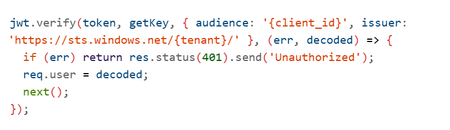
Imagine an AI system that doesn’t just answer questions but takes action querying your databases, updating records, triggering workflows, even processing refunds without human intervention. That’s Agentic AI and it’s here. But with great power comes great responsibility. This autonomy introduces new attack surfaces and regulatory obligations. The Model Context Protocol (MCP) Server the gateway between your AI agent and critical systems becomes your Tier-0 control point. If it fails, the blast radius is enormous. This is the story of how enterprises can secure Agentic AI, stay compliant and implement Zero Trust architectures using Azure AI Foundry. Think of it as a roadmap a journey with three milestones - Milestone 1: Securing the Foundation Our journey starts with understanding the paradigm shift. Traditional AI with RAG (Retrieval-Augmented Generation) is like a librarian: It retrieves pre-indexed data. It summarizes information. It never changes the books or places orders. Security here is simple: protect the index, validate queries, prevent data leaks. But Agentic AI? It’s a staffer with system access. It can: Execute tools and business logic autonomously. Chain operations: read → analyze → write → notify. Modify data and trigger workflows. Bottom line: RAG is a “smart librarian.” Agentic AI is a “staffer with system access.” Treat the security model accordingly. And that means new risks: unauthorized access, privilege escalation, financial impact, data corruption. So what’s the defense? Ten critical security controls your first line of protection: Here’s what a production‑grade, Zero Trust MCP gateway needs. Its intentionally simplified in the demo (e.g., no auth) to highlight where you must harden in production. (https://github.com/davisanc/ai-foundry-mcp-gateway) Authentication Demo: None Prod: Microsoft Entra ID, JWT validation, Managed Identity, automatic credential rotation Authorization & RBAC Demo: None Prod: Tool‑level RBAC via Entra; least privilege; explicit allow‑lists per agent/capability Input Validation Demo: Basic (ext whitelist, 10MB, filename sanitize) Prod: JSON Schema validation, injection guards (SQL/command), business‑rule checks Rate Limiting Demo: None Prod: Multi‑tier (per‑agent, per‑tool, global), adaptive throttling, backoff Audit Logging Demo: Console → App Service logs Prod: Structured logs w/ correlation IDs, compliance metadata, PII redaction Session Management Demo: In‑memory UUID sessions Prod: Encrypted distributed storage (Redis/Cosmos DB), tenant isolation, expirations File Upload Security Demo: Ext whitelist, size limits, memory‑only Prod: 7‑layer defense (validate, MIME, malware scanning via Defender for Storage), encryption at rest, signed URLs Network Security Demo: Public App Service + HTTPS Prod: Private Endpoints, VNet integration, NSGs, Azure Firewall no public exposure Secrets Management Demo: App Service env vars (not in code) Prod: Azure Key Vault + Managed Identity, rotation, access audit Observability & Threat Detection (5‑Layer Stack) Layer 1: Application Insights (requests, dependencies, custom security events) Layer 2: Azure AI Content Safety (harmful content, jailbreaks) Layer 3: Microsoft Defender for AI (prompt injection incl. ASCII smuggling, credential theft, anomalous tool usage) Layer 4: Microsoft Purview for AI (PII/PHI classification, DLP on outputs, lineage, policy) Layer 5: Microsoft Sentinel (SIEM correlation, custom rules, automated response) Note: Azure AI Content Safety is built into Azure AI Foundry for real‑time filtering on both prompts and completions. Picture this as an airport security model: multiple checkpoints, each catching what the previous missed. That’s defense-in-depth. Zero Trust in Practice ~ A Day in the Life of a Prompt Every agent request passes through 8 sequential checkpoints, mapped to MITRE ATLAS tactics/mitigations (e.g., AML.M0011 Input Validation, AML.M0004 Output Filtering, AML.M0015 Adversarial Input Detection). The design goal is defense‑in‑depth: multiple independent controls, different detection signals, and layered failure modes. Checkpoints 1‑7: Enforcement (deny/contain before business systems) Checkpoint 8: Monitoring (detect/respond, hunt, learn, harden) AML.M0009 – Control Access to ML Models AML.M0011 – Validate ML Model Inputs AML.M0000 – Limit ML Model Availability AML.M0014 – ML Artifact Logging AML.M0004 – Output Filtering AML.M0015 – Adversarial Input Detection If one control slips, the others still stand. Resilience is the product of layers. Milestone 2: Navigating Compliance Next stop: regulatory readiness. The EU AI Act is the world’s first comprehensive AI law. If your AI system operates in or impacts the EU market, compliance isn’t optional, it’s mandatory. Agentic AI often falls under high-risk classification. That means: Risk management systems. Technical documentation. Logging and traceability. Transparency and human oversight. Fail to comply? Fines up to €30M or 6% of global turnover. Azure helps you meet these obligations: Entra ID for identity and RBAC. Purview for data classification and DLP. Defender for AI for prompt injection detection. Content Safety for harmful content filtering. Sentinel for SIEM correlation and incident response. And this isn’t just about today. Future regulations are coming US AI Executive Orders, UK AI Roadmap, ISO/IEC 42001 standards. The trend is clear: transparency, explainability, and continuous monitoring will be universal. Milestone 3: Implementation Deep-Dive Now, the hands-on part. How do you build this strategy into reality? Step 1: Entra ID Authentication Register your MCP app in Entra ID. Configure OAuth2 and JWT validation. Enable Managed Identity for downstream resources. Step 2: Apply the 10 Controls RBAC: Tool-level access checks. Validation: JSON schema + injection prevention. Rate Limiting: Express middleware or Azure API Management. Audit Logging: Structured logs with correlation IDs. Session Mgmt: Redis with encryption. File Security: MIME checks + Defender for Storage. Network: Private Endpoints + VNet. Secrets: Azure Key Vault. Observability: App Insights + Defender for AI + Purview + Sentinel. Step 3: Secure CI/CD Pipelines Embed compliance checks in Azure DevOps: Pre-build: Secret scanning. Build: RBAC & validation tests. Deploy: Managed Identity for service connections. Post-deploy: Compliance scans via Azure Policy. Step 4: Build the 5-Layer Observability Stack App Insights → Telemetry. Content Safety → Harmful content detection. Defender for AI → Prompt injection monitoring. Purview → PII/PHI classification and lineage. Sentinel → SIEM correlation and automated response. The Destination: A Secure, Compliant Future By now, you’ve seen the full roadmap: Secure the foundation with Zero Trust and layered controls. Navigate compliance with EU AI Act and prepare for global regulations. Implement the strategy using Azure-native tools and CI/CD best practices. Because in the world of Agentic AI, security isn’t optional, compliance isn’t negotiable, and observability is your lifeline. Resources https://learn.microsoft.com/en-us/azure/ai-foundry/what-is-azure-ai-foundry https://learn.microsoft.com/en-us/azure/defender-for-cloud/ai-threat-protection https://learn.microsoft.com/en-us/purview/ai-microsoft-purview https://atlas.mitre.org/ https://digital-strategy.ec.europa.eu/en/policies/european-approach-artificial-intelligence https://techcommunity.microsoft.com/blog/microsoft-security-blog/microsoft-sentinel-mcp-server---generally-available-with-exciting-new-capabiliti/4470125
Global Administrator MFA recovery not possible
Since Microsoft automatically enforced MFA on administrator role in Azure you can end up in the situation where it is no longer possible to recover your tenant. If your only account on that tenant is with Global Administrator role and you accidentally loose your MFA, the only way is to call Microsoft support. Support on the phone is automated where any question regarding Azure is redirected to visit Azure portal. If your only user cannot login then Azure portal is not accessible.
New Blog | Trusted Signing is in Public Preview
By Rakia Segev Trusted Signing has launched into Public Preview! The Trusted Signing service (formerly Azure Code Signing) is a Microsoft fully managed end-to-end signing solution for developers. What is the Trusted Signing service? Trusted Signing is a complete code signing service with an intuitive experience for developers and IT professionals, backed by a Microsoft managed certification authority. The service supports both public and private trust signing scenarios and includes a timestamping service. With Trusted Signing, users enjoy a productive, performant, and delightful experience on Windows with modern security protection features enabled such as Smart App Control and SmartScreen. The service offers several key features that make signing easy: We manage the full certificate lifecycle – generation, renewal, issuance – and key storage that is FIPS 140-2 Level 3 HSMs. The certificates are short lived certificates, which helps reduce the impact on your customers in abuse or misuse scenarios. We have integrated into popular developer toolsets such as SignTool.exe and GitHub and Visual Studio experiences for CI/CD pipelines enabling signing to easily integrate into application build workflows. For Private Trust, there is also PowerShell cmdlets for IT Pros to sign WDAC policy and future integrations with IT endpoint management solutions. Signing is digest signing, meaning it is fast and confidential – your files never leave your endpoint. We have support for different certificate profile types including Public Trust, Private Trust, and Test with more coming soon! Trusted Signing enables easy resource management and access control for all signing resources with Azure role-based access control as an Azure native resource. To learn more about the service go to: https://learn.microsoft.com/azure/trusted-signing. Figure 1: Creating a Trusted Signing Account Read the full post here: Trusted Signing is in Public PreviewAnomalies with Conditional Access Policy "Terms of Use" Failures
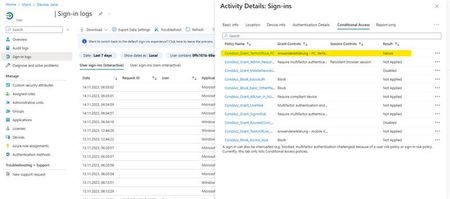
Hello Microsoft Community, I'm reaching out with a bit of a puzzle regarding our "Terms of Use" Conditional Access policy, and I'm eager to tap into the collective wisdom here for some insights. In our Entra ID User Sign-In logs, we've identified intermittent "failure" entries associated with the "Terms of Use" Conditional Access policy. Interestingly, even for users who had previously accepted the "Terms of Use". There appears to be no discernible impact, and they continue their tasks without interruption. This observation became apparent during the troubleshooting of unrelated Surface Hub and Edge Sync issues at some client sites. What adds to the complexity of the situation is that for the same users, both before and after these "failure" entries, the Conditional Access policy is marked as "success". Hence, it doesn't seem to be a straightforward case of the policy erroneously detecting non-acceptance of the "Terms of Use". The mystery lies in understanding why these intermittent "failure" entries occur for users who have already accepted the terms, especially when the policy consistently reports "success" for the same users. Furthermore, the Insights for the "Terms of Use" Conditional Access policy show around 1.48k successes and 1.43k failures in the last 90 days, yet there's no discernible impact on user functionality. Observations: "Failure" entries in Sign-In logs don't seem to disrupt users' day-to-day activities. The ratio of successes to failures is balanced, yet users experience no noticeable problems. The issue complicates troubleshooting efforts but doesn't significantly affect the user experience. I'm turning to the community for guidance on interpreting and resolving this discrepancy between "failure" entries in the Conditional Access policy logs and the seemingly unaffected user experience. Any insights into why these failures occur without user impact would be greatly appreciated. For additional context, I've attached screenshots of a user's Sign-In log entry and the insight chart from the Conditional Access policy. Sign-In log of a user (failure): Sign-In log of same user (success): Current Conditional Access insights: Thank you in advance for your time and assistance. I look forward to any guidance or solutions you can provide. Best regards, Leon TüpkerNew Blog Post | The New Microsoft Security Customer Connection Program (CCP)
Read the full blog post: The New Microsoft Security Customer Connection Program (CCP) - Microsoft Community Hub The security community is constantly growing, changing, and learning from each other in order to better position the world against cyber security threats. For years, Microsoft has driven a customer-obsessed development process by hosting two private communities for end-users of Microsoft security products: the Microsoft Cloud Security Private Community and the Microsoft 365 Defender Customer Connection Program. Under a strict confidentiality framework, our engineering teams get direct community feedback and insights for our roadmap plans, new user experience designs, private preview features, and more. Today, we are happy to announce that these two communities have now come together under one team – The Microsoft Security Customer Connection Program.New Blog Post | Passwordless is here and at scale
Passwordless is here and at scale - Microsoft Tech Community In today’s spotlight, we’ll be focusing on the journey of one of our largest partners, Accenture, as they adopted passwordless authentication and reduced their exposure to phishing attacks. With the rise of cyber-attacks, phishing is among the primary methods that attackers use to compromise your organization’s users. In Microsoft’s latest Digital Defense report, we see it as the highest attack vector on users' credentials.
New Survey: Understanding your PaaS Apps Development Journey on Azure_Would Love Your Feedback!
Hey Valued Developers, Hope you all have been well since our last survey communication. Azure Security’s Destination:Security team has a mission to dramatically simplify the security of developers during their development projects on Azure. Destination:Security wants to understand your development process and pain points in your current security journey on Azure. Your feedback will direct creation and enhancement of content in the form of videos, white papers, best practices, sample applications and troubleshooting guides. This is the second in a series of brief surveys and we would appreciate your participation by Friday March 1, 2019. Click here to take the survey. We encourage you to share this with your network! Many thanks. Destination:Security team Thanks.Learn Live at Build
Microsoft Build is live! Explore the latest innovations in code and application development. On Wednesday, May 25th, from 11 AM-12 PM PST join the Learn Live at Build Session: Configure Application Security Features. Follow along with Microsoft experts to learn how to register your company applications, then use Azure security features to configure and monitor secure access to the application. Register here to attend this session and many more.